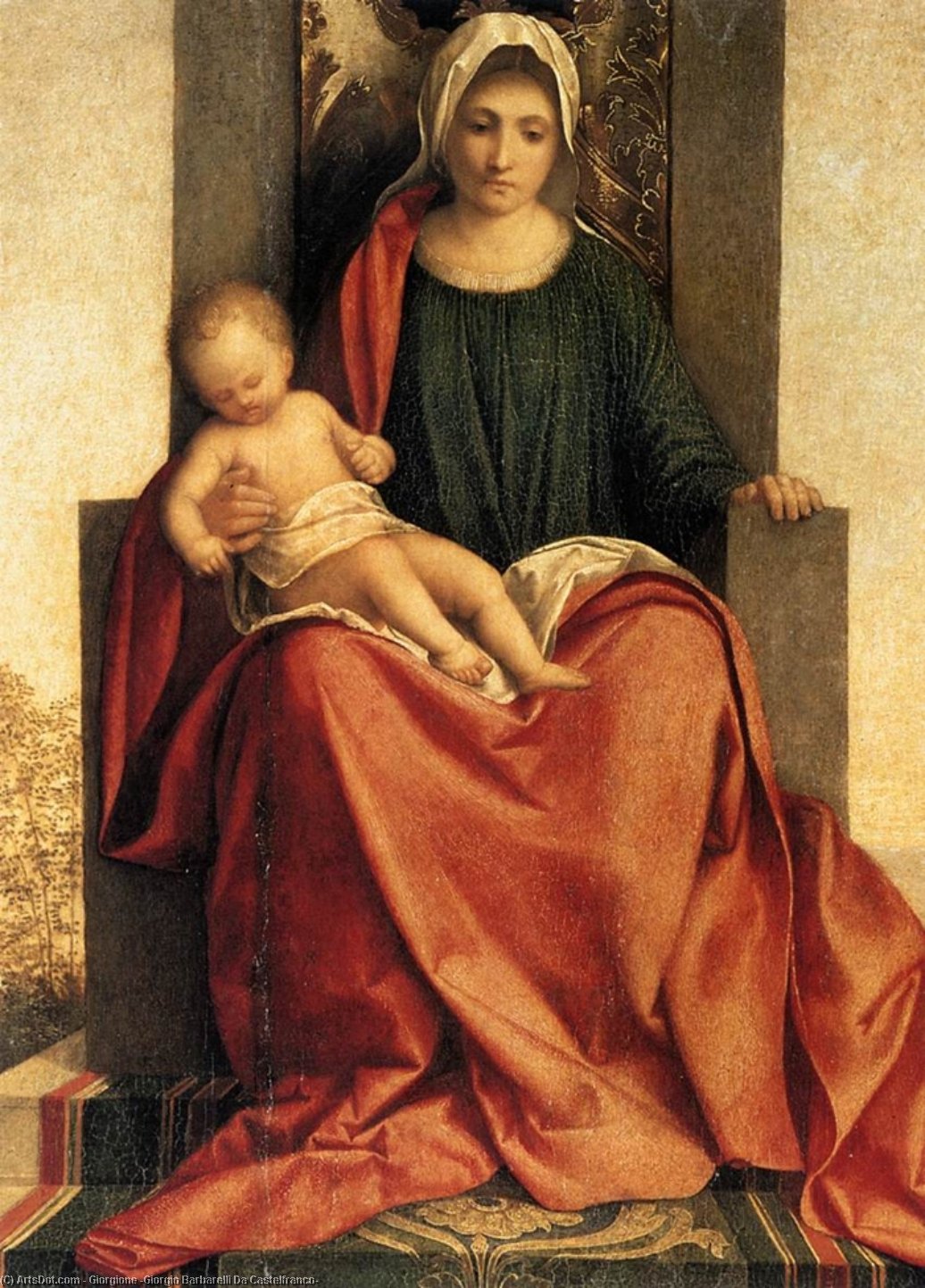
Magnífica obra maestra renacentista que captura la serenidad divina y el amor maternal en una composición armoniosa entre San Francisco y San Liberalis. Descubre los detalles de esta pintura icónica.
Descubra a Giorgione (1477/8-1510), un pintor veneciano clave de la Alta Renacimiento. Explore sus obras líricas y enigmáticas que enfatizan el color y la atmósfera, como 'La Tormenta' y 'Concierto Pastoral'. Fundador de la Escuela Veneciana, influyendo a Titian y más allá.
Madonna And Child Enthroned Between St Francis And St Liberalis (detail)
This exquisite detail offers a glimpse into one of Giorgione’s most celebrated works, the *Madonna and Child Enthroned Between St. Francis and St. Liberalis*, also known as the Castelfranco Madonna. Painted around 1504-1505, this altarpiece embodies the High Renaissance’s burgeoning focus on humanism, naturalism, and a lyrical approach to religious iconography. Giorgione, a master of Venetian painting, imbues the scene with an atmosphere of quiet devotion and tender grace. He sought to capture not merely the likeness of figures but also their inner life—a feat achieved through masterful use of color, light, and texture that continues to captivate viewers centuries later.
Subject & Composition: A Harmonious Gathering
The composition centers around the Virgin Mary cradling the Christ Child, seated regally upon an ornate throne. Flanking them are Saint Francis of Assisi – identifiable by his humble habit – and Saint Liberalis, the patron saint of Castelfranco Veneto, where the painting was originally commissioned for the town’s cathedral. The arrangement isn't rigidly formal; instead, Giorgione achieves a harmonious balance through subtle gestures and gazes that connect the figures. This detail focuses on the intimate connection between mother and child, highlighting Mary’s gentle expression and protective embrace. Notice how Giorgione skillfully uses diagonal lines to guide the eye across the canvas, creating a sense of movement and dynamism within the serene setting.
Style & Technique: Venetian Lyricalism
Giorgione's style is distinctly Venetian, prioritizing color, atmosphere, and *poetic* feeling over precise linear definition – a contrast to the Florentine school. He masterfully employs oil paint, utilizing glazing techniques to build up layers of luminous color and create a soft, almost dreamlike quality. Notice the rich textures achieved through impasto, particularly in Mary’s robes and the intricate detailing of the throne. The landscape background, though indistinct, suggests depth and contributes to the overall sense of serenity. His use of *sfumato*, borrowed from Leonardo da Vinci, softens outlines and creates a subtle haziness that enhances the painting's ethereal quality. This technique—characterized by gradual blending of colors without harsh transitions—was revolutionary for its time and remains a hallmark of Venetian art.
Symbolism & Iconography: Layers of Meaning
The artwork is rich in religious symbolism. Mary’s pose as a nurturing mother – breastfeeding the Christ Child – emphasizes her role as both divine queen and earthly caregiver. The throne signifies her royal status as Queen of Heaven, while the presence of Saints Francis and Liberalis connects the sacred scene to local patronage and devotion. Saint Francis' inclusion speaks to Giorgione’s era’s growing appreciation for Franciscan spirituality and its emphasis on poverty and humility. Beyond these immediate symbols, Giorgione subtly conveys a profound meditation on faith, beauty, and compassion—themes that resonate deeply with viewers even today. The painting embodies the humanist ideals of Renaissance Italy, reflecting a belief in human dignity and potential alongside reverence for divine grace.
Historical Context & Legacy: A Venetian Master
Giorgione lived a tragically short life, but his impact on the development of Venetian painting was profound. He, alongside Titian, established the foundations of the Venetian school, characterized by its vibrant color palettes, atmospheric perspective, and emphasis on *sensuous* beauty. His innovative approach paved the way for future generations of artists and continues to inspire today. The Castelfranco Madonna is considered one of his most important works, showcasing his unique ability to blend religious piety with a distinctly humanistic sensibility. Its enduring appeal lies in its masterful execution—a testament to Giorgione’s genius and a cornerstone of Venetian artistic heritage. Reproducing this artwork would bring a touch of Renaissance elegance and tranquility to any interior space, serving as a focal point for contemplation and aesthetic appreciation.