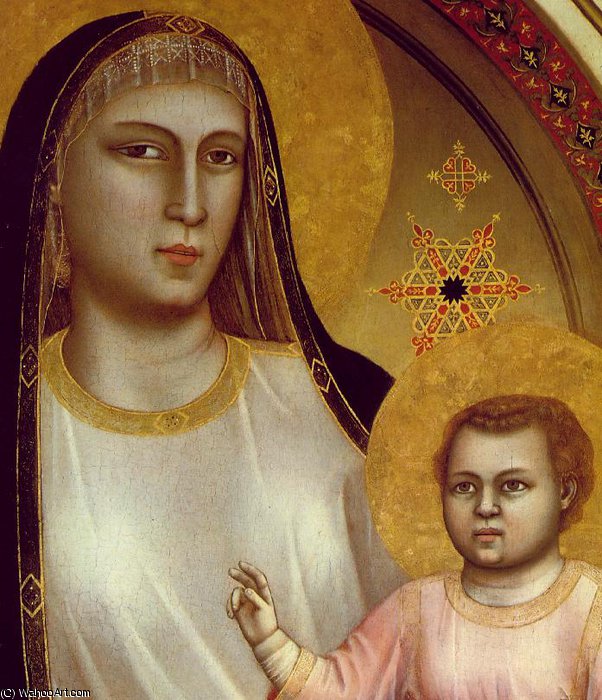
Descubre la obra maestra de Giotto Di Bondone, María en Gloria (c. 1311), una pintura revolucionaria que marcó el inicio del Renacimiento italiano con su innovadora composición y representación naturalista.
Madonna in Glory
The
Madonna in Glory stands as a cornerstone of Renaissance art, born from the visionary brushstrokes of Giotto Di Bondone around 1311. More than just a depiction of Mary and Jesus—a motif central to Christian iconography—this tempera on panel masterpiece embodies Giotto’s revolutionary approach to painting, marking a decisive break from Byzantine conventions and establishing a new aesthetic standard that would reverberate throughout subsequent artistic movements. Its current home is the Musée National de la Renaissance in Écouen, France, where visitors can immerse themselves in the grandeur of French Renaissance art alongside this iconic work.
A Pioneering Vision
Giotto’s genius resided not merely in his technical skill but in his profound understanding of human emotion and spatial realism—concepts previously sidelined by Byzantine artistic dogma. Unlike the flattened figures and shimmering gold backgrounds characteristic of earlier eras, Giotto imbued his Madonna with palpable presence, capturing a sense of movement and depth that captivated audiences and profoundly influenced generations of artists to come. This wasn’t simply about replicating what was seen; it was about conveying what was felt—a feat achieved through meticulous observation and masterful manipulation of perspective, techniques that would become hallmarks of the Renaissance itself.
Compositional Innovation
The painting's composition is deliberately striking. Mary sits majestically upon a throne elevated by clouds, symbolizing divine authority and grace. Her gaze directs towards Jesus nestled securely in her lap—a gesture conveying tenderness and protection. Surrounding them are two figures on the left side and one near the top right corner, adding layers of complexity to the scene and enriching its narrative dimension. These additions aren’t mere decorative flourishes; they contribute to a carefully constructed visual hierarchy that reinforces the central theme of motherhood and divine grace. Giotto's use of light—particularly radiant rays emanating from God—further enhances the painting’s spiritual impact, illuminating Mary and Jesus with an ethereal glow.
Influence Beyond Technique
Giotto Di Bondone’s legacy extends far beyond his mastery of technique; he fundamentally reshaped Western artistic thought. His insistence on portraying figures as three-dimensional beings—a radical departure from Byzantine tradition—established a precedent for subsequent artists who sought to capture the natural world with unprecedented accuracy. Consider, for example, the monumental frescoes adorning San Francesco’s Basilica in Assisi – Giotto's ambitious undertaking that cemented his reputation as a visionary innovator. To delve deeper into Giotto’s life and artistic endeavors, visit his page on ArtsDot:
Giotto Di Bondone.
Experience the beauty of Madonna in Glory and other Renaissance masterpieces at ArtsDot.
Discover more about the Musée National de la Renaissance and its collection on Wikipedia:
Musée National de la Renaissance.