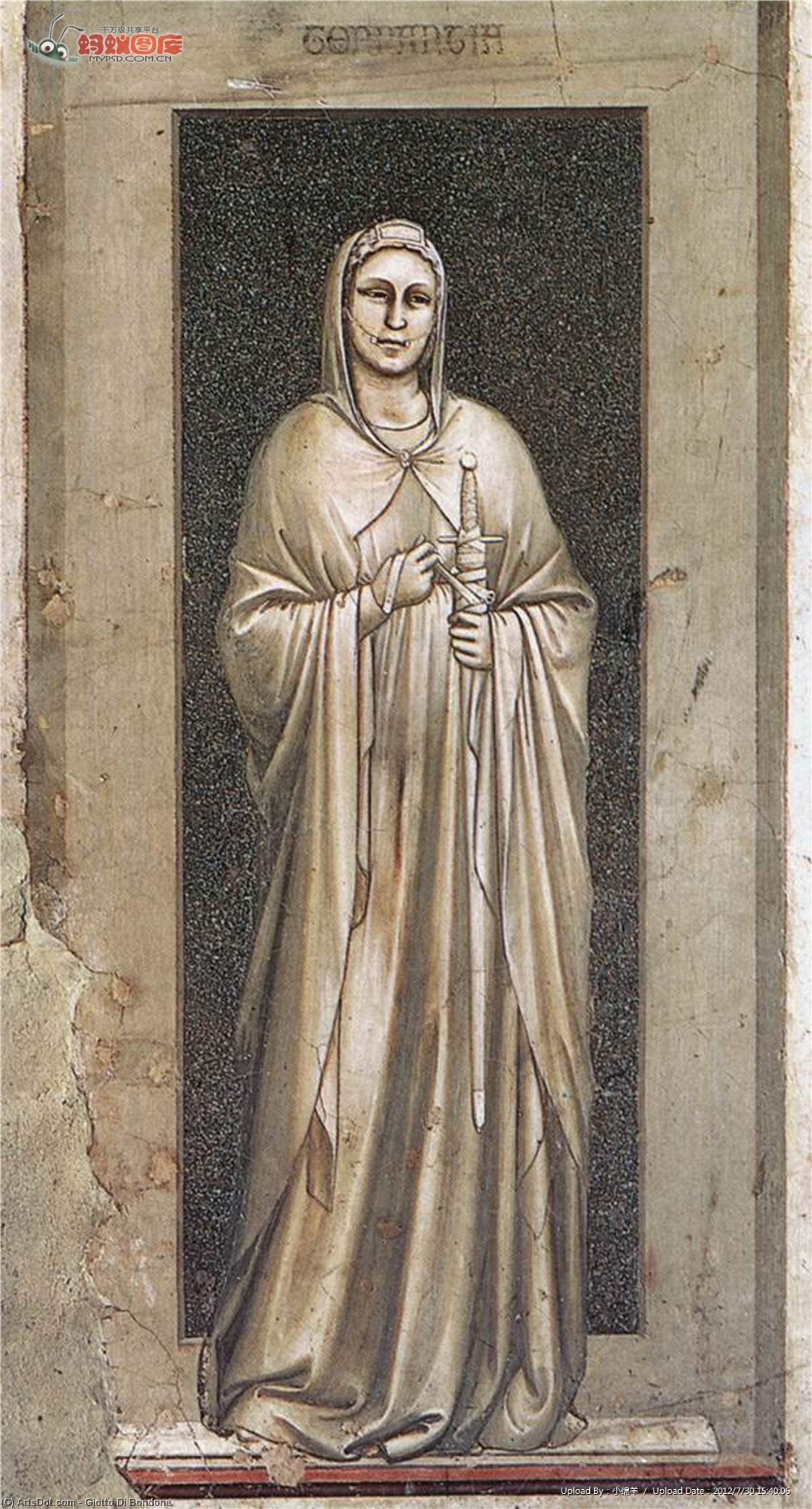
No. 42 The Seven Virtues: Temperance
Giotto di Bondone’s “No. 42 The Seven Virtues: Temperance,” created in 1306, stands as a cornerstone of Early Renaissance art and embodies the profound spiritual ideals of its time. Located within the Cappella Scrovegni in Padua, Italy—a chapel commissioned by Enrico Scrovegni to commemorate his deceased son—this fresco is more than just pigment on stone; it’s a meticulously crafted meditation on balance and moderation, rendered with unparalleled naturalism for the period. Giotto's genius wasn’t merely technical prowess but an ability to convey emotion and psychological depth – qualities that distinguish him from his Byzantine predecessors and firmly establish him as the father of Western painting.
The Painting: A Symbolic Portrait
The central figure is a woman draped in flowing white robes, symbolizing purity and chastity—the very essence of Temperance. Her serene gaze directs upwards, conveying inner peace and contemplation. Giotto’s masterful use of chiaroscuro – the dramatic interplay between light and shadow – sculpts her form with remarkable realism, capturing subtle nuances of musculature and drapery folds that would become hallmarks of Renaissance art. She holds a book or scroll in one hand, representing wisdom and knowledge—the antithesis of excess—while her other hand grasps an object resembling a cross, signifying faith and spiritual devotion. This juxtaposition underscores the virtue’s core message: achieving harmony between opposing forces is paramount to moral excellence.
Context Within Cappella Scrovegni
The Cappella Scrovegni itself represents a monumental undertaking driven by piety and artistic ambition. Constructed between 1303 and 1305, it houses a cycle of frescoes depicting scenes from the Life of Christ and the Virgin Mary—a testament to Giotto’s transformative influence on artistic expression. The chapel's austere interior contrasts sharply with the vibrant colors and emotive depictions within, creating an immersive experience for viewers that reflects the spiritual fervor of the era. Enrico Scrovegni’s desire to atone for his sins solidified the chapel’s significance as a site of pilgrimage and artistic contemplation.
Giotto’s Legacy: A Revolution in Representation
Before Giotto, Byzantine art favored stylized figures and flattened perspectives—a stylistic convention rooted in theological dogma rather than observation of the natural world. Giotto decisively rejected this approach, prioritizing anatomical accuracy and psychological realism—techniques that would revolutionize painting for centuries to come. His frescoes demonstrate a profound understanding of human anatomy and emotion, capturing expressions of grief, joy, and compassion with breathtaking sensitivity. This pioneering spirit cemented Giotto’s place as one of the most influential artists in history, shaping the trajectory of Western art and inspiring generations of painters who followed.
- Artist: Giotto di Bondone (1267-1337)
- Date: 1306
- Location: Cappella Scrovegni, Padua, Italy
- Medium: Fresco
- Style: Proto-Renaissance
For a detailed examination of Giotto’s artistic techniques and the broader context of Early Renaissance art, explore resources at ArtsDot.com.