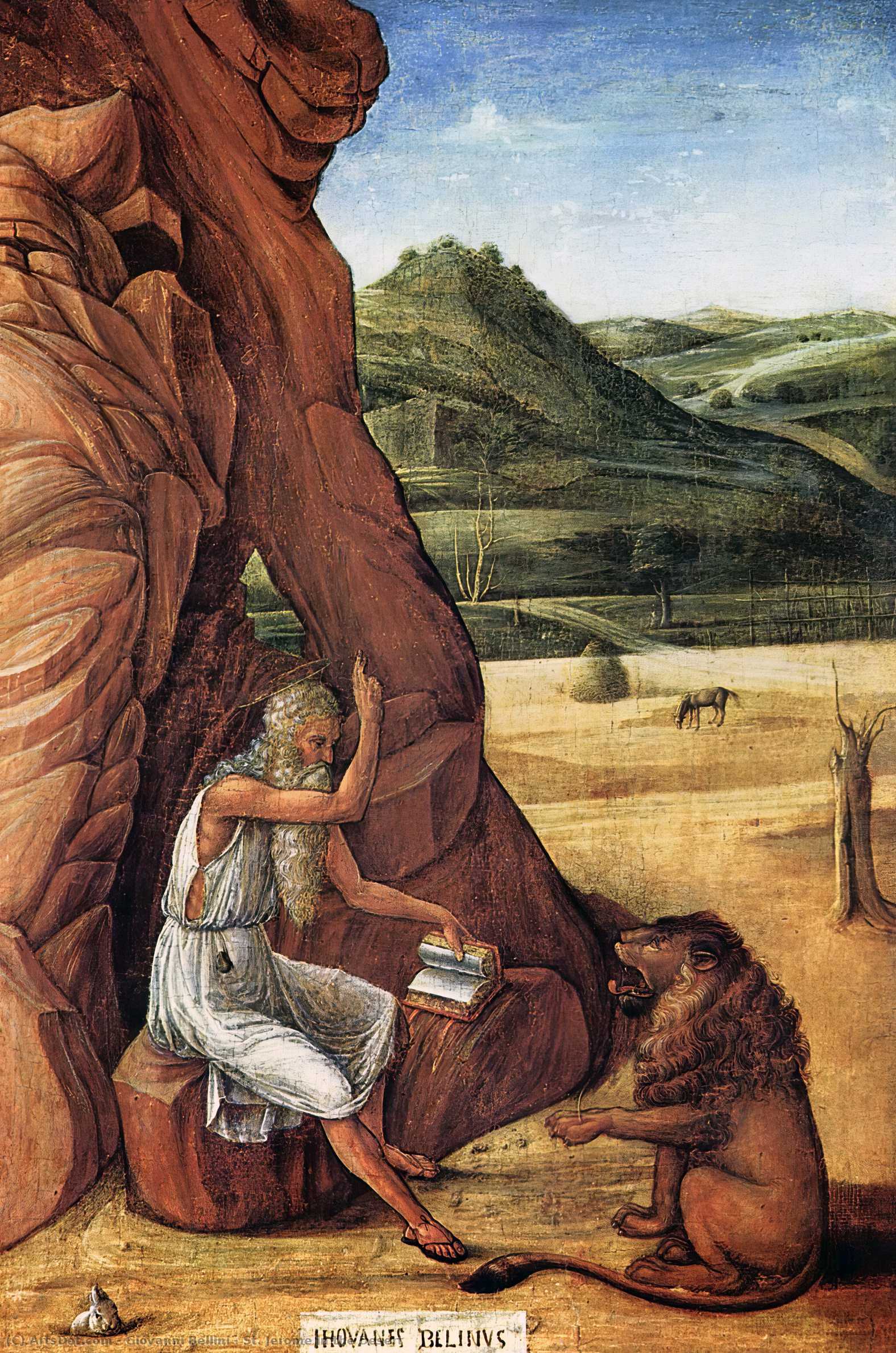
Giovanni Bellini’s ‘St. Jerome in the Desert,’ painted around 1450, showcases a serene Renaissance scene of the saint amidst a dramatic desert landscape with a lion and other animals. Discover this exquisite hand-painted reproduction and bring timeless beauty into your space.
A Meditation on Solitude: Giovanni Bellini’s St. Jerome in the Desert
Giovanni Bellini's St. Jerome in the Desert, painted around 1450, is more than a depiction of a biblical scene; it’s an intensely personal meditation on solitude, faith, and the arduous path to spiritual enlightenment. Executed during a pivotal moment in Venetian art history – bridging the opulent Byzantine traditions with the nascent Renaissance humanism – this work exemplifies Bellini's mastery of color, composition, and psychological depth. Measuring 44 x 23 cm, its intimate scale invites viewers into a profoundly contemplative space, mirroring the saint’s own internal struggle.
- Subject Matter: The painting portrays St. Jerome, renowned for his ascetic life and dedication to monasticism, as he sought refuge in the desolate Egyptian desert to combat his temptations. This iconic image, central to Christian iconography, represents a profound commitment to prayer, self-discipline, and divine guidance.
- Composition & Technique: Bellini’s technique is characterized by its subtle gradations of color and meticulous attention to detail. The use of oil paint allows for a luminous quality, particularly evident in the rendering of light on the rock Jerome sits upon and the textures of the animals surrounding him. Note the careful modeling of Jerome's figure, conveying both physical weariness and an inner strength.
The Symbolism of the Desert Landscape
The dramatic backdrop of towering mountains – a frequent motif in Venetian art reflecting the lagoon’s influence – isn’t merely a scenic element; it serves as a potent symbol. The vast, unforgiving desert represents the challenges and temptations Jerome faces in his spiritual journey. The presence of the lion, often interpreted as representing Christ or divine protection, underscores this theme. The inclusion of other animals—a dog, a horse, and a bird—adds layers of symbolic meaning, potentially alluding to aspects of human nature and the animal kingdom’s connection to the divine. The placement of these creatures within the composition creates a dynamic tension, reflecting Jerome's internal battle.
A Venetian Master at Work
Giovanni Bellini was a key figure in Venice’s artistic landscape during the 15th century. His work demonstrates a remarkable ability to synthesize Byzantine influences – particularly evident in his use of rich color palettes and flattened perspectives – with the emerging Renaissance emphasis on naturalism and psychological realism. Bellini's workshop, steeped in tradition yet open to innovation, produced works that were highly sought after by both religious institutions and private collectors. This painting showcases his skill in creating a sense of atmosphere and emotion through subtle shifts in color and light, anticipating the developments of Venetian painting in the following century.
Emotional Impact & Artistic Legacy
St. Jerome in the Desert possesses a remarkable emotional resonance. The solitary figure of Jerome, rendered with quiet dignity and vulnerability, invites viewers to contemplate their own struggles with temptation and the pursuit of spiritual truth. Bellini’s masterful handling of light and shadow creates a sense of depth and atmosphere, drawing us into the scene and fostering a profound connection with the subject. This work stands as a testament to Bellini's artistic genius and his enduring contribution to the history of Venetian painting – a legacy that continues to inspire and captivate audiences today.