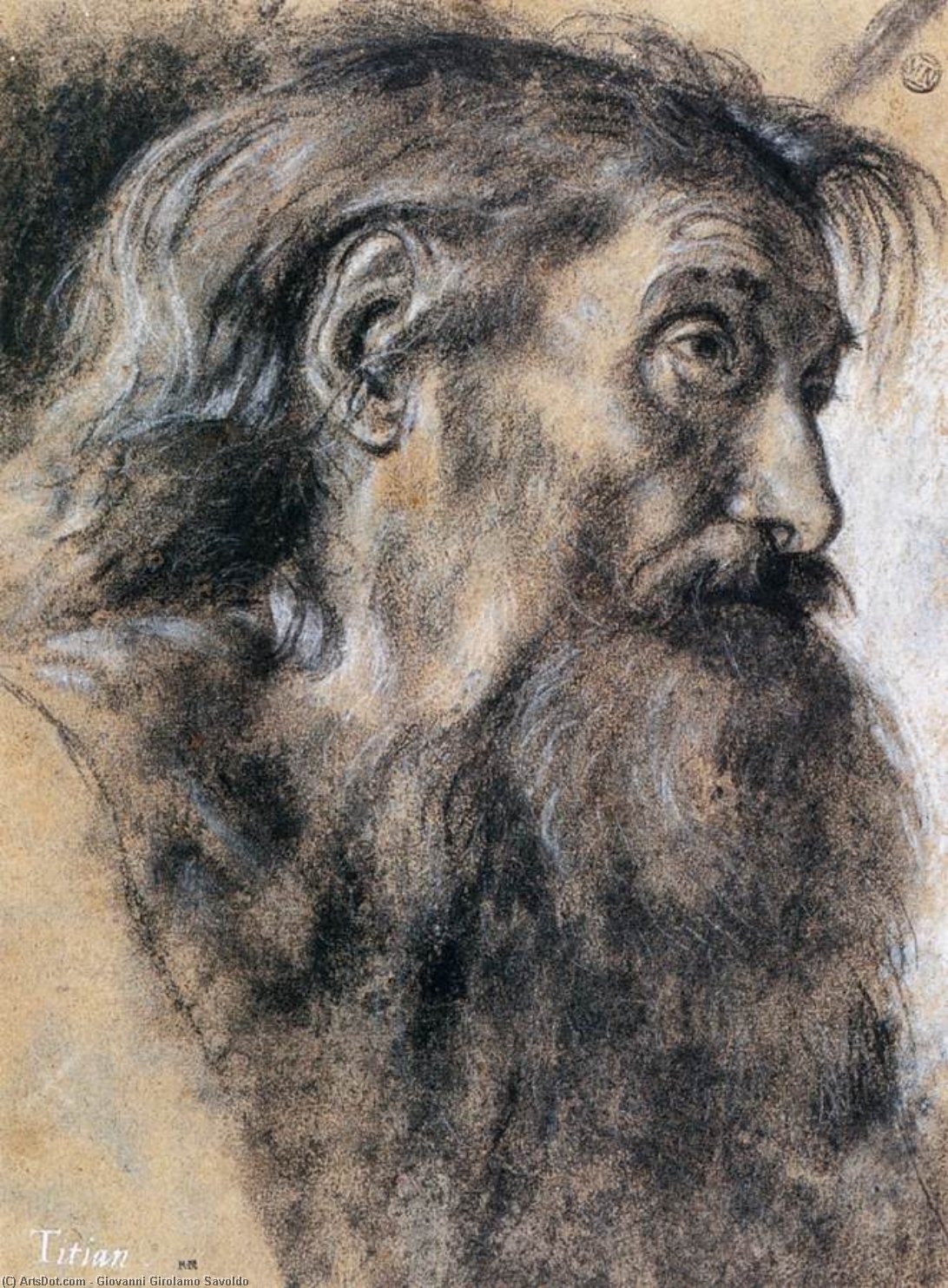
Explore Giovanni Savoldo’s 'Head of St Jerome' (1525). A stunning charcoal drawing showcasing Renaissance realism & emotional depth. Discover this masterpiece's texture, shading & contemplative gaze.
Giovanni Savoldo fue un pintor veneciano del Renacimiento que destacó por su uso de claroscuro suave, escenas religiosas realistas y retratos expresivos. Reconocido por obras maestras como "Saint Matthew and the Angel" y "The Portrait of Gaston de Foix", este artista fusionó elementos lombardos con influencias flamencas para crear una estética única que sigue fascinando a los historiadores del art
Descubre el Louvre en París: hogar de obras icónicas como la Mona Lisa y Venus de Milo. ¡Viaja por la historia del arte desde Egipto hasta iconos renacentistas! Planifica tu visita hoy.
París
Francia
Un Palacio Forjado a Través del Tiempo: Revelando el Alma del Louvre
El Musée du Louvre no es simplemente un edificio que alberga obras maestras; es un palimpsesto grabado en piedra y lienzo, susu
A Portrait Steeped in Contemplation: Giovanni Savoldo’s ‘Head of St Jerome’
Giovanni Girolamo Savoldo (c. 1480 – after 1548) remains an enigmatic figure within the Venetian Renaissance, a painter whose oeuvre—approximately forty canvases—commands considerable admiration for its unparalleled blend of Northern European realism and Lombard artistic sensibilities. Despite scholarly debate surrounding his precise birthplace and formative years, Savoldo’s contribution to art history is undeniable; he achieved renown primarily through his drawings and continues to intrigue researchers who meticulously scrutinize the chronology of his paintings and grapple with questions concerning attribution disputes. His singular style—characterized by a masterful manipulation of light and shadow—established him as one of the foremost practitioners of Lombard modeling, a technique that distinguishes itself from its Florentine counterpart through an emphasis on subtle tonal gradations and textural nuances.
The Subject Matter: A Study in Dignified Aging
‘Head of St Jerome,’ executed around 1525, exemplifies Savoldo’s preoccupation with portraying human emotion and psychological complexity within the confines of religious iconography. The portrait depicts an elderly man's head and upper torso—a deliberate choice reflecting Savoldo’s artistic inclination toward introspective contemplation rather than grand narrative scenes. The subject’s gaze is direct yet melancholic, conveying a profound sense of inner reflection and perhaps hinting at the burdens borne by age and experience. This careful observation of human anatomy and expression distinguishes Savoldo's work from many of his contemporaries who favored idealized representations. He eschewed conventional artistic conventions to capture the essence of humanity—the vulnerability inherent in aging alongside the steadfastness of spirit.
Technique: Charcoal’s Dance with Light
Savoldo’s technique is fundamentally drawing-based, utilizing charcoal sticks and blending tools to achieve astonishing levels of tonal accuracy and textural detail. The artist employs a layered approach, applying charcoal strokes with varying degrees of pressure to build up subtle gradations of tone—a hallmark of Lombard painting—that illuminate the contours of the face and torso. Lines are predominantly dark and meticulously crafted, creating a palpable sense of depth and volume; they intertwine to sculpt the musculature beneath the skin and delineate the folds of drapery with remarkable precision. Furthermore, Savoldo skillfully incorporates loose charcoal application in certain areas, introducing an element of impressionistic nuance that enhances the overall textural richness of the composition. This deliberate manipulation of light and shadow—a cornerstone of Renaissance artistry—transforms the drawing into a luminous study of human form.
Historical Context: Venetian Artistic Innovation
Savoldo’s artistic endeavors unfolded during a period of fervent cultural exchange between Northern Europe and Italy, specifically Venice. The Venetian Republic fostered an environment conducive to experimentation and innovation, attracting artists from across Christendom who sought to refine their craft amidst the city's cosmopolitan atmosphere. Savoldo’s stylistic choices—his meticulous anatomical rendering and his nuanced portrayal of emotion—were undoubtedly influenced by developments in Flemish painting, where artists like Jan van Eyck championed realism and psychological insight. Yet, Savoldo remained firmly rooted in Lombard artistic traditions, prioritizing textural modeling and tonal subtlety over flamboyant ornamentation—a distinction that underscores the enduring legacy of Savoldo’s singular vision.
Symbolism: Beyond Mere Representation
While ostensibly a portrait depicting St Jerome—the patron saint of contemplation—‘Head of St Jerome’ transcends mere visual representation to convey deeper symbolic meanings. The man's solemn gaze and furrowed brow encapsulate the spiritual quest for inner peace and moral fortitude—themes central to Christian theology. Savoldo’s masterful rendering captures not only physical likeness but also psychological state, inviting viewers to contemplate the complexities of human experience and the enduring power of faith. The drawing serves as a testament to Savoldo's ability to imbue his artwork with profound emotional resonance—a characteristic that elevates it beyond the realm of decorative art into the domain of contemplative reflection.