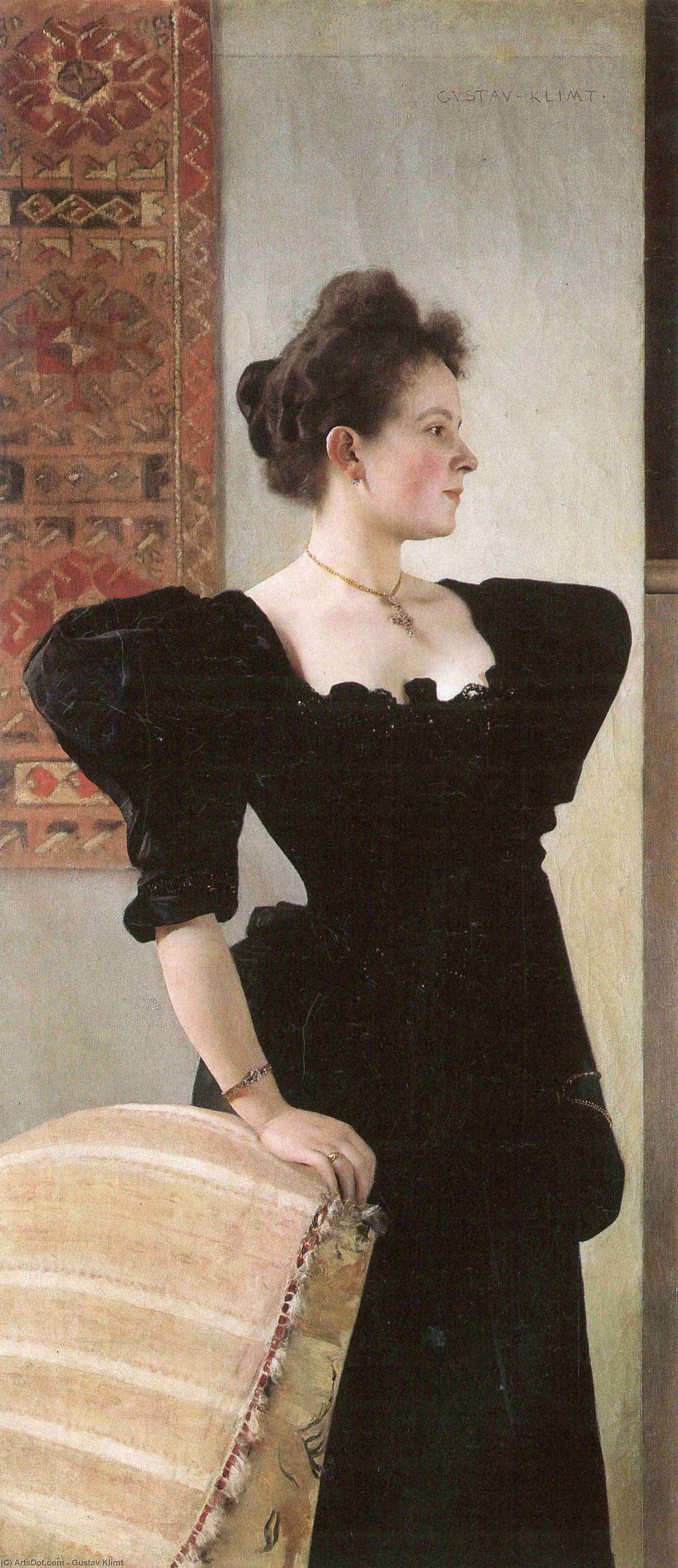
El retrato de Marie Breunig, obra maestra de Gustav Klimt (1894), ejemplifica el estilo temprano del pintor austriaco con detalles impresionistas y una composición innovadora que refleja la sensibilidad artística de la época Secessionista Vienesa. ¡Descubre más!
Portrait of Marie Breunig
Gustav Klimt’s “Portrait of Marie Breunig,” completed in 1894, stands as a cornerstone of his early Symbolist style and an emblem of the Vienna Secession movement. This monumental oil painting on canvas captures the essence of Viennese bourgeois life during the late nineteenth century—a period marked by artistic experimentation and social upheaval. Klimt’s meticulous attention to detail and masterful use of texture elevate this portrait beyond mere representation, transforming it into a profound meditation on femininity and beauty.
The Subject: Marie Breunig
Marie Breunig was the wife of Josef Breunig, a prominent Viennese baker—a figure representing stability and prosperity within the burgeoning Austro-Hungarian Empire. Klimt skillfully portrays her back turned to the viewer, emphasizing her grace and poise while simultaneously creating an aura of mystery. The pose is deliberate, inviting contemplation rather than direct engagement, reflecting the Symbolist preoccupation with psychological depth. Her dress, rendered in muted tones and adorned with subtle floral motifs—a hallmark of Klimt’s decorative sensibilities—suggests refinement and understated elegance.
Artistic Style
“Portrait of Marie Breunig” exemplifies Klimt's distinctive blend of realism and Symbolism. While the painting adheres to a degree of anatomical accuracy, it transcends mere observation through the incorporation of opulent ornamentation—particularly gold leaf—a technique borrowed from Byzantine mosaics and reflecting Klimt’s fascination with religious iconography. The shimmering gold subtly illuminates Marie’s skin tone and drapery, symbolizing purity and spiritual enlightenment. Klimt's brushstrokes are loose and expressive, creating a textured surface that captures the luminescence of light and imbues the painting with an ethereal quality. This stylistic choice distinguishes it from academic conventions prevalent at the time and firmly establishes Klimt as a pioneer of modern art.
Historical Context
The late nineteenth century witnessed significant shifts in artistic sensibilities—a rejection of traditional realism in favor of subjective experience and emotional resonance. Klimt’s embrace of Symbolism coincided with broader intellectual currents questioning established norms and exploring esoteric ideas. The Secession movement, founded by Klimt and other artists disillusioned with the conservative Austro-Hungarian Academy of Fine Arts, championed innovation and challenged artistic dogma. Klimt's work served as a powerful critique of bourgeois materialism and celebrated the beauty of female subjectivity—a theme that would recur throughout his oeuvre.
Relevance Today
“Portrait of Marie Breunig” continues to captivate audiences with its exquisite craftsmanship and evocative symbolism. Its enduring appeal lies in Klimt’s ability to distill complex emotions into a single visual image—a testament to the power of art to transcend time and culture. For interior designers seeking inspiration or collectors pursuing exceptional pieces of Viennese Symbolism, this painting represents an unparalleled opportunity to experience the artistic genius of Gustav Klimt firsthand. Its luminous gold leaf and delicately rendered textures evoke the grandeur of Byzantine churches and invite viewers into a realm of beauty and contemplation.
Experience the beauty of Gustav Klimt's work with handmade oil painting reproductions from ArtsDot. For more information on Gustav Klimt and his works, visit
ArtsDot.