El Canto de los Cantos: Un Viaje al Corazón del Simbolismo Moreau
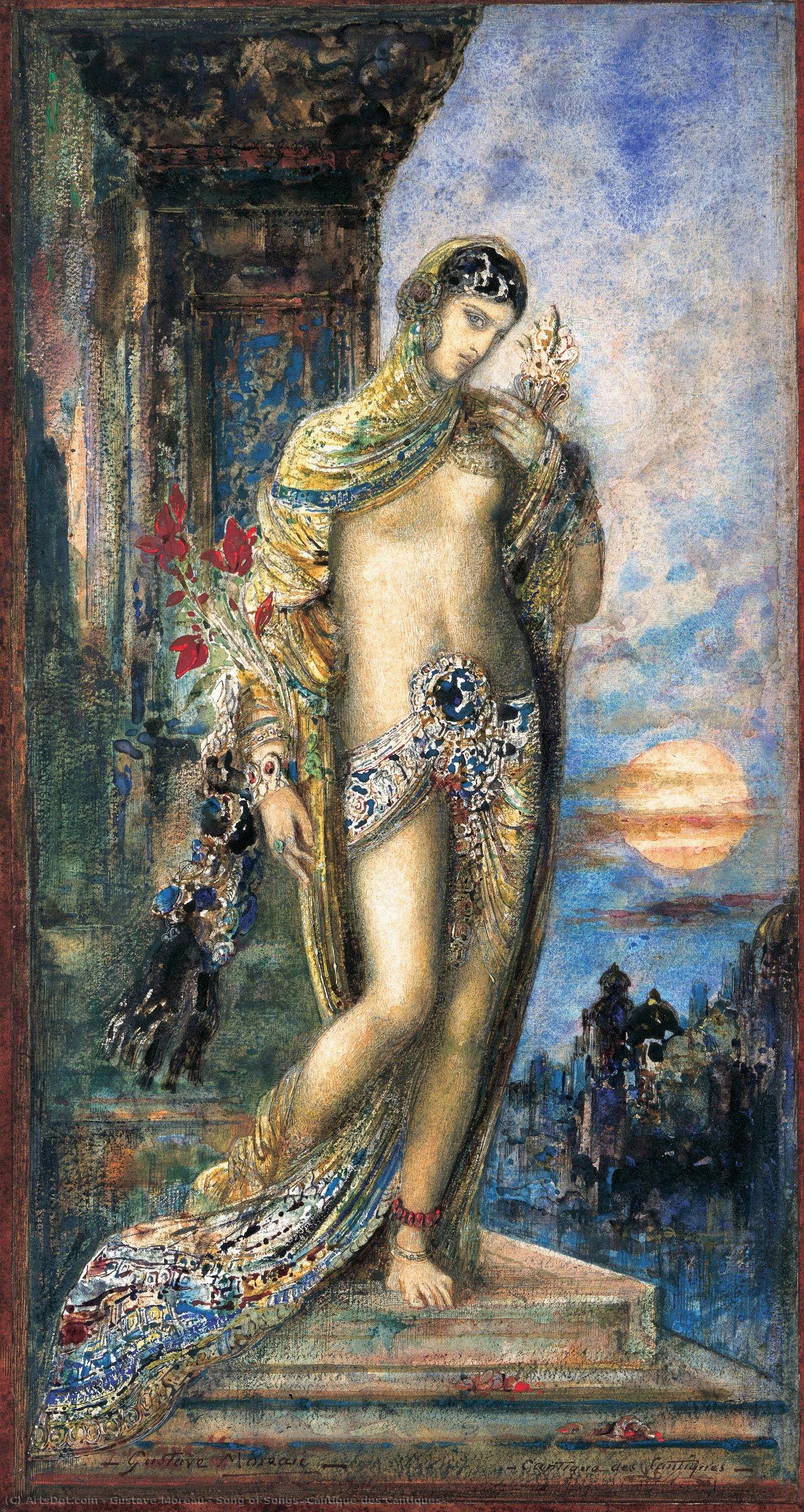
Gustave Moreau’s “Song of Songs” (Cantique des Cantiques), painted in 1893, isn't merely a watercolor; it’s an immersion into the richly layered world of Symbolist thought. This intimate scene, rendered with meticulous detail and a hauntingly beautiful palette, captures a moment suspended between earthly desire and celestial grace. The painting immediately draws the eye to its central figure – a woman standing on a pedestal, her hands clasped to her face in a gesture of both vulnerability and profound contemplation. Her veiled head suggests an otherworldly presence, hinting at a goddess or angel, while her dress, though simple, speaks of classical beauty and timelessness. Moreau masterfully employs light and shadow, bathing the scene in a warm, diffused glow that emanates from the unseen sun, creating an atmosphere of serene mystery.
La Técnica y el Estilo: Un Legado Académico con un Toque Onírico
Moreau’s artistic training at the École des Beaux-Arts instilled in him a rigorous understanding of technique – a foundation built upon meticulous observation and masterful rendering. However, he deliberately subverted these traditional academic principles, rejecting the pursuit of photographic realism in favor of an intensely subjective and symbolic approach. Notice the incredibly detailed brushwork; each fold of fabric, each strand of hair, is rendered with painstaking precision. Yet, this technical virtuosity serves not to depict reality, but to amplify the painting’s dreamlike quality. The colors are muted yet luminous, creating a sense of depth and atmosphere that transcends mere representation. Moreau's use of watercolor allows for delicate washes and subtle gradations, perfectly capturing the ethereal mood he sought to evoke.
Simbolismo y Mitología: Un Universo Interior
“Song of Songs” is deeply rooted in the rich tapestry of mythology and religious symbolism. The title itself, taken from the Song of Solomon in the Bible, represents a passionate love song between two lovers. Moreau, however, transcends this literal interpretation. The pedestal upon which the woman stands elevates her to a position of divine significance, suggesting an idealized vision of love and beauty. The presence of other figures – a man standing nearby, and two others on the right – hints at a narrative unfolding beyond the immediate scene, inviting the viewer to participate in a complex symbolic drama. The dog at the bottom left corner adds another layer of intrigue, often associated with fidelity and loyalty, further enriching the painting’s multifaceted meaning.
El Contexto Histórico: El Nacimiento del Simbolismo
Moreau was a pivotal figure in the rise of Symbolism – an artistic movement that flourished at the end of the 19th century. Rejecting the materialism and scientific rationalism of the preceding era, Symbolist artists sought to express inner emotions, spiritual truths, and the mysteries of the unconscious through evocative imagery and suggestive symbolism. Moreau’s work reflects this broader intellectual climate, drawing inspiration from medieval art, mythology, and literature. “Song of Songs” embodies the movement's fascination with dreams, myths, and the exploration of the human psyche – a desire to tap into realms beyond the purely observable world. It stands as a testament to Moreau’s ability to translate complex philosophical ideas into a visually arresting and emotionally resonant work of art.
ArtsDot offers exquisite, hand-painted reproductions of Gustave Moreau's "Song of Songs," allowing you to bring this captivating masterpiece into your home or office. Each reproduction is created with the same meticulous attention to detail and vibrant color palette as the original, ensuring an authentic representation of this iconic Symbolist painting. Explore our collection today and discover a timeless work of art that speaks to the heart.