Génie du mal

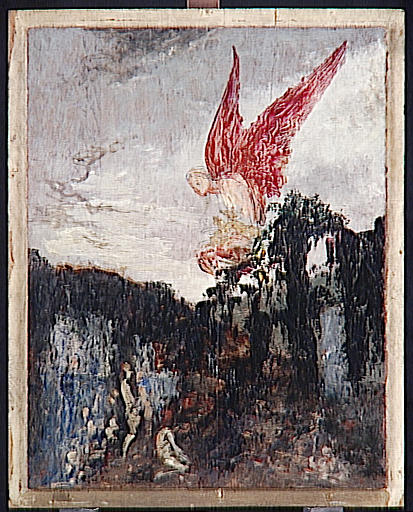
Gustave Moreau’s ‘Génie du mal’ – a dramatic Symbolist painting of an angel in flight. Explore its moody palette, expressive brushwork & spiritual themes. A captivating masterpiece!


Gustave Moreau (1826 - 1898)

Explore la cautivadora obra simbolista de Gustave Moreau (1826-1898). Descubra sus pinturas alegóricas, escenas mitológicas y su influencia en Matisse y Rouault. Visite el Musée Gustave Moreau en París para experimentar el legado de esta figura fundamental.

A Vision of Spiritual Turmoil: Decoding Gustave Moreau’s *Génie du mal*

  • Subject and Composition: *Génie du mal* (“Genius of Evil”) presents a dramatic scene dominated by an ethereal, winged figure – an angel or demon – in dynamic flight above a rugged, mountainous landscape. The composition is powerfully vertical, drawing the eye upwards towards the swirling sky. Below, a cluster of small figures huddles together, seemingly dwarfed by both the landscape and the celestial being above them. This juxtaposition immediately establishes a sense of vulnerability and perhaps impending doom.
  • Style & Historical Context: Painted by Gustave Moreau (1826-1898), this work is a quintessential example of Symbolism, a late 19th-century artistic movement that rejected Realism and Impressionism in favor of exploring subjective emotions, spiritual themes, and the realm of dreams. Moreau was a leading figure within this movement, deeply influenced by Romantic predecessors like Eugène Delacroix, but forging his own unique path through elaborate detail and evocative imagery. *Génie du mal* reflects the Symbolist fascination with mythology, biblical narratives, and the darker aspects of the human psyche.

Technique & The Language of Color

  • Brushwork & Texture: Moreau’s technique is characterized by loose, gestural brushstrokes that create a rich and textured surface. This isn't about precise representation; it’s about conveying feeling and atmosphere. The visible brushwork emphasizes the artist’s hand and adds to the painting’s emotional intensity. The work appears to be executed in oils, allowing for layering and blending of tones.
  • Color Palette & Symbolism: A muted palette of browns, grays, and blues dominates the landscape, creating a somber and melancholic mood. This is dramatically contrasted by the vibrant red used for the angel’s wings and clothing. Red, often associated with passion, danger, and even evil, immediately draws the viewer's eye and underscores the figure’s ambiguous nature – is this a fallen angel or a harbinger of destruction? The atmospheric perspective further enhances the depth and mystery of the scene.

Decoding the Symbolism & Emotional Impact

  • The Angel/Demon: The central figure is deliberately ambiguous. Its angelic form suggests a divine origin, yet its powerful presence and the title *Génie du mal* hint at something far more sinister. This duality reflects the Symbolist interest in exploring the complex relationship between good and evil, heaven and hell.
  • The Huddled Figures: The small group below represents humanity – vulnerable, fearful, and seemingly powerless against forces beyond their control. Their position emphasizes their insignificance in the face of cosmic struggles or divine judgment.
  • Emotional Resonance: *Génie du mal* evokes a powerful sense of unease, mystery, and spiritual longing. It’s a painting that invites contemplation on themes of mortality, faith, and the eternal battle between light and darkness. The dramatic composition and evocative color palette create an immersive experience for the viewer, leaving a lasting emotional impression.

For Collectors & Interior Design

  • A statement piece: A high-quality reproduction of *Génie du mal* would serve as a striking focal point in any room, adding depth and sophistication to the décor.
  • Complementary Styles: The painting’s rich colors and dramatic composition complement both traditional and contemporary interior styles. It pairs well with dark wood furniture, velvet textures, and metallic accents.
  • Evoking Atmosphere: This artwork is particularly suited for spaces intended for contemplation or relaxation – libraries, studies, or bedrooms – where its evocative imagery can create a sense of mystery and intrigue.