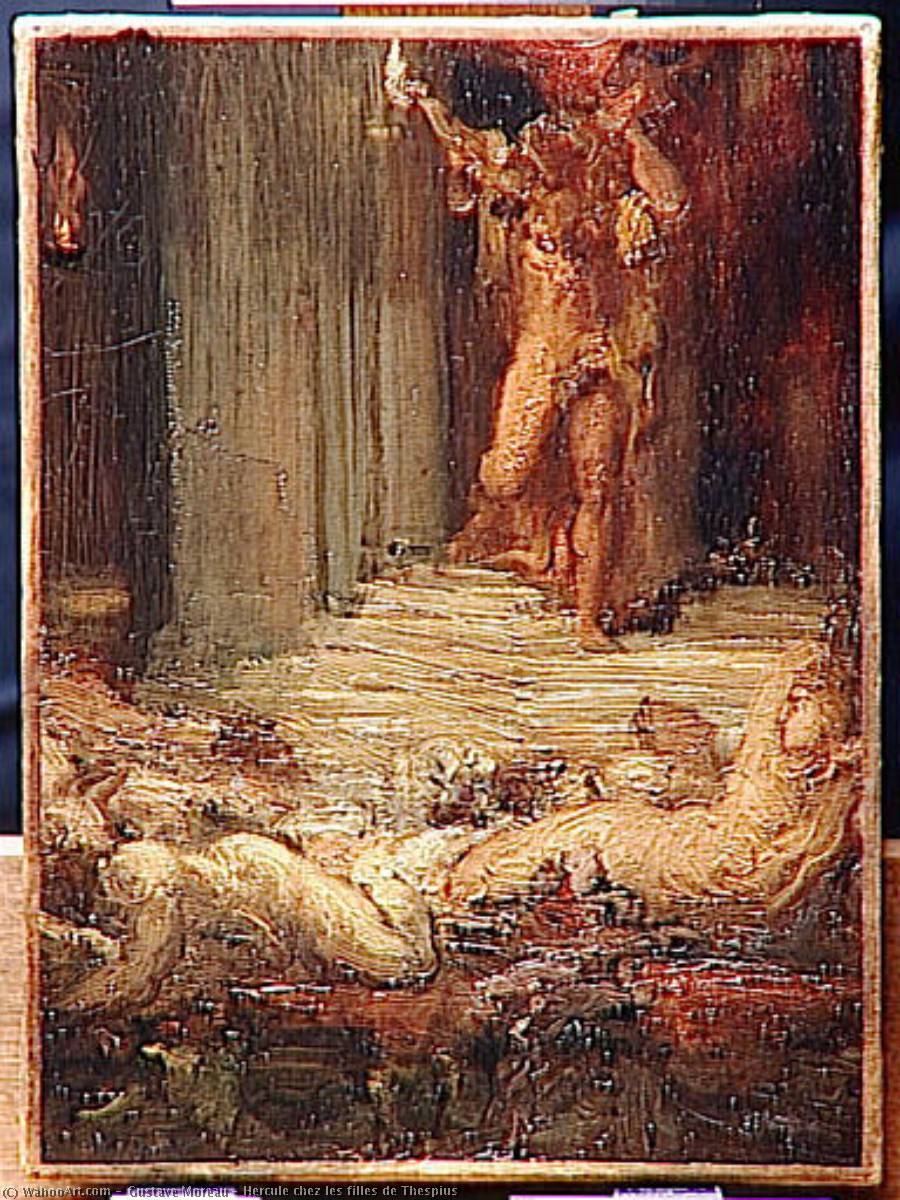
A Descent into Mythic Reverie: Gustave Moreau’s *Hercule chez les filles de Thespius*
Gustave Moreau's Hercule chez les filles de Thespius (Hercules Among the Daughters of Thespius) is not merely a depiction of a classical hero; it’s an immersion into a dreamscape, a meticulously constructed tableau born from the artist’s profound engagement with Symbolist aesthetics. Painted during his lifetime, this work exemplifies Moreau's unique approach – one that deliberately eschewed the naturalism favored by contemporary movements in favor of exploring the realms of myth, religion, and the subconscious. The painting immediately arrests the viewer with its opulent atmosphere, a deliberate layering of textures and colors designed to evoke a sense of timelessness and mystery. Moreau’s meticulous brushwork, combined with his masterful use of color, creates an almost palpable sense of weight and volume, drawing the eye deeper into the scene's enigmatic narrative.
Subject Matter and Narrative Ambiguity
The subject itself – Hercules amidst a group of women identified as the daughters of Thespius – is steeped in Greek mythology. Thespius was the son of Creusa and Electryion, and his abduction by Hercules forms the basis of this particular narrative. However, Moreau doesn’t present a straightforward heroic tale. Instead, he transforms the story into something far more complex and suggestive. The central figure of Hercules, depicted with raised hands, suggests both triumph and vulnerability, while the nude figures surrounding him introduce an element of ambiguity – are they admirers, temptresses, or perhaps even embodiments of temptation itself? This deliberate lack of clarity is a hallmark of Symbolist art, inviting viewers to actively participate in constructing their own interpretations.
Symbolism and the Language of Dreams
Moreau’s work is saturated with symbolism, drawing heavily from sources such as medieval bestiaries, alchemical texts, and esoteric traditions. The opulent setting – reminiscent of a decadent palace or temple – contributes to this sense of otherworldly grandeur. The use of rich jewel tones—deep reds, blues, and golds—evokes a feeling of luxury and spiritual intensity. The inclusion of the naked figures is particularly significant; they represent not just physical beauty but also primal instincts and the untamed forces of nature. Moreau’s meticulous attention to detail – from the intricate folds of drapery to the expressive faces of his figures – creates a world that feels both familiar and utterly alien, mirroring the experience of dreaming.
Technique and Artistic Influences
Moreau's technique is characterized by its meticulous layering of glazes, creating a luminous effect that was revolutionary for its time. He built up his compositions gradually, allowing each layer to dry before applying the next, resulting in a depth and richness of color rarely achieved. His artistic training at the École des Beaux-Arts provided him with a solid foundation in traditional academic techniques, but he quickly surpassed these conventions, developing a highly personal style that combined elements of Byzantine icon painting, Pre-Raphaelite aesthetics, and his own unique Symbolist vision. The influence of artists like William Blake is also evident in Moreau’s exploration of mythology and symbolism.
Emotional Impact and Artistic Legacy
Hercule chez les filles de Thespius possesses a profound emotional impact, inviting viewers to confront themes of desire, temptation, and the struggle between reason and instinct. It’s a painting that lingers in the memory long after viewing, prompting reflection on the nature of myth, beauty, and the human condition. Gustave Moreau's work continues to resonate with audiences today, solidifying his place as one of the most important figures in the Symbolist movement and demonstrating the power of art to transport us beyond the confines of reality.