A Dream Woven in Color: The Ethereal Realm of Les Licornes
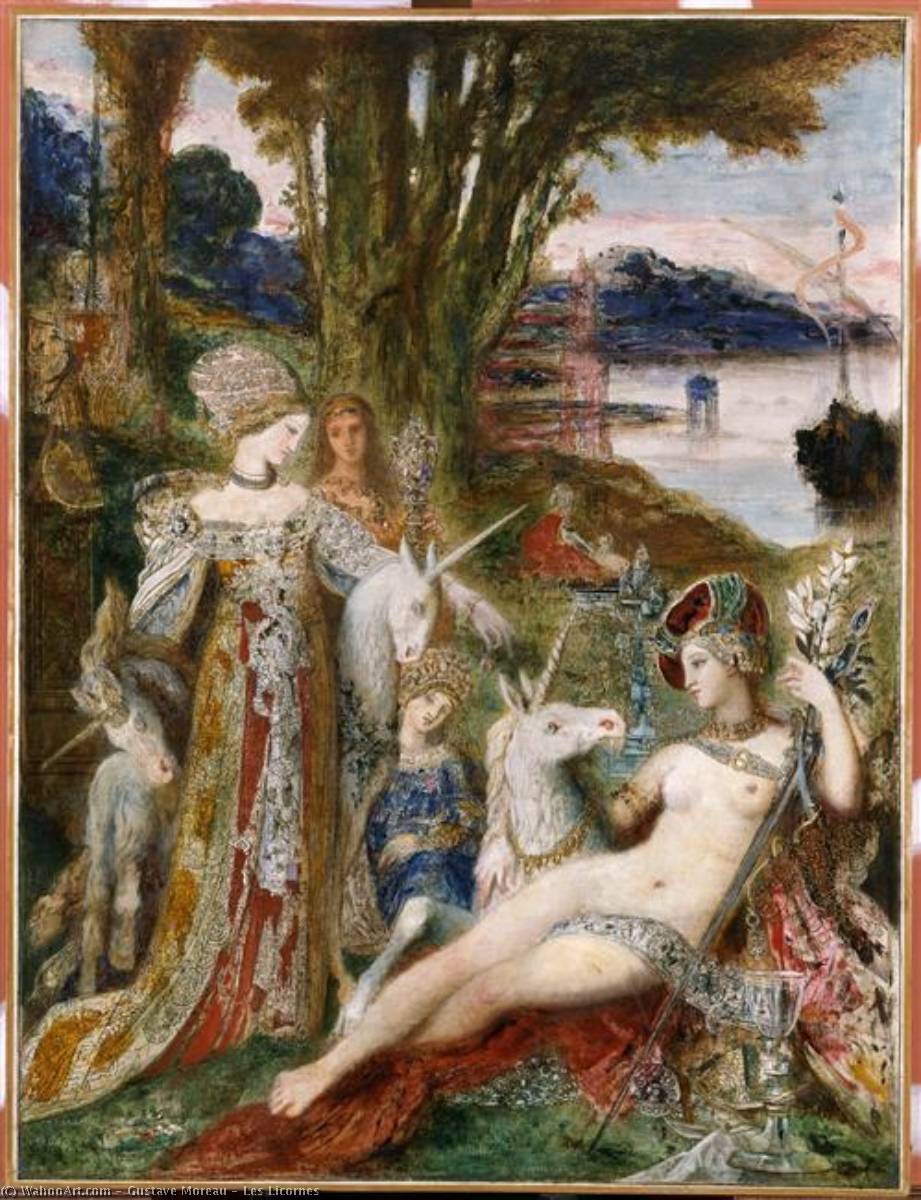
To gaze upon Gustave Moreau’s Les Licornes is to step through a portal, leaving the tangible world behind for a realm where the boundaries between reality and dream dissolve into a shimmering haze. Painted around 1896, this monumental masterpiece stands as a cornerstone of the Symbolist movement, capturing a moment of profound mythic harmony. The canvas does not merely depict a scene; it conjures an atmosphere of enchantment, inviting the viewer into a sacred grove where the air feels thick with magic and ancient secrets. Within this lush, forest setting, unicorns and mermaids gather in a tableau of quiet splendor, their presence evoking a sense of primordial innocence and spiritual grace that resonates deeply within the human psyche.
The composition is a masterful tapestry of mythological figures and natural elements, centered around an ancient tree that serves as a silent witness to this mystical assembly. This motif, often interpreted as the Tree of Life, symbolizes regeneration and divine wisdom, anchoring the fantastical creatures to a deeper, more esoteric meaning. As the eye wanders through the scene, one encounters mermaids resting near the water's edge and human figures interacting with these legendary beings, creating a sense of communal peace. The inclusion of a distant boat adds a layer of narrative mystery, suggesting a journey or a passage between worlds, further enhancing the painting's role as an invitation to contemplate the elusive beauty of the imagination.
The Alchemy of Symbolism and Technique
Moreau’s technical prowess is inseparable from the emotional weight of his subject matter. Eschewing the spontaneous, fleeting brushstrokes of the Impressionists, Moreau embraced a more deliberate and opulent approach. He utilized a meticulous layering of paint, often applying multiple glazes to create a surface texture that seems to glow from within. This technique lends an otherworldly luminosity to the figures, making the unicorns appear as if they are composed of light itself. His palette, characterized by muted yet jewel-toned hues, avoids the harshness of reality, opting instead for a soft, dreamlike spectrum that reinforces the painting's ethereal quality.
Every element in Les Licornes is steeped in symbolic significance, reflecting Moreau’s fascination with medieval folklore and Christian iconography. The unicorn, a perennial symbol of purity and the unattainable, acts as a spiritual anchor for the work. In the context of the late 19th-century fin de siècle—a period marked by profound social anxiety and a growing skepticism toward scientific rationalism—Moreau’s art offered a sanctuary. By turning inward to explore myths and legends, he provided a visual language for the era's longing for transcendence and the expression of complex inner states such as ecstasy, fear, and spiritual yearning.
An Enduring Vision for the Modern Collector
For the discerning collector or interior designer, Les Licornes offers much more than mere decoration; it provides a focal point of profound intellectual and emotional depth. The painting’s ability to transform a space is unparalleled, bringing an aura of sophisticated mystery and quiet contemplation to any setting. Whether placed in a grand gallery or a private study, the artwork serves as a window into a lost world of enchantment, stimulating conversation and inspiring wonder.
Owning a high-quality reproduction of this Symbolist masterpiece allows one to preserve the legacy of Moreau’s visionary spirit. The intricate details—from the delicate scales of the mermaids to the soft texture of the unicorns' coats—are captured with such fidelity that the painting retains its original, haunting beauty. It is an investment in atmosphere, a way to surround oneself with the enduring power of myth and the timeless allure of the dreamscape.