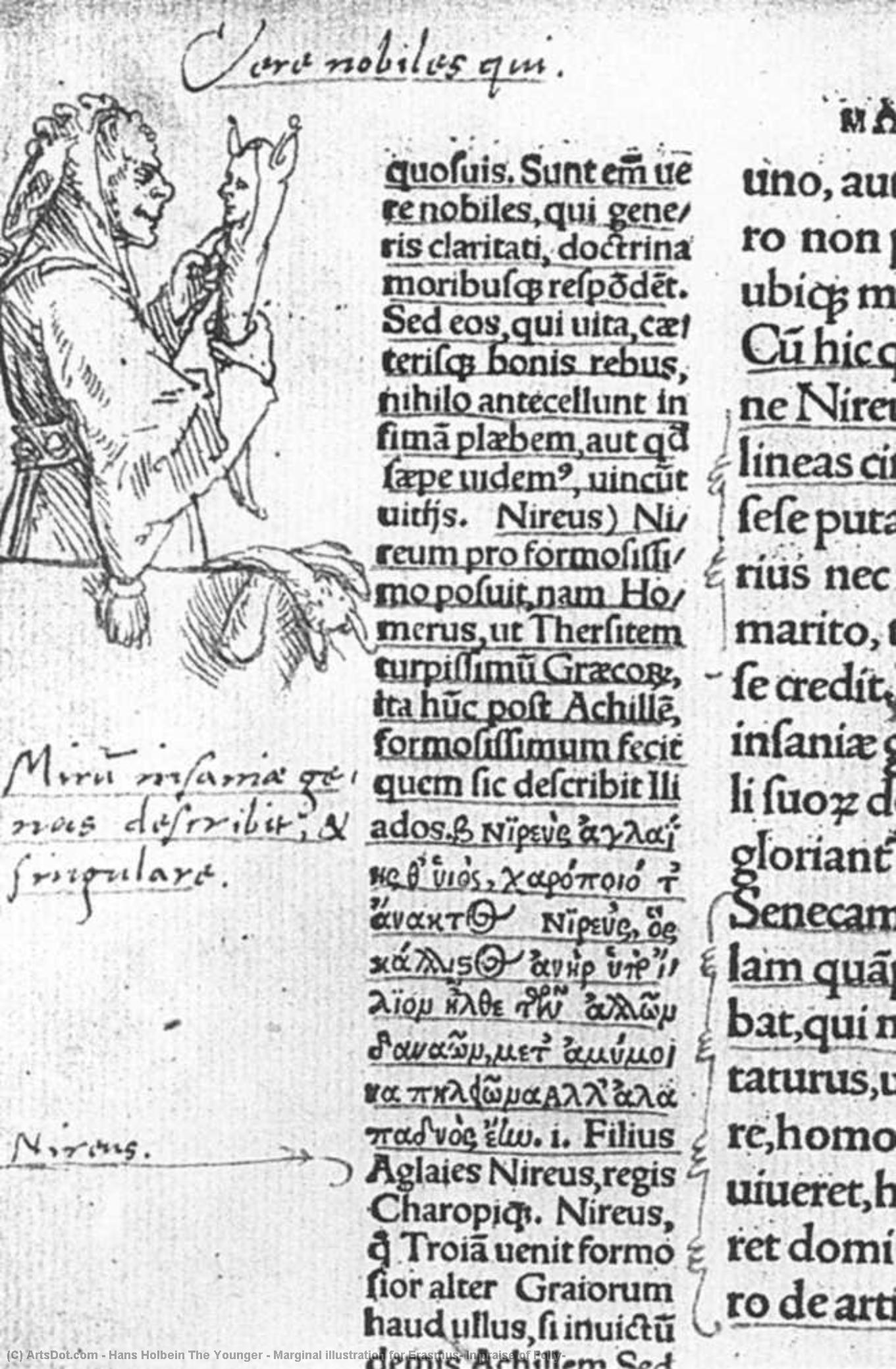
Marginal Illustration for Erasmus ‘In Praise of Folly’
Hans Holbein the Younger's “Marginal illustration for Erasmus ‘In Praise of Folly’” transcends mere visual representation; it embodies the intellectual fervor and humanist spirit of the early sixteenth century. Created in 1515, this monochrome woodcut captures a pivotal moment within Erasmus’s seminal work—a satirical critique of human folly presented as an allegorical narrative.
- Subject Matter: The illustration depicts a man dressed in period attire gesturing upwards with his right hand while holding an open book in his left. This figure embodies wisdom and directs the viewer’s gaze toward something beyond the immediate frame, symbolizing knowledge and contemplation.
- Style & Technique: Holbein's masterful draughtsmanship adheres to Renaissance conventions—characterized by meticulous detail and a restrained palette—emphasizing realism while maintaining stylistic elegance. The woodcut technique itself contributes to the artwork’s aesthetic impact, producing crisp lines and subtle shading that convey depth and texture.
- Historical Context: Produced during Erasmus's time, this illustration reflects the humanist movement’s preoccupation with classical ideals and philosophical inquiry. It aligns perfectly with Erasmus’s own intellectual stance—a blend of erudition and ironic observation—making it a powerful emblem of Renaissance thought.
The composition centers around the central figure, whose posture exudes authority and invites reflection. Surrounding text provides crucial context, reinforcing the illustration's thematic core: the pursuit of wisdom amidst societal folly. The artist’s deliberate use of line and shading elevates this seemingly simple image into a profound statement about human understanding.
More than just a decorative element, “Marginal Illustration for Erasmus ‘In Praise of Folly’” speaks to the enduring fascination with intellectual discourse and moral contemplation—a timeless reminder of the importance of questioning assumptions and embracing critical thinking. Its understated beauty and symbolic richness continue to inspire artists and collectors alike.