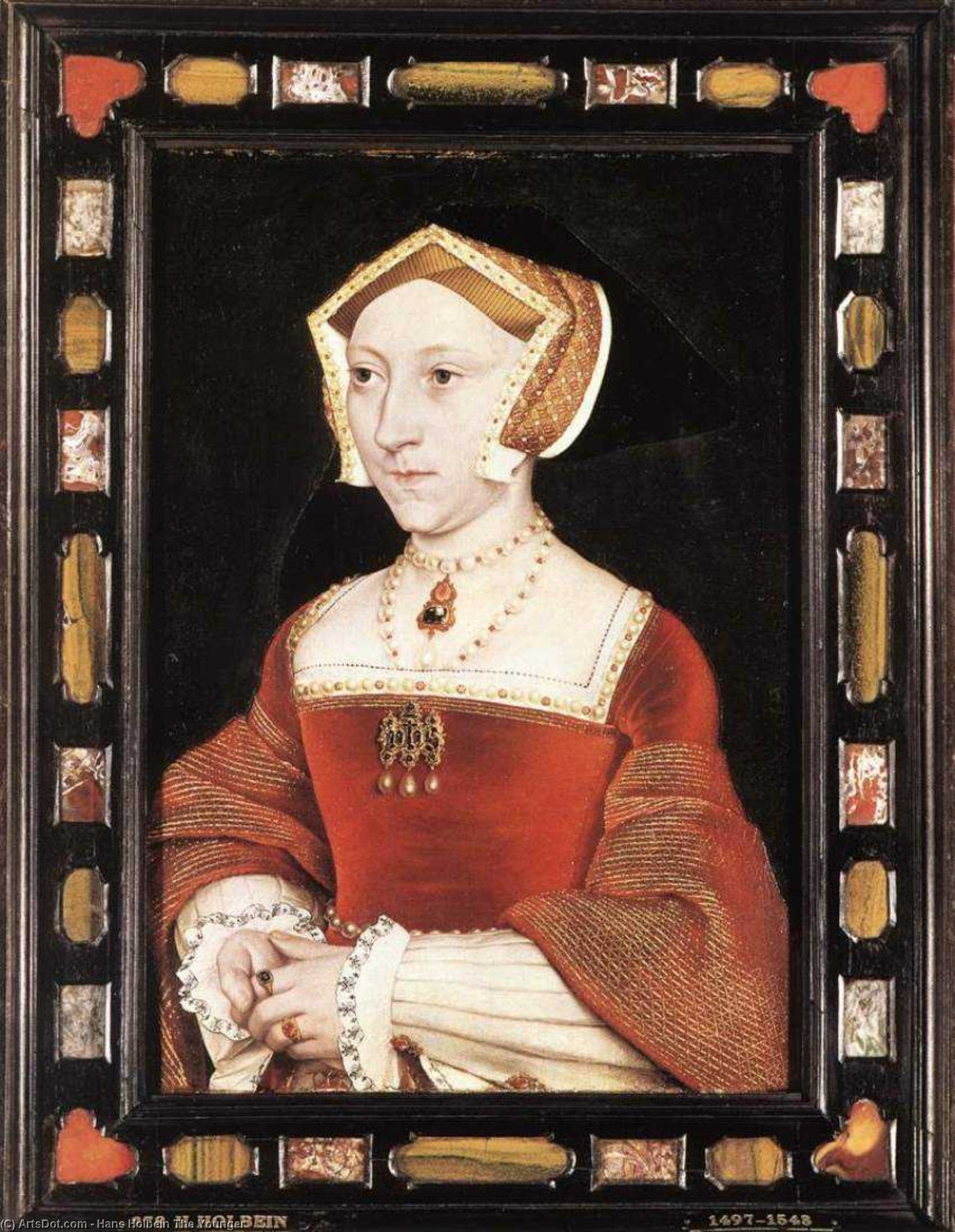
Portrait of Jane Seymour
The
Portrait of Jane Seymour, painted by the renowned German artist
Hans Holbein the Younger in 1537, stands as a testament to Renaissance artistry and psychological portraiture—a captivating artwork that transcends mere likeness to capture the essence of its subject. This oil on oak painting measures 26 x 18 cm and currently resides within the prestigious Mauritshuis museum in The Hague, Netherlands, offering visitors an unparalleled opportunity to contemplate one of Holbein’s most celebrated masterpieces.
The Subject: Jane Seymour
Jane Seymour (c. 1508 – October 24, 1537) holds a poignant place in Tudor history as the third wife of Henry VIII—a woman whose brief reign was marked by both hope and tragedy. Following the tumultuous divorce from Anne Boleyn and her subsequent execution, Jane ascended to the throne amidst considerable public sympathy, fueled by her unwavering devotion to Henry and her fervent desire for him to produce a male heir. Despite achieving this crucial goal with the birth of Prince Edward VI, her life was tragically cut short just twelve days after childbirth due to complications—a poignant reminder of the fragility of existence within the grandeur of royal courts. According to Henry VIII’s wishes, she was interred alongside him at Windsor Castle, ensuring a solemn memorial to her legacy.
The Painting
Holbein's masterful depiction exemplifies the Northern Renaissance style, characterized by its meticulous realism and profound exploration of human emotion. The painting is executed in muted yet luminous colors—primarily black and gold—creating an atmosphere of dignified restraint that contrasts sharply with the flamboyant fashions prevalent during Anne Boleyn’s reign. Jane Seymour is portrayed wearing a sumptuous red gown adorned with a crisp white collar, symbolizing purity and virtue—a deliberate stylistic choice reflecting prevailing moral sensibilities of the era. Her gaze downward, subtly averted from the viewer, lends an air of introspection and vulnerability to her countenance, inviting contemplation on themes of motherhood, faith, and inner resilience. The artist’s painstaking attention to detail—from the delicate folds of fabric to the subtle shading of skin tones—demonstrates Holbein's unparalleled skill in conveying not just physical appearance but also psychological character.
Artistic Significance
This portrait aligns seamlessly with Holbein’s depiction of Jane Seymour in his Whitehall wall-painting, which sadly survives only through a faithful copy by Remigius van Leemput—a remarkable feat of artistic preservation. Furthermore, it adheres closely to Holbein's preparatory drawing, underscoring the artist’s methodical approach to capturing his subjects with unwavering accuracy. The painting serves as an exemplar of Renaissance portraiture, mirroring trends established in Italy and influencing artists across Europe. It represents a pivotal moment in Holbein’s oeuvre—a culmination of his stylistic innovations and a demonstration of his mastery in portraying human psychology within the confines of formal portraiture.
Artist: Hans Holbein the Younger
Hans Holbein the Younger (c. 1497 – 1543) stands as one of the foremost figures of the German Renaissance—a painter whose oeuvre encompasses portraits, religious paintings, and decorative artworks that continue to inspire admiration for their technical brilliance and expressive depth. Born in Augsburg, Germany, Holbein’s artistic training began within his father’s workshop, where he honed his skills alongside Sigismund Holbein—establishing a lineage of accomplished artists dedicated to capturing the human form with unparalleled realism. His work profoundly impacted book design and religious art, cementing his place as a cornerstone of Northern Renaissance aesthetics. For deeper insights into Holbein's artistic journey, explore
Holbein The Younger, Hans: Portrait of Jane Seymour (1509?-1537) and
Holbein The Younger, Hans: Portrait of Robert Cheseman (1485-1547) on ArtsDot.
- Museum: Mauritshuis
- Size: 26 x 18 cm
- Date: 1537
## Further Exploration
Interested in delving deeper into the artistic legacy of Hans Holbein the Younger? Visit
List of paintings by Hans Holbein the Younger on Wikipedia for a comprehensive overview of his prolific output and enduring influence.