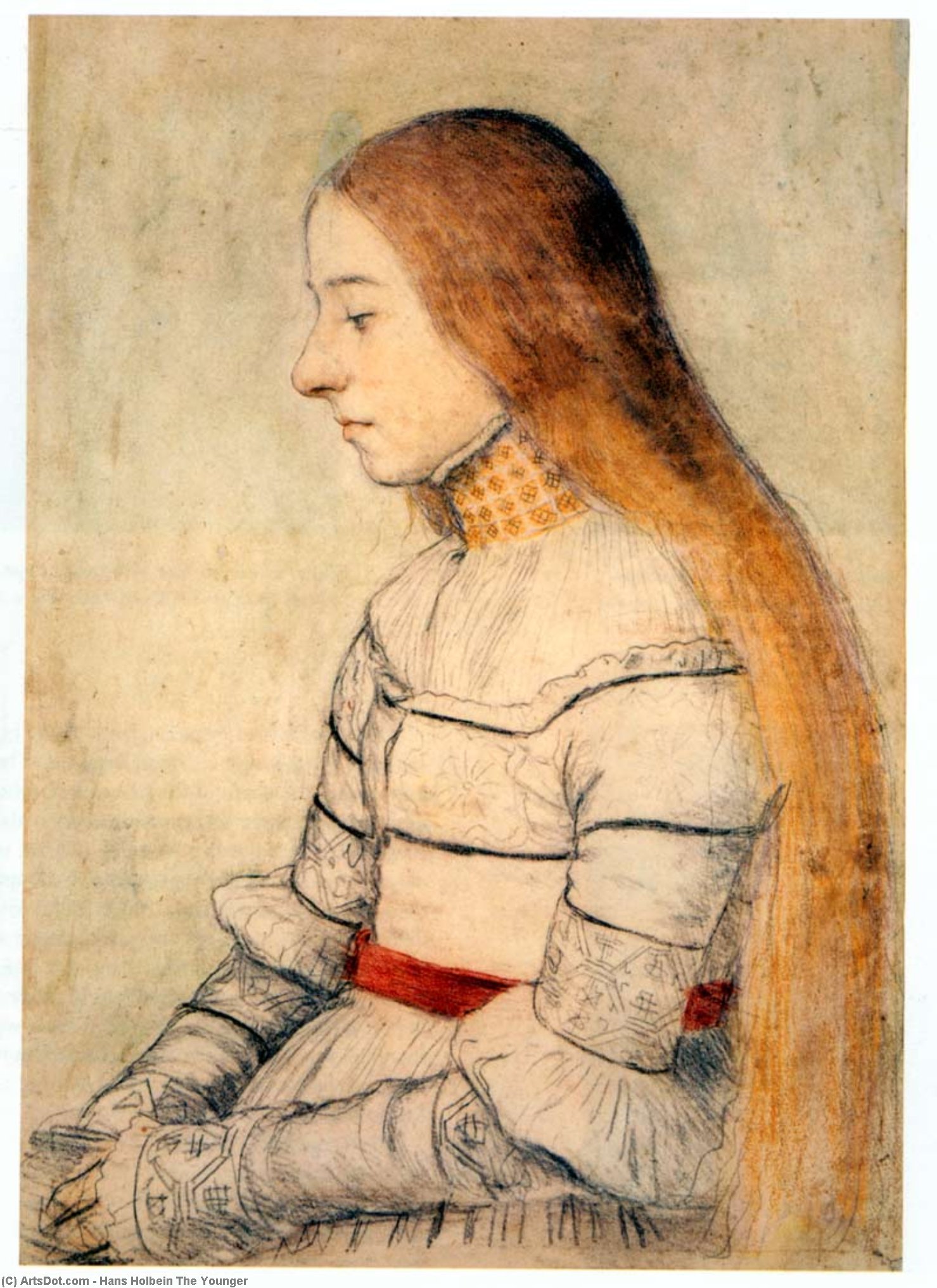
Captured in exquisite detail by Hans Holbein the Younger during the Northern Renaissance, this portrait depicts Anna Meyer with serene contemplation—a masterful depiction of beauty and introspection within a richly ornamented setting.
Hans Holbein el Joven (1497-1543): Maestro del Renacimiento norteño, reconocido por su realismo vívido y por capturar la realeza Tudor como Enrique VIII. Explore sus detallados estudios, composiciones innovadoras y su legado perdurable.
A Portrait of Quiet Reflection: Exploring Hans Holbein the Younger’s “Anna Meyer”
The painting "Anna Meyer," executed by Hans Holbein the Younger in 1526, stands as a testament to the artist's unparalleled ability to convey emotion and intellect through meticulous observation. More than just a depiction of a woman’s face—it’s an invitation into her inner world, captured with astonishing precision against the backdrop of the Renaissance humanist tradition. This portrait transcends mere representation; it embodies the spirit of its time, reflecting the burgeoning interest in psychological realism that characterized the era.
The Artist's Vision: Holbein's Technique and Style
Holbein’s mastery lay not only in his technical prowess but also in his stylistic choices. He employed oil paint on panel—a technique favored by artists seeking luminosity and depth—allowing him to achieve a remarkable level of detail that would become synonymous with his oeuvre. The artist meticulously rendered Anna Meyer's skin tones, capturing subtle variations in hue and texture, demonstrating an unwavering commitment to anatomical accuracy. Furthermore, Holbein’s use of chiaroscuro – the dramatic interplay between light and shadow – skillfully sculpts the figure, emphasizing her posture and conveying a sense of solemn contemplation. This technique wasn’t simply about creating a visually appealing image; it was about communicating profound ideas about human experience.
Historical Context: Renaissance Humanism and Portraiture
“Anna Meyer” emerged during the apex of Renaissance humanism—a philosophical movement that championed reason, observation, and the study of classical antiquity. Artists like Holbein were profoundly influenced by humanist ideals, striving to portray subjects as individuals possessing complex inner lives rather than mere symbols of status or piety. Portraits served as a crucial medium for documenting identity and conveying social standing, but Holbein elevated them beyond these conventions. He sought to capture not just outward appearance but also the psychological state of his sitter—a daring ambition that anticipated later developments in portraiture. The painting reflects the humanist belief in the dignity of human intellect and emotion, presenting Anna Meyer as a woman engaged in thoughtful introspection.
Symbolism Within the Frame: Gestures and Composition
The composition itself contributes to the painting’s emotional impact. Anna Meyer's downward gaze—a gesture laden with significance—suggests contemplation and perhaps melancholy. This posture speaks volumes about the sitter’s inner life, inviting viewers to ponder her thoughts and feelings. The positioning of the other figures flanking Anna Meyer adds another layer of complexity to the image. They serve as anchors for the composition, grounding the portrait within its social context while simultaneously emphasizing the woman's solitude. Holbein subtly utilizes visual cues to convey a narrative beyond the surface appearance—a hallmark of Renaissance artistic practice.
Emotional Resonance: Capturing Inner Beauty
Ultimately, “Anna Meyer” succeeds in conveying a powerful emotional resonance. The painting’s serene beauty is undercut by an underlying sense of quiet sadness—a reflection of the human condition itself. Holbein's masterful rendering captures not just Anna Meyer’s physical likeness but also her inner spirit, demonstrating his profound understanding of human psychology. It remains a captivating artwork that continues to inspire admiration for its technical brilliance and its ability to evoke contemplation about the complexities of human experience. This reproduction offers an opportunity to appreciate Holbein’s legacy—a timeless masterpiece that speaks across centuries.