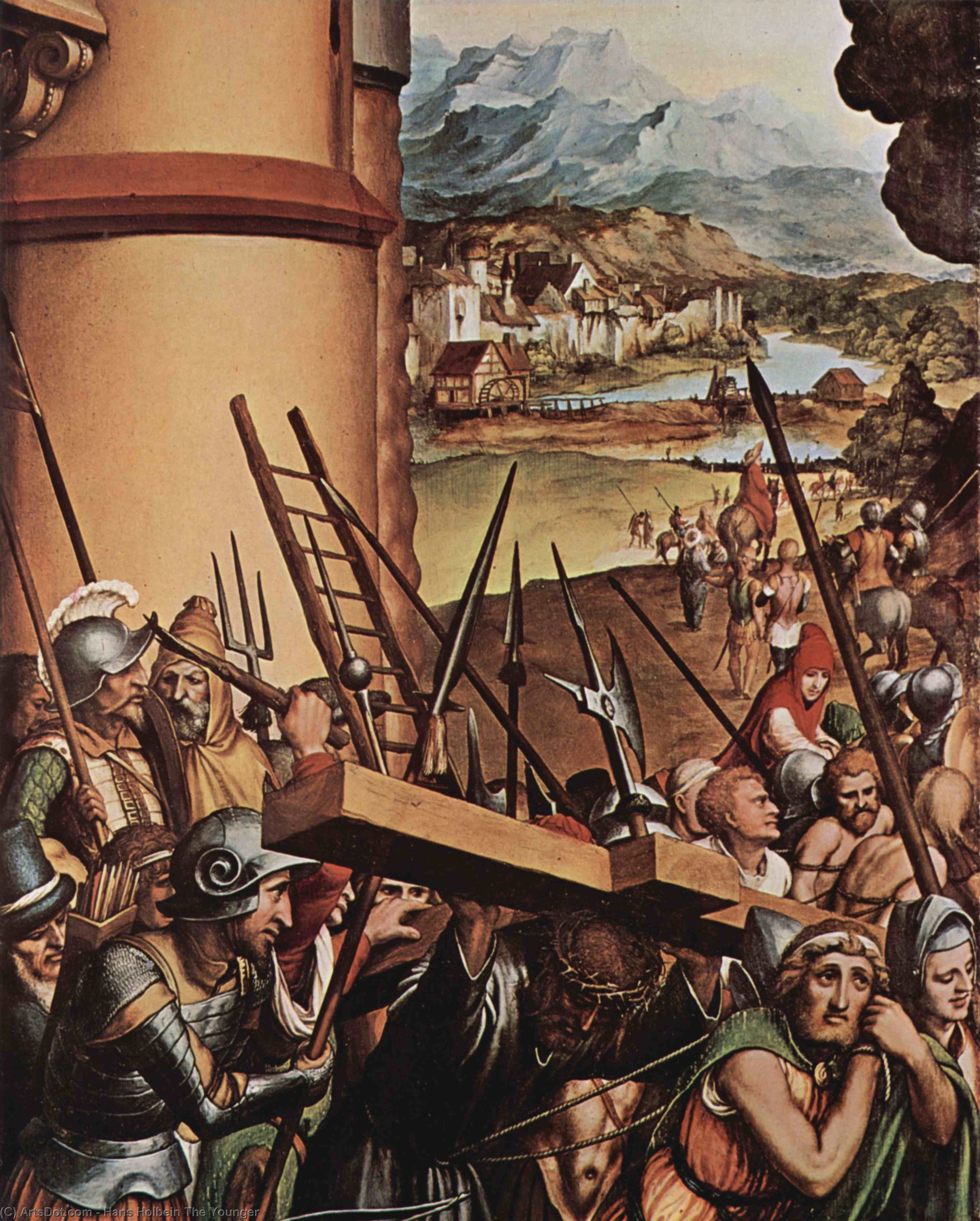
Hans Holbein’s masterful depiction of Jesus Christ's crucifixion showcases unparalleled detail—the poignant gaze and precise nail placement capturing the profound sorrow and suffering of this iconic biblical scene. A cornerstone of the Northern Renaissance, Holbein’s work invites contemplation and offers a timeless glimpse into human emotion.
Hans Holbein el Joven (1497-1543): Maestro del Renacimiento norteño, reconocido por su realismo vívido y por capturar la realeza Tudor como Enrique VIII. Explore sus detallados estudios, composiciones innovadoras y su legado perdurable.
Passion (Detail - ) – A Window into Renaissance Faith
The painting “Passion” by Hans Holbein the Younger stands as a monumental achievement of Northern Renaissance art, capturing not merely an event but the profound spiritual and psychological complexities surrounding it. Executed around 1530, this meticulously crafted depiction of Christ’s crucifixion transcends mere visual representation; it's a testament to Holbein’s unparalleled skill in conveying emotion and detail—a feat that continues to captivate audiences centuries later.
Style and Technique: Precision Beyond Compare
Holbein’s signature style is characterized by an astonishing level of realism, achieved through painstaking observation and anatomical accuracy. Unlike many artists of his time who prioritized idealized beauty, Holbein relentlessly pursued truthfulness in portraying the human form—a revolutionary approach that would profoundly influence subsequent generations of painters. The artist employed oil paint on panel, a technique favored for its ability to produce rich colors and subtle gradations of tone. This meticulous layering of pigment allowed Holbein to capture the textures of skin, cloth, and wood with breathtaking precision. Furthermore, he utilized chiaroscuro—the dramatic interplay between light and shadow—to sculpt form and heighten emotional impact, directing the viewer’s gaze towards key elements within the composition.
Historical Context: Reformation Echoes
“Passion” emerged during a period of intense religious upheaval in Europe – the Protestant Reformation. Holbein, commissioned by Henry VIII to depict Christ's agony, was deeply invested in conveying the suffering endured by Jesus and reflecting the anxieties of his era. The painting’s solemn atmosphere underscores the gravity of Christian faith amidst political turmoil. It serves as a poignant reminder of the humanist ideals that challenged medieval dogma, prioritizing human experience and emotion alongside theological contemplation. Holbein skillfully integrates elements of biblical narrative with psychological insight—a hallmark of Renaissance art—demonstrating an understanding of both visual artistry and intellectual discourse.
Symbolism: Layers of Meaning
Beyond its immediate depiction of Christ’s crucifixion, “Passion” is laden with symbolic significance. The nails securing Jesus to the cross represent sacrifice and suffering, central themes in Christian theology. The horse and boat in the background symbolize royalty and pilgrimage—references to Christ's divine majesty and his journey towards salvation. The faces of the onlookers convey a spectrum of emotions: sorrow, compassion, disbelief – mirroring the human response to faith and mortality. Holbein’s masterful use of color contributes to this symbolic richness; the muted hues evoke a sense of solemnity and contemplation, reinforcing the painting's spiritual message.
Emotional Impact: A Timeless Expression of Suffering
“Passion” remains profoundly moving for viewers today because it confronts us with the raw reality of human suffering—a subject Holbein tackled with unflinching honesty. The artist’s ability to convey psychological depth is remarkable; he captures not just physical pain but also spiritual anguish, inviting contemplation on themes of faith, redemption, and mortality. This enduring emotional resonance speaks to the universality of human experience and confirms Holbein's place as one of the greatest painters of his time—a visionary who transformed visual art into a vehicle for profound reflection.