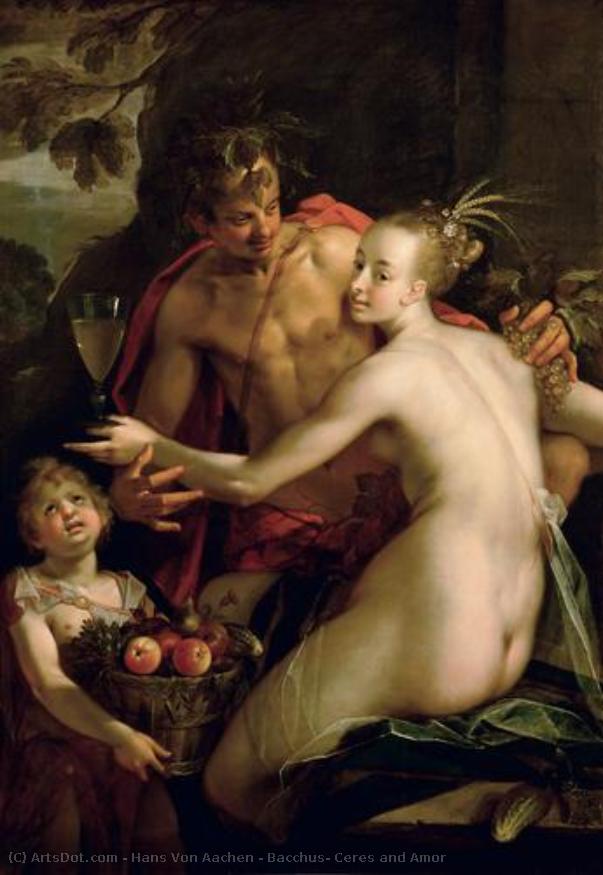
Bacchus, Ceres and Amor: A Symphony of Mythological Drama
Hans von Aachen’s “Bacchus, Ceres and Amor,” painted around 1600 during the height of Mannerism—a stylistic movement that bridged the Renaissance and Baroque eras—represents more than just a depiction of classical mythology; it embodies a profound exploration of human emotion and artistic innovation. Situated within the opulent court of Prague, Aachen’s masterpiece served as a testament to humanist ideals and the burgeoning fascination with theatrical spectacle.
Composition and Dramatic Lighting
The painting's central focus is an intimate embrace between Bacchus (god of wine) and Ceres (goddess of agriculture), symbolizing fertility and abundance. Amor, Cupid, delicately perched at the lower left corner, gazes upwards towards them with unwavering adoration—a gesture that underscores the pervasive theme of desire and divine love. Aachen skillfully arranges these figures within a dark green forest setting, creating a triangular composition that draws the viewer’s eye directly to the core interaction. Crucially, Aachen employs dramatic chiaroscuro – intense contrasts between light and shadow – to illuminate Bacchus and Ceres prominently while plunging much of the background into darkness. This technique wasn't merely aesthetically pleasing; it served to heighten emotional impact and convey a sense of dynamism.
Color Palette and Artistic Technique
A rich color palette dominates “Bacchus, Ceres and Amor,” characterized by warm hues—primarily reds, browns, and flesh tones—that clash against the cool greens of the foliage. Aachen’s masterful brushwork contributes to the painting's textural complexity. The artist utilized oil paints on canvas – a standard medium for the period – layering pigments with meticulous precision to achieve remarkable detail and luminosity. Noticeably, Aachen departed from the idealized proportions favored by earlier Renaissance artists, opting instead for elongated figures that convey an element of theatrical grandeur.
Symbolism and Emotional Resonance
Beyond its visual splendor, “Bacchus, Ceres and Amor” resonates with deep symbolic meaning. The pairing of Bacchus and Ceres represents the cyclical renewal of nature—the promise of harvest after winter—a concept central to humanist thought during Aachen’s time. Amor embodies passion and divine inspiration, highlighting the transformative power of love. Aachen's deliberate use of expressive gestures and facial expressions captures the emotional intensity of the scene, inviting contemplation on themes of beauty, desire, and spiritual aspiration. The painting continues to captivate audiences today with its masterful blend of artistic skill and humanist conviction.
Historical Context and Legacy
Painted during a period marked by intellectual curiosity and artistic experimentation, “Bacchus, Ceres and Amor” exemplifies the Mannerist style’s preoccupation with psychological realism alongside formal elegance. Influenced by El Greco's expressive distortions and dramatic lighting—a stylistic hallmark of Mannerism—Aachen elevated painting to an art form capable of conveying profound emotional truths. Today, reproductions of this iconic artwork adorn galleries and private collections worldwide, ensuring that Aachen’s vision of mythological drama persists as a beacon of artistic achievement.