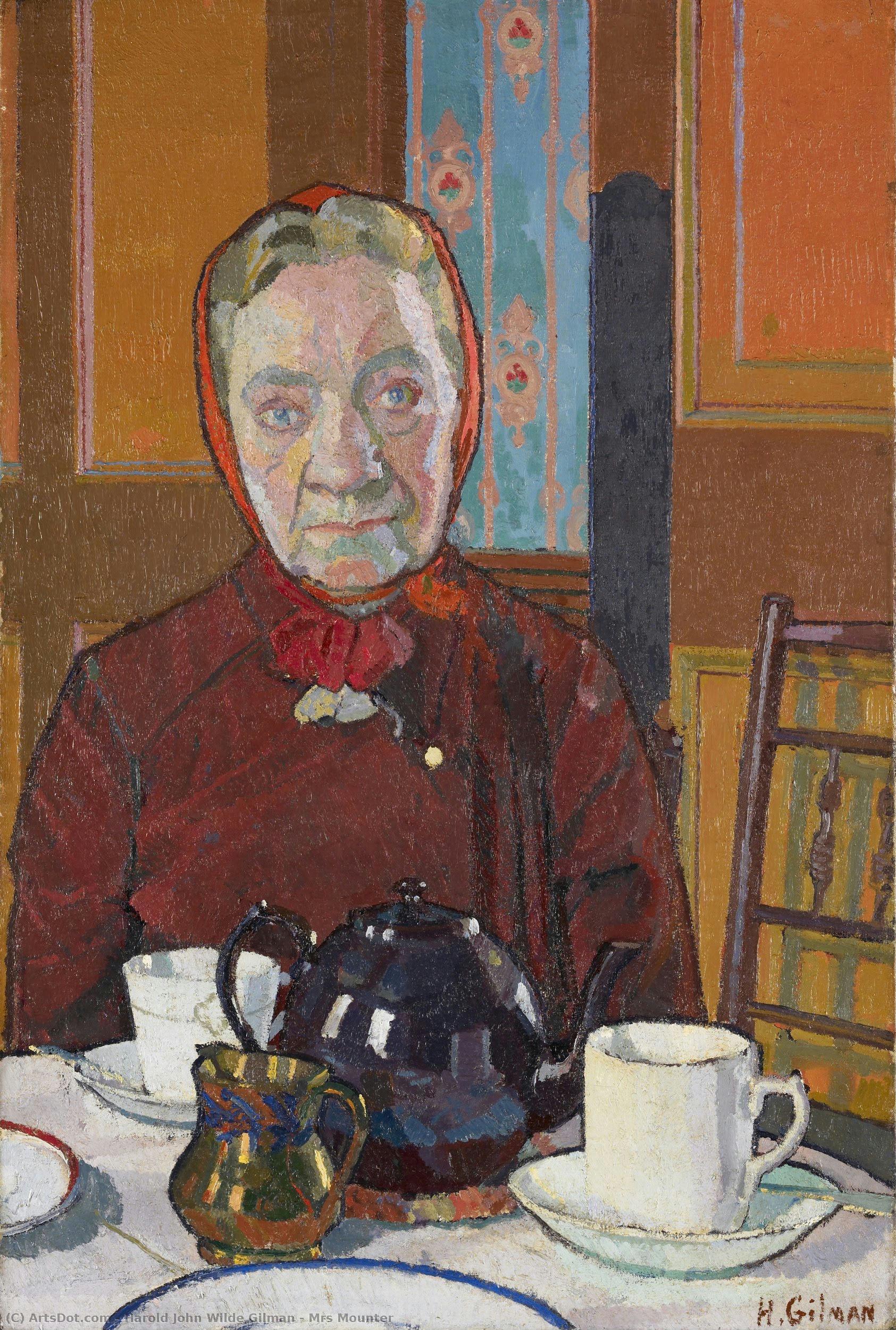
Harold John Wilde Gilman's 'Mrs Mounter at the Breakfast Table', painted in 1916-17, captures intimate domestic life with striking color palettes and expressive brushwork—a cornerstone of Camden Town Group realism.
Descubre a Harold John Wilde Gilman (1876-1919), un pintor británico y fundador del Camden Town Group. Explora interiores íntimos, retratos, paisajes y su influencia en el arte del siglo XX.
Descubre la rica historia y colecciones impresionantes de los Museos Nacionales de Liverpool! Arte, marinería, cultura e innovación te esperan en este destino cultural único.
Mrs Mounter - Harold John Wilde Gilman
Harold John Wilde Gilman (1876–1919) stands as a pivotal figure in British Modernism, remembered primarily for his intimate interiors and sensitive portraits that captured the spirit of the era. While he achieved relatively little fame during his lifetime—selling only a handful of works—his legacy persists through the enduring influence of the Camden Town Group and subsequent scholarly appreciation.
Gilman’s artistic journey began with formal training at Tonbridge School and Brasenose College, Oxford, where he honed his initial skills in drawing and painting. However, it was his encounter with Spencer Gore and Walter Sickert that truly ignited his creative fervor, propelling him into the vanguard of British avant-garde art.
His distinctive style emerged from a profound engagement with Impressionism and Post-Impressionism, yet Gilman swiftly transcended these influences to forge an individual path characterized by bold color palettes—particularly reds and oranges—and expressive brushwork. He deliberately rejected the stylistic conventions of his contemporaries, favoring instead a directness reminiscent of Vincent van Gogh and Paul Cézanne. This approach wasn’t merely aesthetic; it reflected a deep conviction that art should convey emotion authentically.
The painting “Mrs Mounter” exemplifies this ethos perfectly. Executed in 1916-17, it depicts a domestic scene—a woman seated at a dining table with two cups—rendered with meticulous detail and imbued with palpable warmth. Gilman’s masterful use of color—the dominant orange hue of the vase and tablecloth—creates an atmosphere of quiet contemplation and understated elegance.
Beyond its technical brilliance, “Mrs Mounter” resonates with symbolic significance. The woman's gaze directly confronts the viewer, establishing a connection that transcends mere representation. Her posture conveys dignity and composure, mirroring the values of the Edwardian period—a time marked by social conservatism yet underpinned by burgeoning artistic experimentation. Gilman’s deliberate choice to portray his landlady in such a candid manner speaks volumes about his desire to capture not just likeness but also character.
Gilman's influence extended beyond his own canvases; he mentored younger artists at Westminster School of Art, fostering a new generation of talent committed to exploring the expressive potential of painting. Though tragically cut short by influenza in 1919—a fact that overshadowed his artistic achievements during his lifetime—Harold John Wilde Gilman’s contribution to British art remains substantial and continues to inspire admiration for its honesty and emotional depth.