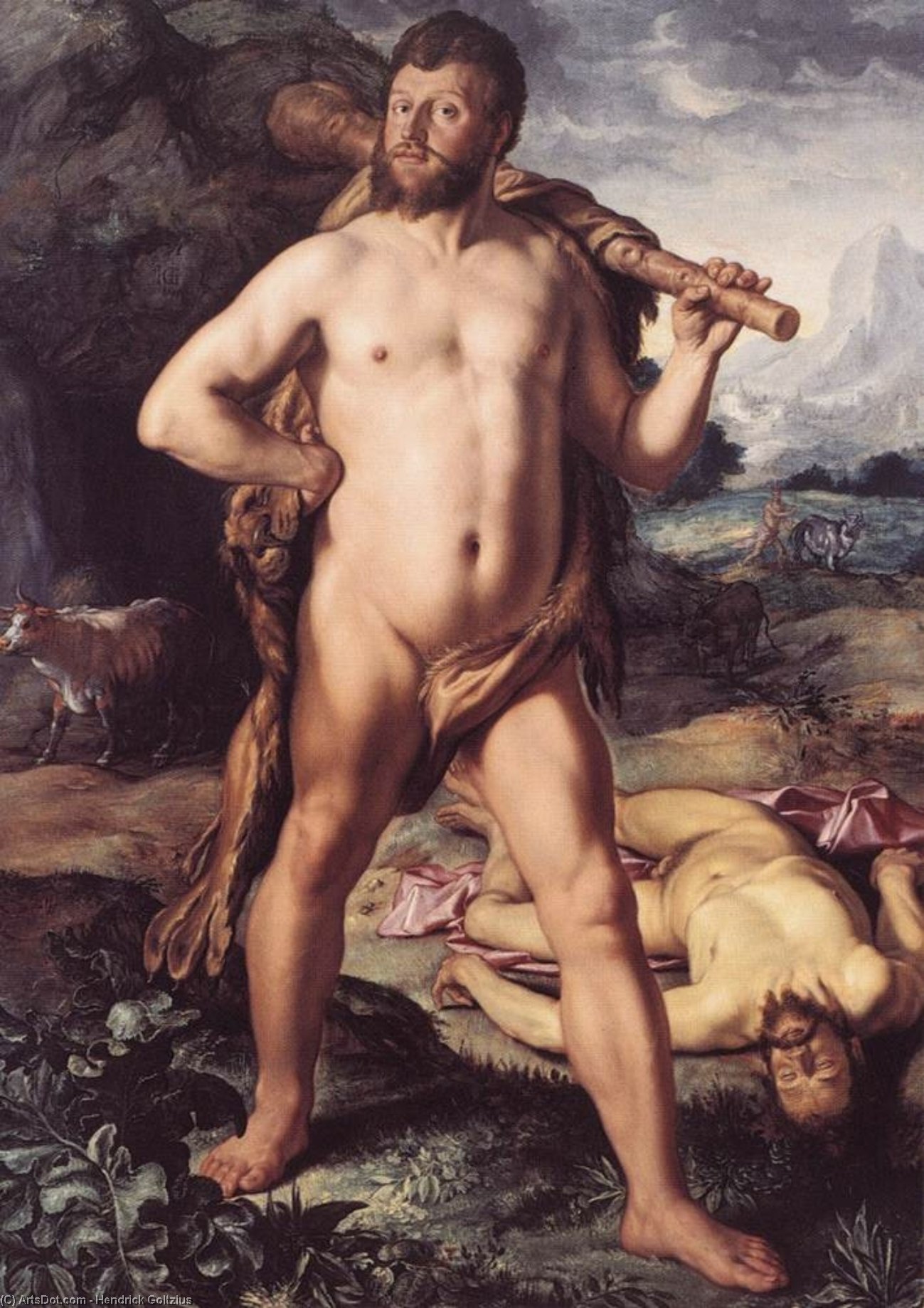
Admire Hendrick Goltzius’ ‘Hercules and Cacus’ (1613) – a stunning Renaissance oil painting of the hero. Explore its classical realism, dramatic lighting & powerful symbolism.
Descubre los grabados y pinturas de Hendrik Goltzius (1558-1617), maestro neerlandés del manierismo nórdico y el Barroco en grabado. Explora su técnica innovadora, como la línea hinchada.
¡Descubre las obras maestras de Frans Hals en el Museo Frans Hals en Haarlem! Explora el arte de la Edad de Oro holandesa en edificios históricos y profundiza en la vida y el legado de este pintor icónico.
Hercules and Cacus: A Renaissance Triumph of Strength and Narrative
Hendrik Goltzius’s “Hercules and Cacus” (1613) stands as a testament to the enduring fascination with classical mythology within the burgeoning Baroque era. More than just a depiction of heroic legend, this oil painting embodies the artistic ideals of its time—a masterful blend of Renaissance realism and Mannerist exuberance that continues to captivate viewers today. Examining its composition, color palette, stylistic choices, and historical significance reveals layers of meaning beyond mere visual splendor.
The artwork portrays Hercules wrestling with Cacus, a monstrous serpent representing primal chaos and resistance to divine order. Goltzius meticulously rendered the muscular physique of Hercules—a deliberate homage to idealized human form—emphasizing anatomical accuracy through detailed shading and precise linework. The pose itself conveys unwavering determination and physical prowess, reflecting the heroic ethos prevalent in Renaissance art. Contrasting sharply with Hercules’s solidity is Cacus, depicted as a coiled serpent dominating the lower portion of the canvas. This duality underscores the central narrative: the triumph of virtue over vice, order over disorder—themes deeply rooted in Greco-Roman mythology and resonating powerfully within Christian humanist thought.
The painting's color palette leans heavily into warm earth tones – ochre yellows, burnt siennas, and russet reds – creating a sense of groundedness and conveying the rugged landscape surrounding Hercules’s struggle. Cool blues and greens subtly delineate the distant mountains, establishing depth and reinforcing the dramatic lighting scheme. Goltzius skillfully employed glazing techniques—applying thin layers of translucent paint over underlying colors—to achieve luminous effects and imbue the artwork with an ethereal quality characteristic of Mannerism. These subtle nuances contribute to the overall emotional impact: a palpable tension between hero and beast, mirroring the internal battles faced by humanity in its quest for moral fortitude.
Furthermore, Goltzius’s technique demonstrates unparalleled mastery of oil painting—a medium favored by artists striving for unprecedented realism and expressive power. The textured surface achieved through layering paint captures the physicality of the figures and the ruggedness of the terrain, inviting viewers to contemplate the monumental scale of Hercules's exertion. The directional lines meticulously etched into the musculature serve as visual anchors, guiding the eye across the canvas and emphasizing the heroic posture. The single light source positioned from the upper left casts dramatic shadows, highlighting Hercules’s form and amplifying the scene’s intensity—a stylistic hallmark of Renaissance artists seeking to convey emotion through chiaroscuro.
“Hercules and Cacus” transcends its mythological subject matter to become a symbol of human resilience and spiritual triumph. Its enduring appeal lies in its ability to communicate profound ideas about courage, perseverance, and the confrontation between good and evil. Collectors and interior designers alike appreciate this artwork not only for its aesthetic beauty but also for its historical significance—a cornerstone of Renaissance artistic achievement that continues to inspire awe and contemplation centuries later.