A Glimpse into Parisian Serenity: The Soul of Madame Juliette Pascal
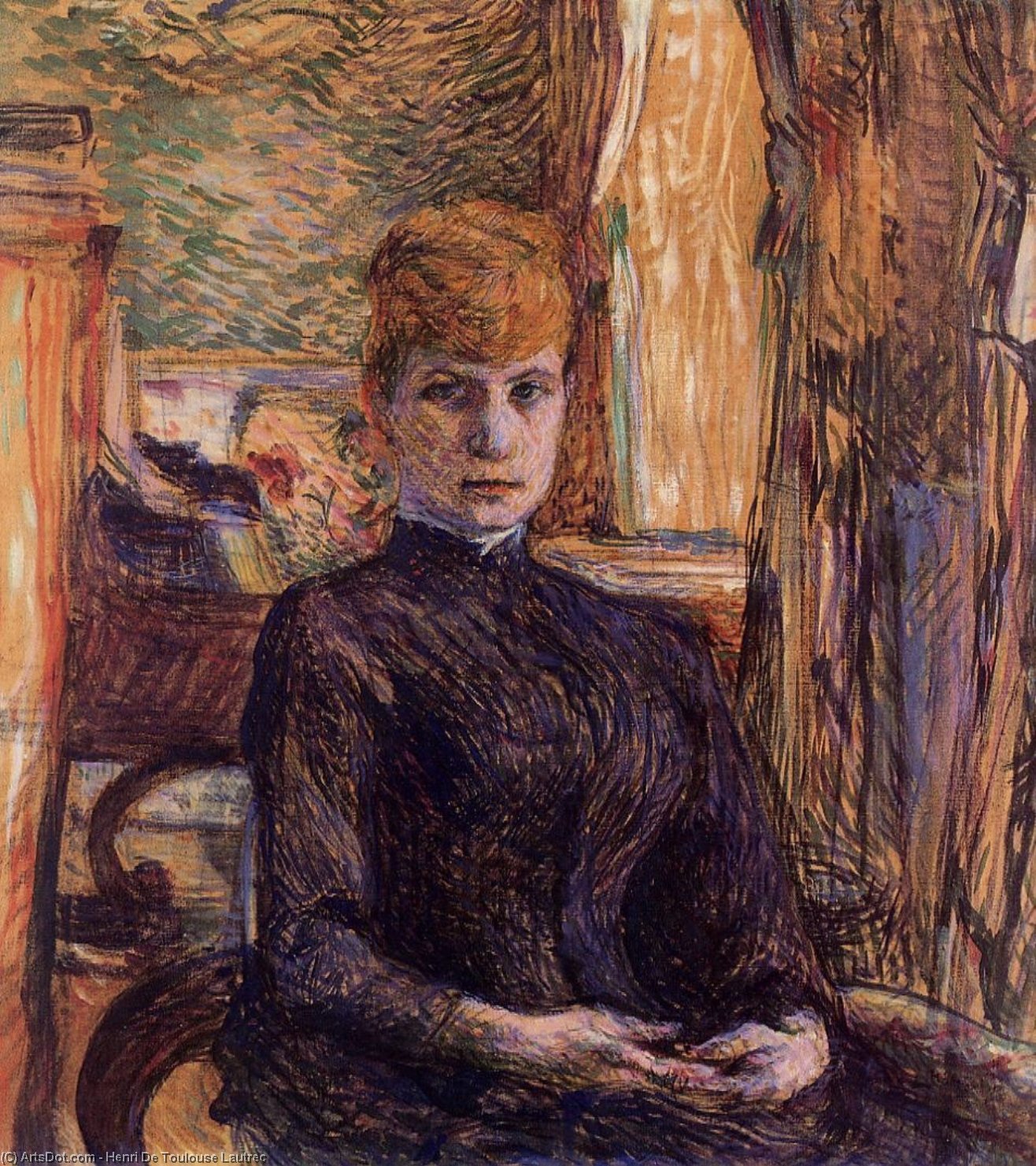
In the vibrant, often chaotic tapestry of late 19th-century Paris, Henri de Toulouse-Lautrec captured moments of profound stillness that offered a respite from the bustling Montmartre nightlife. His masterpiece, “Madame Juliette Pascal,” is far more than a mere portrait; it is an evocative window into the Belle Époque, a period defined by its opulent social rituals and a burgeoning fascination with the psychological depth of its subjects. As one gazes upon this work, the viewer is immediately drawn into the quietude of Madame Pascal’s presence. Seated gracefully in a chair, her hands clasped in a gesture of gentle contemplation, she embodies an aura of serenity that seems to exist in a separate realm from the frantic energy of the city outside. The composition, bathed in the soft, diffused light emanating from a nearby window, creates an intimate atmosphere that invites the observer to linger and reflect alongside the subject.
The technical brilliance of Toulouse-Lautrec shines through his masterful application of the Post-Impressionist style. Moving beyond the fleeting, light-obsessed observations of his Impressionist predecessors, Lautrec utilized a bolder, more expressive approach. He employed thick, palpable impasto brushstrokes—layers of pigment applied with such vigor that they lend a physical texture to the canvas itself. This technique imbue the painting with a rhythmic dynamism, making the light feel as though it is truly dancing across the fabric of her dress and the surfaces of the room. His palette, dominated by sophisticated muted reds, deep browns, and earthy tones, establishes a somber yet rich mood, providing a sense of structural depth that anchors the ethereal quality of the light.
Symbolism and the Essence of an Era
Beyond the formal elements of color and texture, “Madame Juliette Pascal” serves as a profound study in symbolism and historical resonance. The setting—a room featuring a resting cat, delicate books, and a simple vase—suggests a domesticity that is both refined and deeply personal. These small, quiet details act as anchors to reality, grounding the subject's contemplative state within a tangible world. For the discerning collector or interior designer, this painting offers a unique emotional weight; it does not merely decorate a space but transforms it, bringing an air of intellectual sophistication and historical gravity to any room. The interplay between the shadows in the corners of the room and the brightness of the window symbolizes the duality of the era: the hidden, often scandalous depths of Parisian life contrasted with the polished, public elegance of the upper classes.
To possess a reproduction of this work is to hold a piece of art history that challenged the rigid standards of the Académie Royale. As Lautrec pushed the boundaries of what was considered acceptable subject matter, he paved the way for the avant-garde movements that would define the 20th century. This painting stands as a testament to his ability to find beauty in the quiet, often overlooked moments of human existence. Whether placed in a contemporary gallery setting or a classic study, the enduring emotional impact of Madame Juliette Pascal remains undiminished, offering a timeless connection to the heart of French artistic heritage.