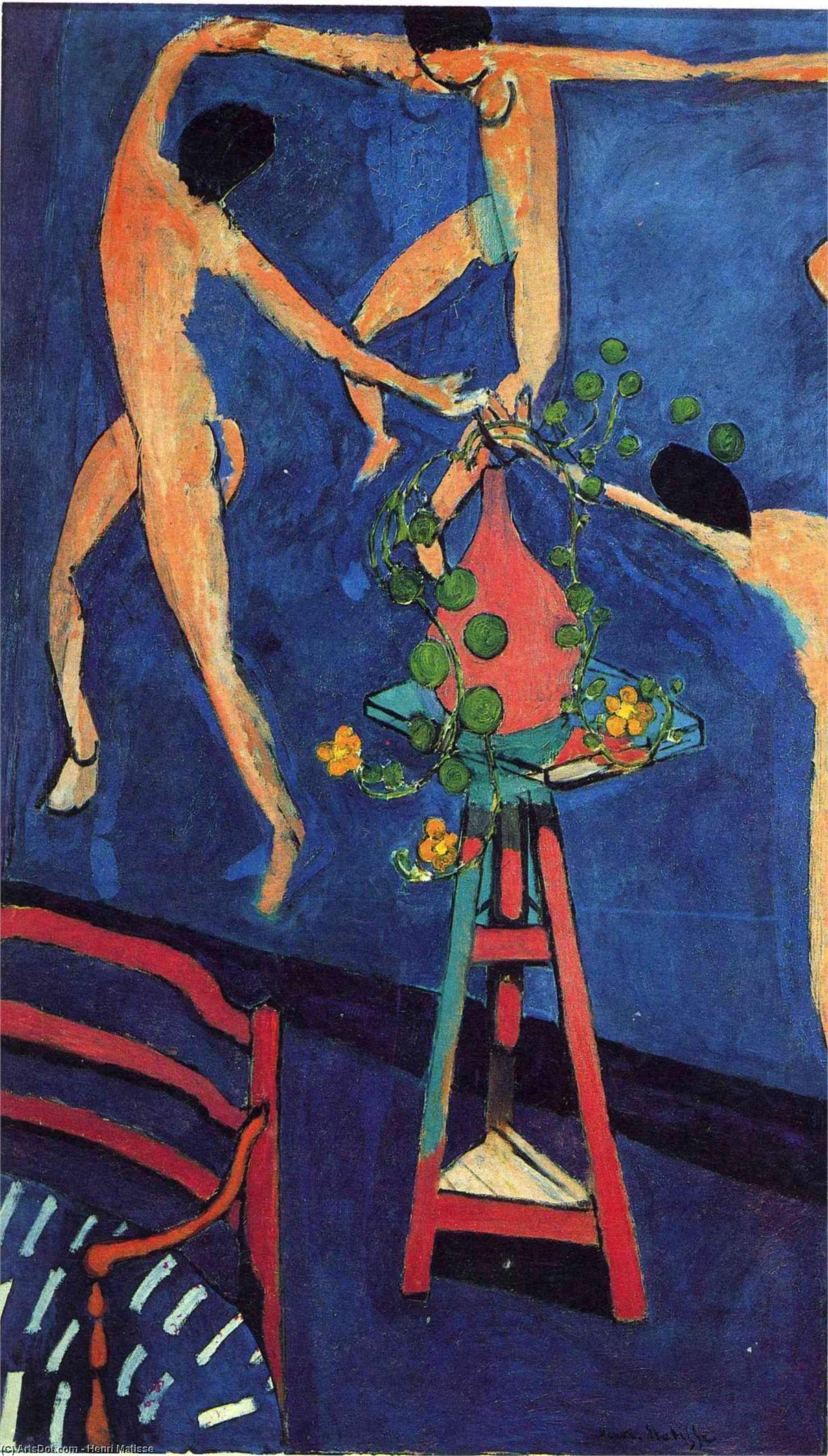
Nasturtiums with ''The Dance'' (II) – A Fauvist Symphony of Color and Movement
Henri Matisse’s “Nasturtiums with ‘Dance’ (II)” transcends mere botanical depiction; it embodies the very essence of Fauvism, a movement that revolutionized painting in early 20th century France. Created in 1912 during a period of artistic experimentation fueled by influences from Cézanne and Japanese prints, this oil on canvas masterpiece resides at the Pushkin Museum in Moscow, Russia—a testament to its enduring significance within art history.
- Composition & Style: The painting centers around two nude women engaged in an intimate dance or gesture of connection. Surrounding them are carefully positioned objects – a vase brimming with vibrant nasturtiums and a chair – contributing to the overall dynamic interplay between stillness and movement. Matisse deliberately eschewed traditional perspective, opting for a flattened plane that prioritizes color and expressive brushwork over realistic representation.
- Color Palette: Matisse’s audacious use of color is immediately striking. Dominating the background are hues of deep teal and emerald green, juxtaposed against the fiery orange blossoms of the nasturtiums. This deliberate contrast isn't merely decorative; it serves to heighten emotional impact and convey a sense of joyous exuberance—a hallmark of Fauvist aesthetics.
- Brushwork: Thick, visible brushstrokes characterize Matisse’s technique, lending texture and energy to the canvas. The artist employed impasto – applying paint thickly onto the surface – creating palpable ridges that capture the movement implied by the dancers' postures and mirroring the vibrancy of the floral arrangement.
Influence and Historical Context
“Nasturtiums with ‘Dance’ (II)” emerged from a milieu marked by intellectual ferment and artistic innovation. The Fauvist movement arose in response to Impressionism, rejecting its subtle gradations of color in favor of bold, arbitrary hues—a reaction against the perceived limitations of academic painting. Matisse's work aligns seamlessly with this broader trend, reflecting the desire for artists to express emotion directly through visual language. It stands as a pivotal piece in establishing Fauvist principles and influencing subsequent generations of painters.
Symbolism & Emotional Resonance
Beyond its formal qualities, “Nasturtiums with ‘Dance’ (II)” carries symbolic weight. The nasturtiums themselves represent vitality and freshness—a celebration of the natural world—while the dancers embody human connection and movement. Matisse skillfully captures this duality, conveying a feeling of carefree joy and sensual pleasure. The painting invites contemplation on themes of beauty, harmony, and the expressive power of color.
Related Artworks & Further Exploration
Matisse’s artistic legacy extends far beyond “Nasturtiums with ‘Dance’ (II).” Consider exploring his other celebrated pieces, such as "La Danse aux Capucines" ("The Dance at the Monastery") and "Entrance to the Kasbah," which similarly showcase his masterful command of color and composition. For a deeper understanding of Fauvist art and Henri Matisse's contribution to modern painting, visit
https://ArtsDot.com for exceptional hand-painted reproductions—bringing the vibrancy of Matisse’s vision into your home.