Nudos Azules

Descubre los 'Nudos Azules' de Matisse: collages vibrantes que exploran la forma humana con audaz simplicidad y una profunda carga emocional. ¡Una obra maestra del fauvismo!


Henri Matisse (1869 - 1954)

Descubra a Henri Matisse (1869-1954), un maestro fauvista! Explore su vibrante color, su innovadora trazo y sus icónicas pinturas como 'Las Calabazas'. Una figura destacada en el arte moderno.

Henri Matisse's Blue Nudes: A Dance of Form and Color

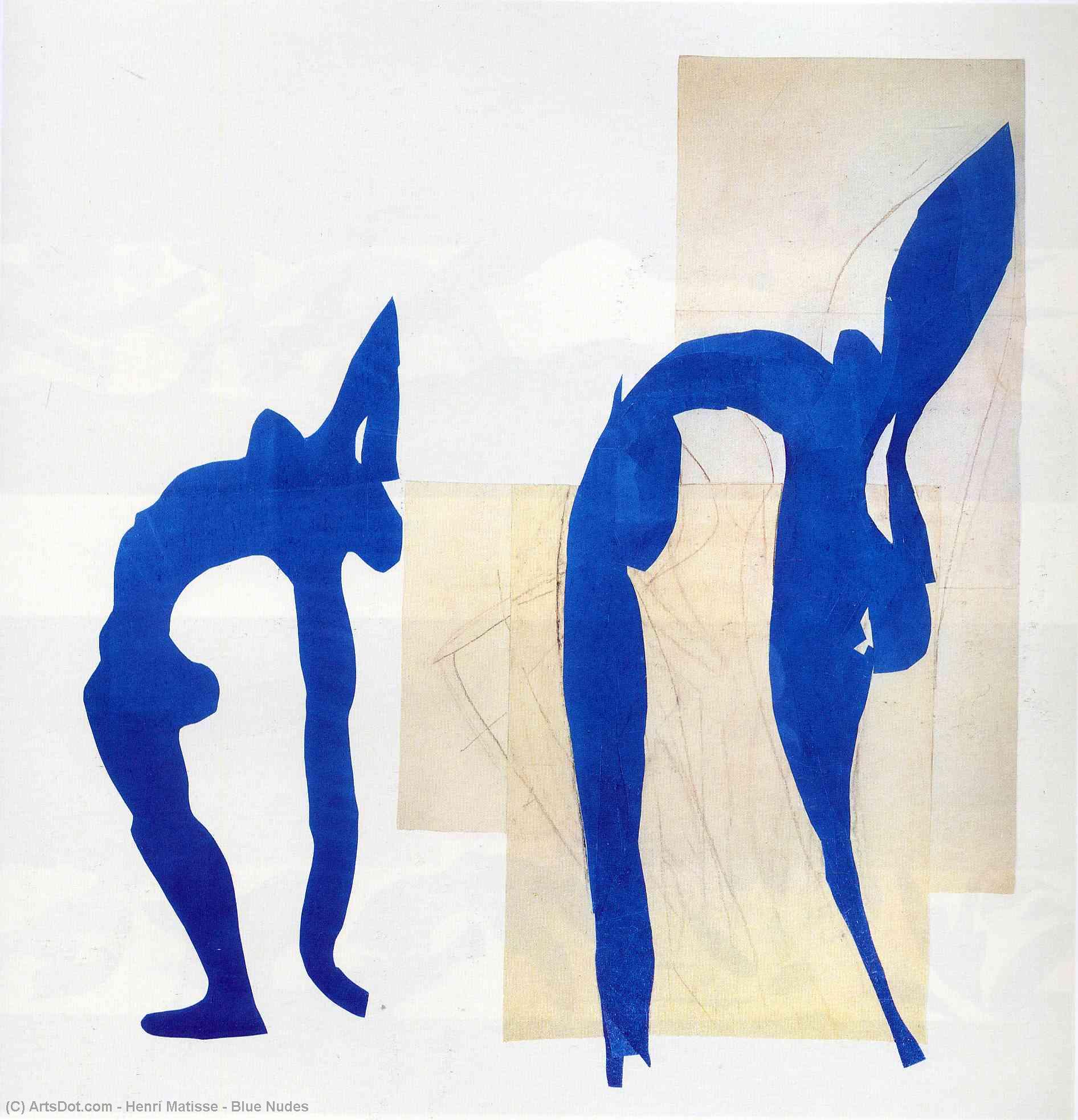
  • Artwork Overview: Henri Matisse’s "Blue Nudes" series, particularly "Blue Nude III," represents a pivotal moment in the artist’s late career. Created between 1952 and 1953, these works are striking cut-paper collages that showcase simplified nude figures rendered entirely in shades of blue against a stark white background. The artwork is not merely a depiction of the human form; it's an exploration of shape, movement, and emotional resonance through abstraction.

Style and Technique: Embracing Cut-Paper Collage

  • Fauvist Roots & Modernist Evolution: Matisse was a leading figure in the Fauvist movement, known for its bold use of color. The "Blue Nudes" demonstrate his continued exploration of color's expressive power while evolving towards a more abstract and simplified style characteristic of early Modernism.
  • The Cut-Paper Technique: Due to declining health following surgery, Matisse pioneered the cut-paper collage technique. Rather than painting, he would select sheets of colored paper – in this case, various shades of blue – and cut shapes directly with scissors, then assemble them onto a larger support. This method allowed for an immediacy and spontaneity that traditional painting could not achieve.
  • Geometric Abstraction: The figures are reduced to essential geometric forms—angular limbs, simplified torsos—rejecting realistic anatomical representation. Overlapping shapes create a dynamic composition with a sense of movement and fluidity despite the flat, two-dimensional surface. The use of negative space (the white background) is integral to the artwork’s impact, defining the blue forms and enhancing their visual presence.

Symbolism and Emotional Impact: Vulnerability and Sensuality

  • Themes of the Human Form: The nude figure has been a recurring subject in art history. Matisse's approach here is unique; rather than celebrating idealized beauty, he presents a sense of vulnerability and detachment through simplification. The figures are not sensual in a traditional way but evoke an introspective quality.
  • Isolation and Abstraction: The stark blue palette and the absence of background details contribute to a feeling of isolation. The abstracted forms suggest a stripping away of identity, leaving only the essence of the human form.
  • Emotional Resonance: Despite their simplicity, the "Blue Nudes" are deeply emotive. They convey a sense of quiet contemplation and perhaps even melancholy. The dynamic composition and bold use of color create an engaging visual experience that resonates with viewers on an emotional level.

Historical Context & Matisse's Legacy

  • Late Period Innovation: Created in the final years of Matisse’s life, the "Blue Nudes" represent a remarkable culmination of his artistic journey. They demonstrate his ability to innovate and push boundaries even in old age.
  • Influence on Modern Art: The cut-paper technique pioneered by Matisse had a significant impact on subsequent generations of artists, influencing collage and mixed-media practices. His exploration of abstraction and color continues to inspire contemporary artists today.
  • Matisse's Biography: Henri Émile Benoît Matisse (1869-1954) was born in Le Cateau-Cambrésis, Northern France. Initially studying law, he discovered his passion for art after an illness and began experimenting with painting. He studied at the Académie Julian and École Nationale des Beaux-Arts, initially influenced by classical masters like Jean-Baptiste-Siméon Chardin and Nicolas Poussin before developing his signature Fauvist style.