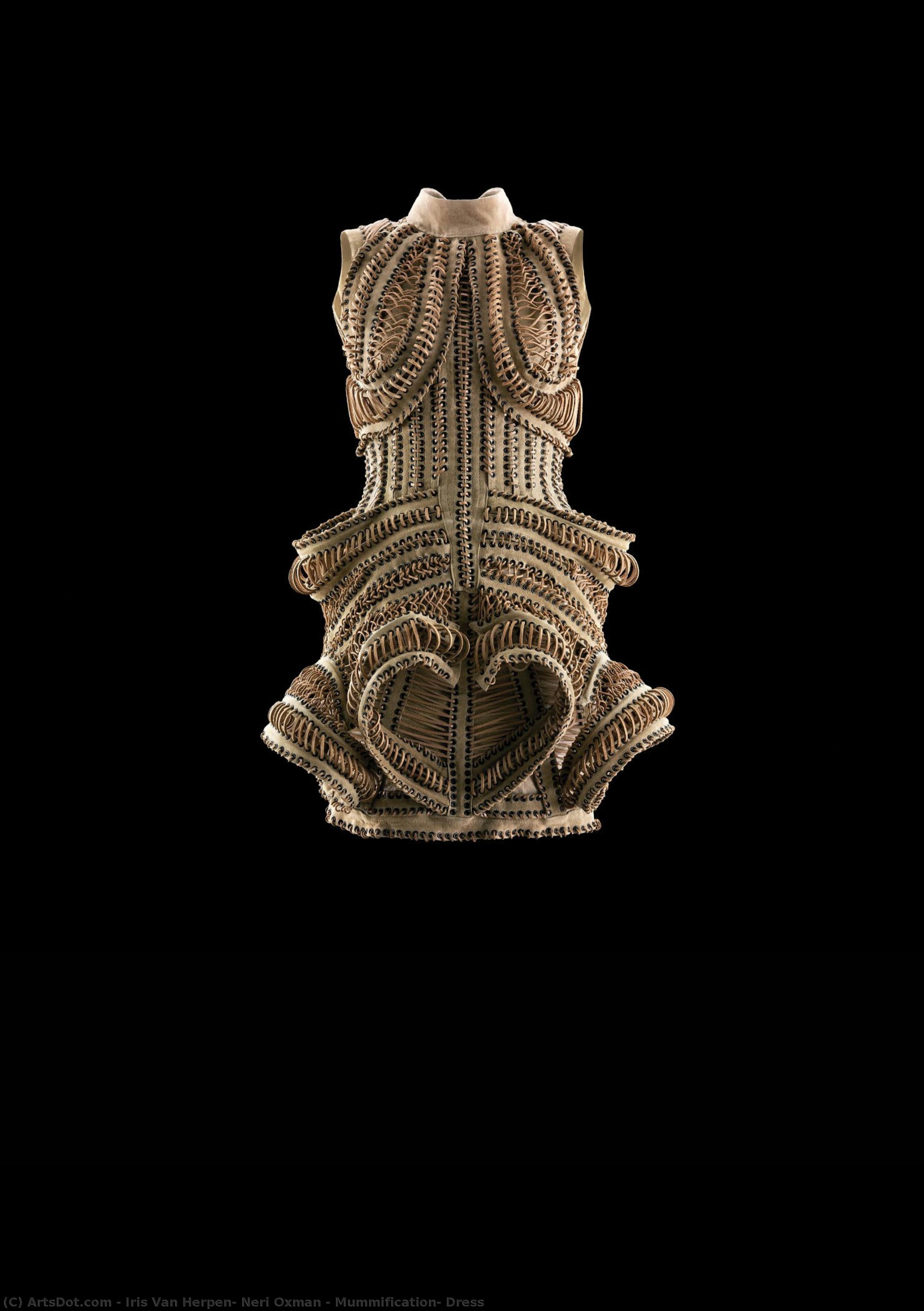
Iris van Herpen's 'Mummification, Dress' blends fashion & sculpture with intricate layers and bio-inspired design. A futuristic exploration of preservation, transformation, and organic forms – a stunning wearable art piece.
Iris van Herpen: Diseñadora de alta costura holandesa que fusiona la moda con la tecnología y la ciencia. Explora sus vestidos escultóricos impresos en 3D, colaboraciones con Neri Oxman y diseños vanguardistas.
Museo de Arte High
(Atlanta, Estados Unidos de América)
Explora el Museo de Arte High en Atlanta, GA – el museo de arte líder del sureste. Descubre arte americano del siglo XIX y XX, arte contemporáneo, arte popular, fotografía y exposiciones especiales. Disfruta de festivales, eventos y programas familiares.
A Symphony of Science and Couture
In the intersection where biological evolution meets avant-garde couture, the "Mummification, Dress" emerges as a breathtaking testament to the future of wearable art. Created in 2009 through the visionary collaboration of Dutch designer Iris van Herpen and the polymathic Neri Oxman, this piece transcends the traditional boundaries of fashion. It is not merely a garment but a sculptural phenomenon that challenges our perception of what clothing can be. The work presents a hauntingly beautiful exploration of transformation, where the organic textures of nature are captured through the precision of advanced technology, creating a silhouette that feels both ancient and extraterrestrial.
The visual language of the dress is defined by an intricate, rhythmic complexity. Upon first encounter, the eye is drawn to the mesmerizing interplay of scales and layered structures that wrap around the form. The color palette is deeply evocative, utilizing earthy and neutral tones—shades of beige, cream, and deep brown—that suggest the organic decay and preservation found in the natural world. This choice of color, paired with a highly textured surface, evokes the sensation of something unearthed from an archaeological site, yet the structural precision hints at a digital origin. The lighting within the composition plays a vital role, casting dramatic shadows that accentuate every ridge and crevice, lending a profound three-dimensional depth to the piece.
The Alchemy of Material and Method
What sets this work apart for collectors and connoisseurs is its radical approach to technique. Moving far beyond the needle and thread, the "Mummification, Dress" utilizes a sophisticated blend of textile fabrication and what appears to be cutting-edge 3D printing or additive manufacturing processes. This fusion allows for the creation of repetitive, crystalline elements that mimic biological systems, such as skeletal structures or cellular membranes. The result is a garment that possesses a dual nature: it is simultaneously rigid and fluid, appearing as a protective exoskeleton one moment and a delicate, flowing skin the next. For those seeking to bring a sense of intellectual depth and modern sophistication to an interior space, this piece serves as a profound conversation starter.
The symbolism embedded within the work is as layered as its physical form. The title itself, "Mummification," invites reflections on mortality, the passage of time, and the human desire to preserve beauty against the inevitability of decay. It speaks to the concept of metamorphosis—the idea that through technology and art, we can freeze a moment of biological splendor in perpetuity. This emotional resonance makes the piece particularly captivating for interior designers looking to infuse a space with themes of organic growth, scientific wonder, and timeless elegance. To possess a reproduction of such a work is to hold a fragment of a future where the distinction between the living organism and the man-made object has finally dissolved.