A Whisper of Blossoms: Unveiling Ishibashi Kazunori’s Preparatory Sketch
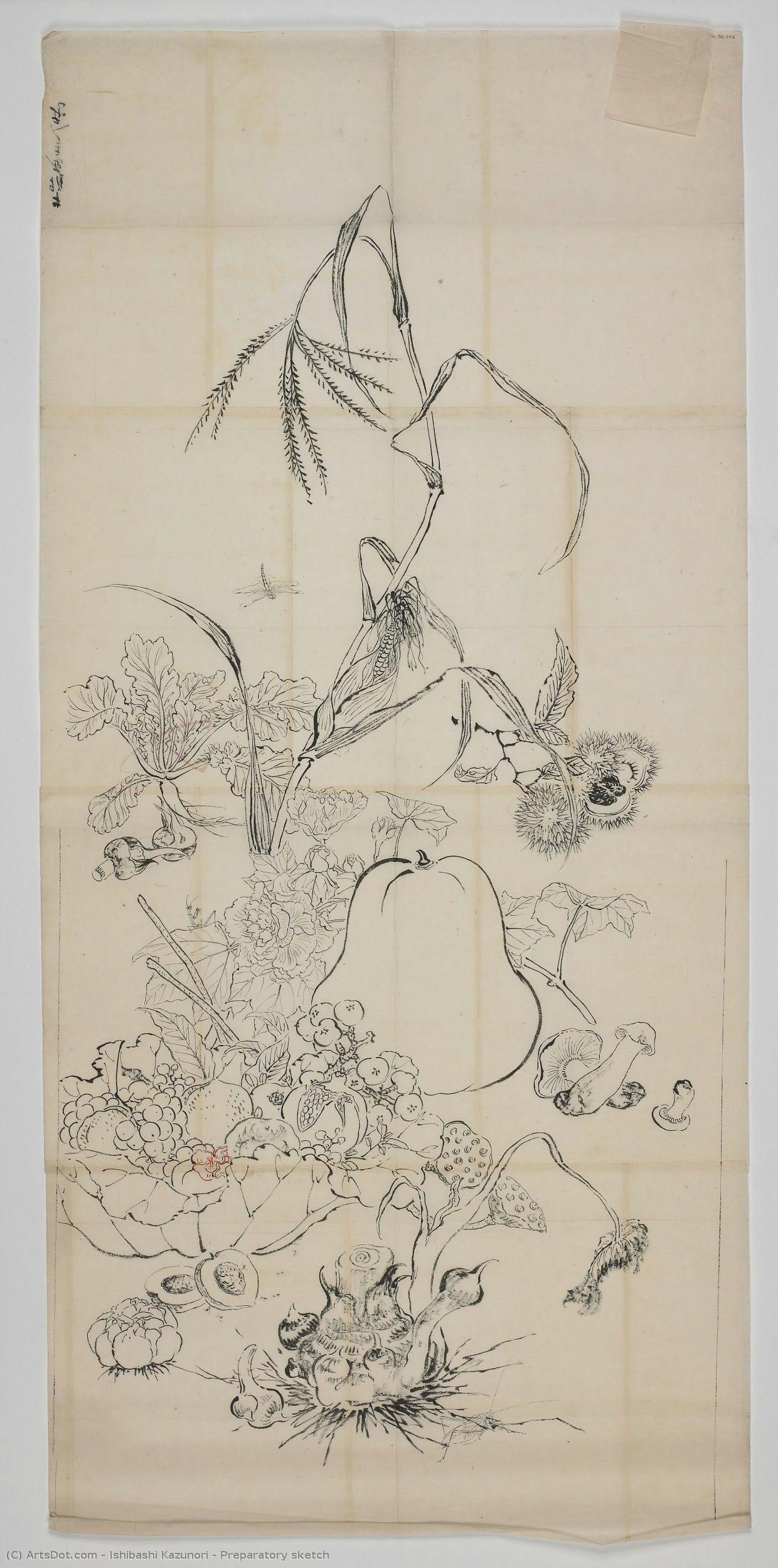
Ishibashi Kazunori's "Preparatory sketch," a delicate study rendered in meticulous ink on paper, offers a captivating glimpse into the creative process behind one of Japan’s most intriguing artistic figures. Dating from the late 19th century – a period of profound transformation for Japanese art – this piece transcends mere draftsmanship; it embodies a bridge between tradition and modernity, a testament to Kazunori's unique synthesis of Eastern aesthetics with burgeoning Western influences. The sketch itself is deceptively simple in its composition: a vibrant floral arrangement punctuated by the graceful presence of a bird, yet within this apparent restraint lies a wealth of artistic intention and historical resonance.
The Language of Line and Tone
Kazunori’s mastery is immediately evident in his command of line. The artwork relies almost entirely on the subtle variations achieved through hatching and cross-hatching – a technique deeply rooted in Japanese Sumi-e painting traditions. These interwoven lines don't merely outline forms; they build volume, suggesting the velvety texture of petals, the delicate structure of leaves, and even the implied weight of the bird perched above. The limited color palette—primarily earthy browns and creams—further emphasizes this linear language, creating a sense of quiet contemplation and drawing the viewer’s eye to the intricate details painstakingly rendered in monochrome. The careful layering of tones evokes a feeling of depth and atmosphere, reminiscent of traditional Japanese landscape paintings.
Symbolism Woven into Nature
Beyond its technical brilliance, the sketch is rich with symbolic meaning. The floral arrangement itself—likely featuring chrysanthemums and peonies – holds profound significance in East Asian culture. Chrysanthemums represent longevity and nobility, while peonies symbolize wealth, prosperity, and good fortune. Their presence speaks to a desire for abundance and harmony. The bird, often depicted as a crane or a pheasant, adds another layer of symbolism, frequently associated with longevity, wisdom, and even messengers between heaven and earth. The juxtaposition of these natural elements within the sketch suggests a reverence for the beauty and inherent power of the natural world – a core tenet of Japanese artistic philosophy.
A Window into an Artistic Legacy
Ishibashi Kazunori’s “Preparatory sketch” is more than just a study; it's a vital document in understanding his broader artistic trajectory. Born in 1876 and tragically passing away in 1928, Kazunori navigated the complex currents of Japanese art history, skillfully blending the established traditions of Nihonga (Japanese painting) with the influences of Yōga (Western-style painting). This sketch serves as a poignant example of this synthesis – a quiet yet powerful statement reflecting his unique artistic vision. Further research reveals that this piece was created as a study for a larger work, likely intended to adorn a screen or panel, demonstrating Kazunori’s ambition and the scale of his creative output. The artwork's current presence in collections like those at the British Museum and World Museum Liverpool underscores its enduring value and significance within the broader context of Japanese art history. Reproductions offer an accessible way to appreciate the artistry and symbolism embedded within this remarkable piece, bringing a touch of serene beauty into any space.
- Artist: Ishibashi Kazunori
- Date: Unknown (circa 1876-1928)
- Medium: Ink on Paper
- Size: 30 x 60 cm
Additional Resources: Google Arts & Culture, British Museum, Norman Rea Gallery Blog