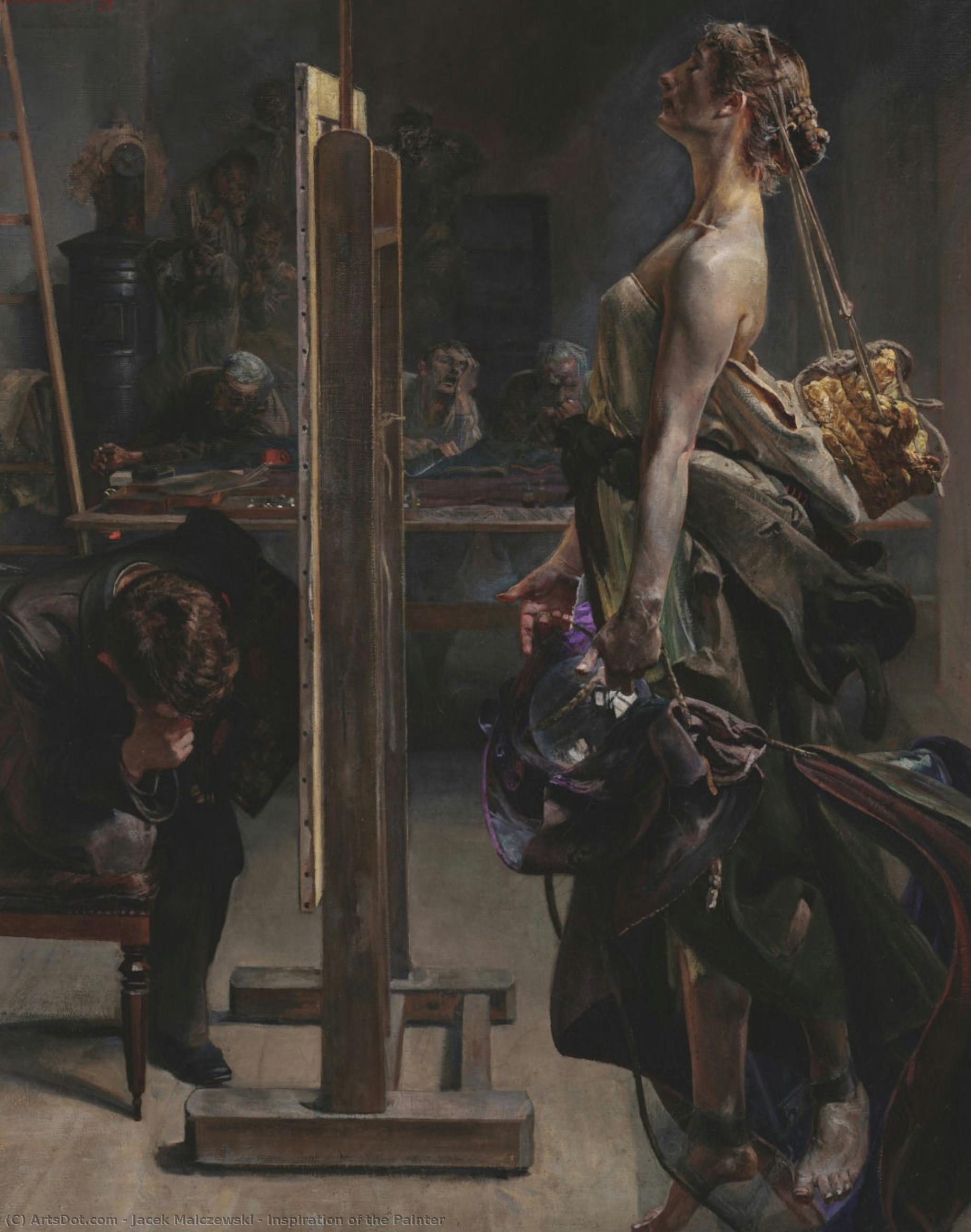
The Genesis of a Masterpiece – “Inspiration of the Painter” (1897)
Jacek Malczewski, a pivotal figure in Polish Symbolism, didn't merely paint; he translated the nation’s yearning for identity and freedom into visual poetry. His 1897 work, "Inspiration of the Painter," isn’t simply a portrait but a profound meditation on artistic creation, loss, and the elusive nature of muse. Born in Radom during a period of Russian occupation, Malczewski carried within him the weight of Polish history – a history marked by partitions, exile, and an unyielding spirit of resistance. This deeply ingrained patriotism permeates his oeuvre, informing not just the subject matter but also the very atmosphere of his paintings.
The painting itself is a study in contrasts. It unfolds within a dimly lit studio, dominated by a large easel – a silent witness to the creative process. At its heart stands the artist himself, rendered in shades of grey and despair, his head bowed as if burdened by an unseen weight. This figure embodies the struggle inherent in artistic endeavor: the isolation, the self-doubt, and the relentless pursuit of capturing something intangible.
A Draped Muse – Symbolism and Female Archetypes
Juxtaposed against this melancholic portrait is a woman of ethereal beauty, draped in flowing fabrics and bathed in a soft, almost otherworldly light. She’s not merely a model; she's a symbol—the embodiment of “Polonia,” the lost and exiled soul of Poland. Her posture suggests both receptivity and a quiet strength, hinting at her role as an inspiration to the artist. The inclusion of this figure is crucial to understanding the painting’s layered symbolism. She represents not just artistic muse but also the historical memory of Poland – a nation yearning for its past glory.
The details surrounding her are equally significant. A palette rests in her hand, a direct reference to the artist's craft, while a delicate handbag suggests both practicality and a hint of vulnerability. The overall impression is one of a timeless beauty, rooted in Polish folklore and tradition – a visual echo of the nation’s enduring spirit.
Technique and Historical Context
Malczewski’s technique is characterized by its rich textures and evocative use of color. He employs thick impasto—a technique where paint is applied thickly to create a three-dimensional effect—particularly in the depiction of the artist's figure, conveying his emotional turmoil. The muted palette – dominated by greys, blues, and browns – reinforces the painting’s somber mood, while subtle highlights draw attention to the woman and the easel. The work was created during a period of intense nationalistic fervor in Poland, following the partitions of the country in the late 19th century. This context profoundly shaped Malczewski's artistic vision, fueling his desire to capture the essence of Polish identity.
Decoding the Shadows – The Significance of the Background
The background figures—a group of older women observing the scene—add another layer of complexity to the painting. They are often interpreted as muses or critics, representing the external forces that shape an artist’s vision. However, their somber expressions and posture also suggest a sense of disillusionment – a reflection on the challenges faced by Polish artists in a politically unstable environment. The vague outlines of men in the distance can be seen as symbolic partitions, representing the fragmented state of Poland at the time.
“Inspiration of the Painter” is more than just a portrait; it’s a powerful allegory of artistic struggle, national identity, and the enduring spirit of Poland. It remains a cornerstone of Polish Symbolism, inviting viewers to contemplate the profound connection between art, history, and the human soul.