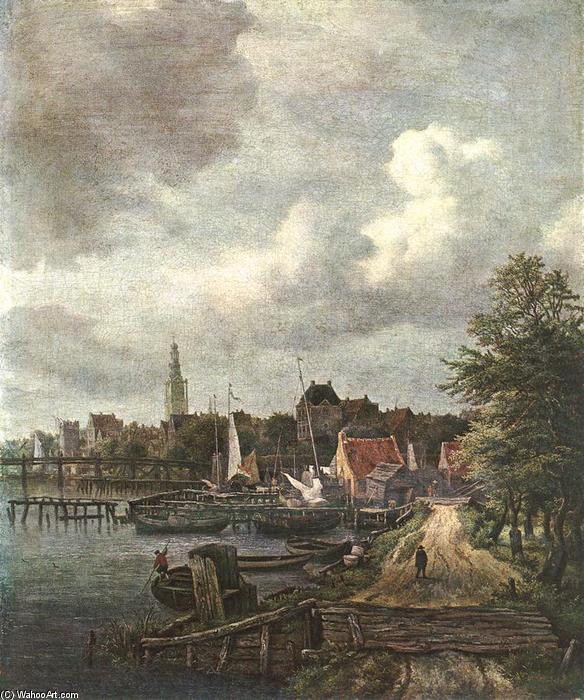
Admire Jacob van Ruysdael’s "View of Amsterdam" – a serene Dutch landscape painting from 1670. Explore its atmospheric perspective, rich details & Golden Age style.
Jacob van Ruisdael (1628-1682) fue el pintor paisajista más importante de la Edad Dorada holandesa. Admira sus paisajes dramáticos, escenas rurales serenas y panoramas urbanos. Inspiró a los románticos ingleses y a generaciones de artistas holandeses.
Descubre el Museo de Bellas Artes de Budapest: arte europeo desde la antigüedad hasta hoy en un palacio neoclásico impresionante en Heroes’ Square.
A Window Into Dutch Serenity: Examining Jacob Isaackszoon van Ruysdael’s “View of Amsterdam”
“View of Amsterdam,” painted circa 1670 by Jacob Isaackszoon van Ruysdael, stands as a cornerstone of Dutch Golden Age landscape painting—a testament to meticulous observation and masterful artistic execution. More than just a depiction of the city's skyline, it embodies the prevailing mood of quiet contemplation and appreciation for the natural world that characterized this era of unparalleled cultural flourishing.
Composition and Technique: Mastering Atmospheric Perspective
Ruysdael’s genius lies in his ability to convey depth and realism through innovative techniques. The painting utilizes aerial perspective—a cornerstone of Baroque art—where distant buildings and trees fade into paler hues, creating a convincing illusion of recession into the hazy distance. This subtle gradation of color isn't merely decorative; it accurately reflects how light interacts with air, grounding the scene in tangible reality. Loose brushstrokes contribute to the overall texture, capturing the ephemeral quality of sunlight filtering through clouds—a deliberate choice that elevates the artwork beyond mere representation. The artist’s careful attention to detail is evident in the rendering of the wooden embankment and scattered logs, adding a tactile element to the visual experience.
The Cityscape: Symbolism Within Everyday Life
Amsterdam itself serves as more than just a backdrop; it's imbued with symbolic significance. Ruysdael captures the bustling Dam square—the city’s central hub—and the Damrak, its grand thoroughfare—representing civic life and prosperity. However, dominating the composition is the imposing church spire, reaching upwards towards the overcast sky. This spire symbolizes faith and spiritual aspiration – a prominent motif in Dutch art during the Golden Age, reflecting the Calvinist influence on society. The inclusion of bleaching grounds—a common feature of Amsterdam’s industrial landscape—adds another layer of observation to the scene, highlighting the realities of daily life alongside the grandeur of architectural achievement.
Historical Context: Reflecting the Spirit of the Dutch Renaissance
“View of Amsterdam” emerged during a period of remarkable artistic innovation and intellectual curiosity – the Dutch Renaissance. Artists like Ruysdael were driven by humanist ideals, prioritizing realism and accuracy in their depictions of the natural world. They sought to capture not just what they saw but also how it felt—the serenity of the landscape, the vibrancy of urban life, and the moral values upheld by the citizenry. The painting exemplifies the broader artistic movement’s fascination with observation and its commitment to portraying human experience with sensitivity and nuance.
Emotional Impact: A Moment Frozen in Time
Ultimately, “View of Amsterdam” transcends mere visual representation; it evokes a profound emotional response. Its muted palette—dominated by grays, blues, and browns—creates an atmosphere of solemn beauty, inviting viewers to pause and contemplate the grandeur of nature alongside the complexities of human society. The painting’s stillness speaks volumes about the values of its time – peace, piety, and civic responsibility. It remains a captivating masterpiece, transporting us back to a pivotal moment in Dutch artistic history and offering enduring inspiration for those who appreciate the power of art to communicate emotion and intellect alike.