A Portrait of Quietude: The Genesis of a Dutch Golden Age Icon
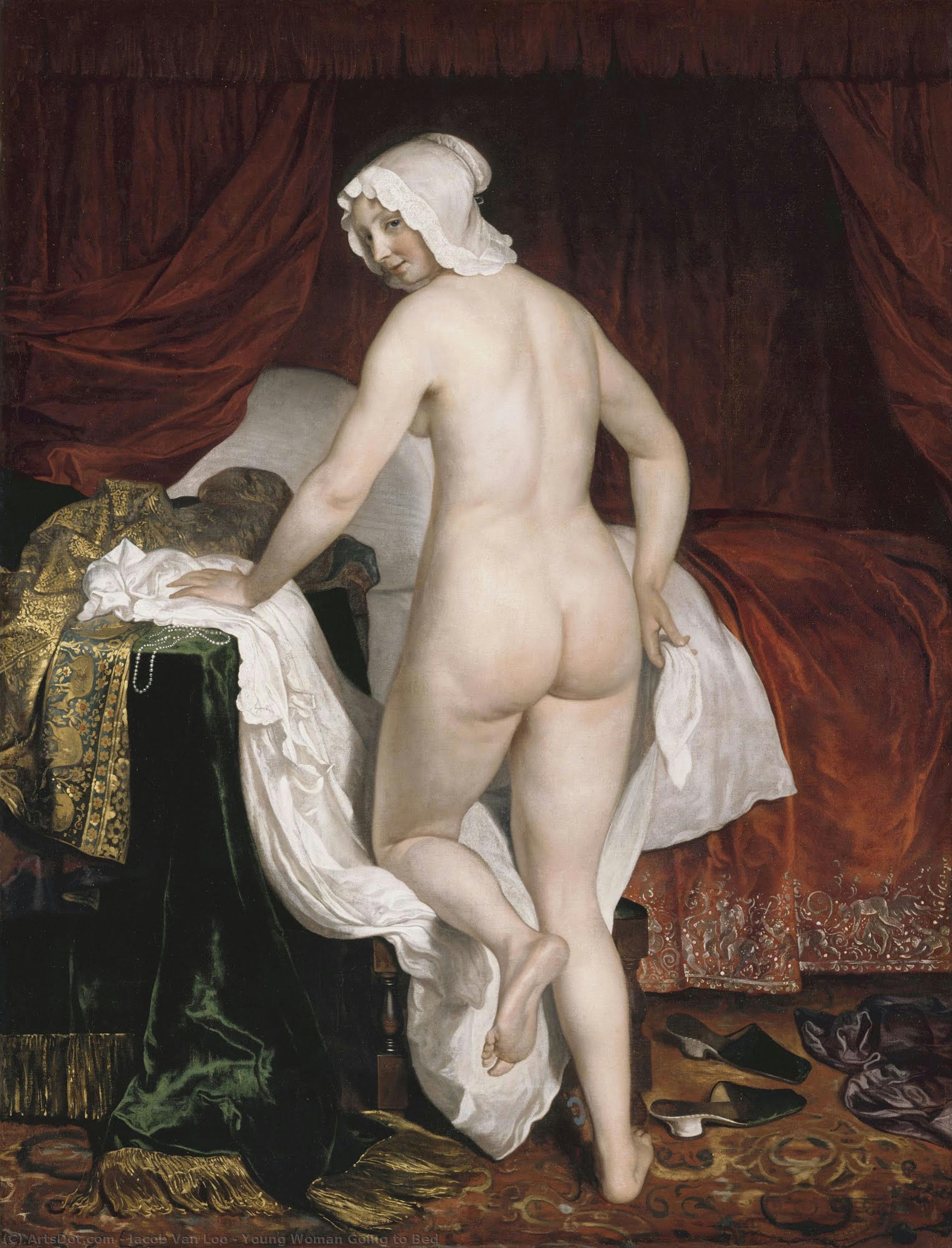
Jacob van Loo’s “Young Woman Going to Bed,” often referred to as “The Italian Sunset,” isn't merely a depiction of a reclining nude; it’s a carefully constructed tableau of domesticity, vulnerability, and the subtle allure of twilight. Painted around 1650 in the heart of Amsterdam during the height of the Dutch Golden Age, this oil on canvas transcends simple portraiture to become a profound meditation on female beauty and the quiet intimacy of private moments. Van Loo, a pivotal figure within his family’s dynasty of painters – a lineage that included the renowned Jean-Baptiste and Charles-André van Loo – masterfully employed techniques honed from his predecessors while establishing his own distinctive style characterized by a remarkable sensitivity to light and form.
Born in Sluis, a bustling port town on the Dutch coast, Van Loo’s early life was deeply intertwined with the artistic traditions of his family. His father, Jan van Loo, instilled in him a foundational understanding of painting, shaping not only his technical skills but also his appreciation for the nuanced portrayal of human emotion and form. The city of Amsterdam became his adopted home, immersing him within a vibrant artistic community that included luminaries like Rembrandt, Frans Hals, and Bartholomeus van der Helst – artists whose influence undoubtedly shaped Van Loo’s own evolving style. The painting's genesis reflects this environment: it’s a conversation with the masters, yet distinctly Van Loo’s own.
The Language of Light and Shadow: Technique and Composition
Van Loo’s technical prowess is immediately evident in the exquisite rendering of texture and form. The painting's composition is anchored by a pyramidal structure, drawing the viewer’s eye upwards towards the woman’s serene face and the luxurious drapery enveloping her body. The use of light is particularly masterful – a dramatic directional illumination casts strong shadows that sculpt the figure, adding depth and volume to the scene. Notice how the warm tones of red in the bedcover and surrounding fabrics are juxtaposed with cooler whites and creams, creating a subtle yet powerful visual contrast. The smooth brushstrokes, meticulously applied, contribute to an overall sense of fluidity and movement, as if capturing a fleeting moment of repose.
The artist’s attention to detail is remarkable; from the delicate folds of the fabric to the subtle variations in skin tone, every element contributes to the painting's convincing realism. Van Loo was particularly celebrated for his ability to depict nudes with an almost unsettling level of naturalism – a characteristic that, during his lifetime, garnered considerable praise, even surpassing that of Rembrandt’s female figures. This reputation stemmed from his meticulous study of anatomy and his keen eye for capturing the subtle nuances of human beauty.
Symbolism and Emotional Resonance: A Window into Dutch Society
Beyond its technical brilliance, “Young Woman Going to Bed” offers a glimpse into the social and cultural values of 17th-century Holland. The scene evokes themes of modesty, privacy, and domesticity – concepts highly valued within Dutch society at the time. The woman’s reclining pose suggests a sense of vulnerability and intimacy, while her serene expression conveys a quiet contentment. The inclusion of personal belongings—a small table with a candle, a book resting on a nearby stool—further reinforces the painting's portrayal of a private sanctuary.
Furthermore, the title itself – “The Italian Sunset” – hints at a broader symbolic meaning. Italy was often associated with beauty, luxury, and artistic refinement during the Dutch Golden Age, making this evocative phrase allude to an idealized vision of feminine grace and sophistication. The painting’s enduring appeal lies not only in its technical mastery but also in its ability to resonate emotionally with viewers, inviting them to contemplate themes of beauty, intimacy, and the quiet pleasures of everyday life.
A Legacy of Artistic Influence
Jacob van Loo's legacy extends far beyond this single masterpiece. He played a crucial role in establishing the Van Loo dynasty of painters, whose influence permeated European art for generations. His son, Louis-Abraham van Loo, and his grandsons, Jean-Baptiste and Charles-André van Loo, continued to build upon their father’s artistic foundation, solidifying the family's reputation as one of the most important painting dynasties in Dutch history. “Young Woman Going to Bed” stands as a testament to Van Loo’s exceptional talent and enduring contribution to the rich tapestry of Dutch art.