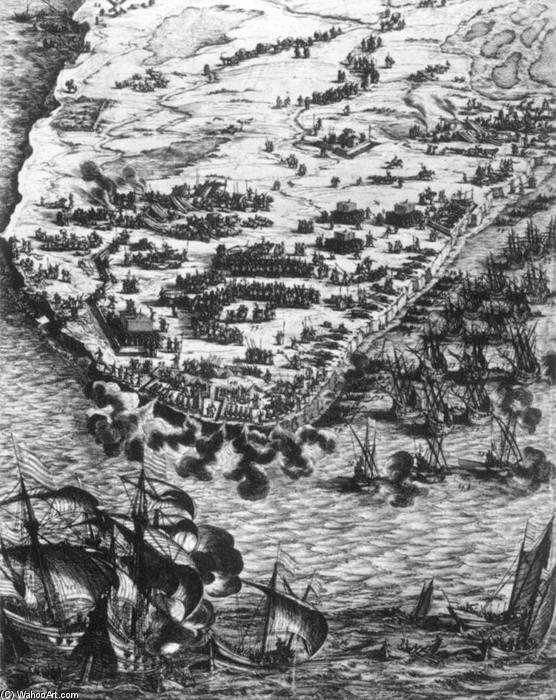
The Siege of La Rochelle was the climax of an ongoing conflict between French Catholics and Protestants. In 1598, the Edict of Nantes had granted the Huguenots religious freedom.
Jacques Callot fue un pintor barroco reconocido por sus obras gráficas impactantes sobre la guerra y la vida cotidiana. Pionero de las estampas maestras antiguas, influyó a artistas como Goya con sus detallados dibujos y técnicas innovadoras.
El museo ofrece talleres educativos para niños y adultos.
Jacques Callot’s Siege of La Rochelle: A Chronicle of Conflict Rendered in Etching
The artwork, Jacques Callot's "Siege of La Rochelle," transcends mere depiction; it embodies the visceral horror and monumental scale of a pivotal moment in French history—the protracted struggle between Catholics and Protestants that culminated in 1627-1628. More than just a visual record, this etching serves as a testament to Callot’s unparalleled mastery of printmaking and his profound understanding of human experience under duress. Published during the reign of Louis XIII, it captures not only the military siege itself but also the broader societal anxieties surrounding religious discord and royal authority.
Composition and Perspective: A Bird's-Eye View of Desolation
Callot’s compositional genius is immediately evident in his audacious choice of perspective—a high vantage point that sweeps across the besieged city of La Rochelle and its environs. This panoramic view isn’t merely descriptive; it actively directs the viewer’s gaze, immersing them within the overwhelming panorama of conflict. The hillside upon which La Rochelle rests subtly emphasizes the vulnerability of the city, while the densely populated landscape—featuring fortifications, soldiers, ships, and scattered figures—creates a palpable sense of claustrophobia and impending doom. Despite its complexity, the arrangement feels purposeful, conveying the sprawling nature of the siege and underlining its significance as a symbol of national division.
The Language of Line: Etching’s Dramatic Power
Callot's technique—etching—is itself a powerful instrument of storytelling. Utilizing finely crafted copper plates etched with needles, he painstakingly transferred images onto paper through a process involving ink and pressure. The resulting print is characterized by an astonishing level of detail achieved through the masterful application of cross-hatching – a technique where intersecting lines create tonal variations that simulate shading and volume. Stronger, bolder lines delineate the outlines of prominent structures like the city walls and warships, anchoring the composition while simultaneously conveying the urgency of the scene. The etching’s textured surface mirrors the harsh realities of siege warfare, mirroring the crumbling fortifications and the desperate plight of besieged citizens.
Symbolism Beyond Representation: Echoes of Suffering and Resilience
Beyond its meticulous depiction of military action, “Siege of La Rochelle” resonates with deeper symbolic meanings. Callot's portrayal of human figures—soldiers, civilians, and even animals—is imbued with pathos, reflecting the profound suffering endured by those caught in the grip of conflict. The artist’s deliberate use of light and shadow amplifies this emotional impact, highlighting moments of vulnerability and despair alongside flashes of defiance. Yet, amidst the devastation, there's also an underlying suggestion of resilience – a quiet dignity expressed in the faces of individuals confronting unimaginable hardship. This duality underscores Callot’s humanist vision, reminding us that even in times of crisis, human spirit persists.
A Legacy of Artistic Innovation
Jacques Callot’s “Siege of La Rochelle” stands as an exemplar of Baroque printmaking and a cornerstone of artistic history. His groundbreaking innovations in etching technique profoundly influenced subsequent generations of artists, notably Goya, who recognized Callot's ability to convey emotion with unparalleled precision. More than just a historical document, this artwork remains a timeless meditation on the human condition—a haunting reminder of the destructive consequences of intolerance and the enduring power of artistic expression to illuminate both darkness and light. Its meticulous detail and emotive quality continue to captivate audiences today, cementing Callot’s place as one of the most influential printmakers of his era.