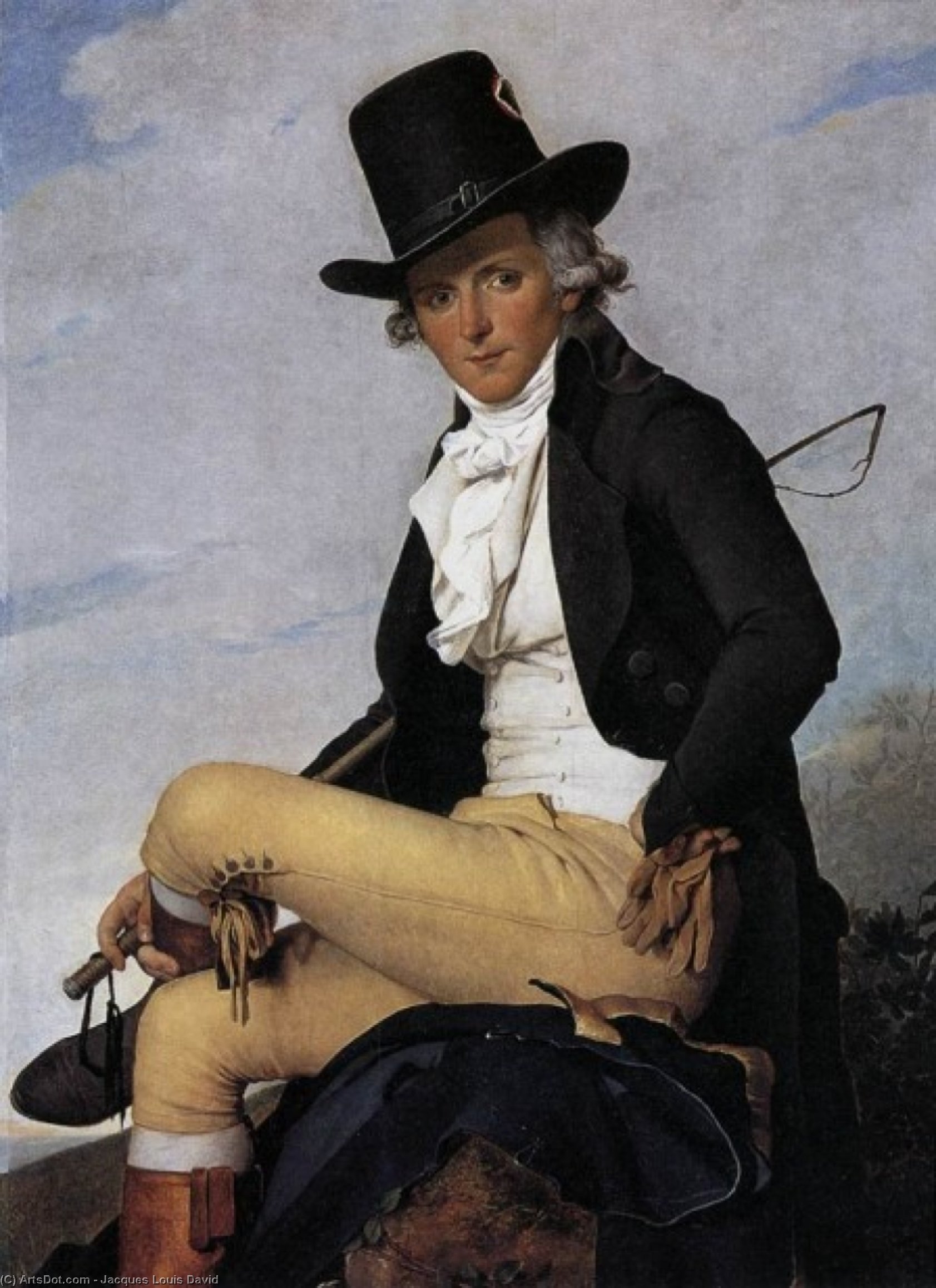
Descubre el retrato de Pierre Seriziat, obra maestra neoclasicista de Jacques-Louis David que captura la esencia de la sociedad francesa ilustrada con detalle y profundidad psicológica.
Jacques-Louis David (1748-1825): Pintor francés neoclásico líder de la Revolución y las épocas napoleónicas. Conocido por 'Juramento de los Horacios', su arte encarna el heroísmo, el drama e ideales clásicos. Explora su legado en ArtsDot!
Portrait of Pierre Seriziat: A Reflection of Enlightenment Dignity
Jacques-Louis David’s *Portrait of Pierre Seriziat*, painted around 1795, transcends mere representation; it embodies the spirit of the French Enlightenment and stands as a testament to Neoclassical artistic ideals. This striking depiction captures Pierre Seriziat, a prominent figure in Parisian society during a tumultuous period marked by revolutionary fervor, presenting him with an unwavering gaze and understated elegance—a visual embodiment of reason and civic virtue. The painting’s significance extends beyond its aesthetic beauty, intertwining personal connections and reflecting the evolving patronage landscape of the era.
Subject & Historical Context: Revolution Within Refinement
The commission itself is laden with historical context. David, deeply invested in the burgeoning republican movement, sought to portray Seriziat amidst the seismic shifts reshaping France following the overthrow of Louis XVI. Notably, Emilie Seriziat—Pierre’s wife—was the sister of Charlotte Corday, assassin of Jean-Paul Marat – a connection that added an intriguing layer of complexity to David's artistic endeavor. This decision underscores the artist’s awareness of the social currents influencing his time and reflects the burgeoning interest in portraying individuals within their socio-political milieu. Prior to this era, artists primarily served royal commissions; however, Seriziat’s patronage represents a crucial transition toward supporting art from the rising bourgeois class—a pivotal moment in artistic history.
Style & Technique: Mastering Neoclassical Precision
David's mastery of Neoclassical technique is immediately apparent. The composition eschews excessive ornamentation, prioritizing balance and focusing intently on Seriziat’s face and upper torso – a deliberate choice reflecting the movement’s rejection of Rococo frivolity. A muted color palette—dominated by browns, creams, blacks, and whites—creates an atmosphere of solemn contemplation, subtly enhancing the psychological depth of the portrait. The artist skillfully employs chiaroscuro, manipulating light and shadow to sculpt Seriziat's form with remarkable realism, lending him a palpable presence. Observe the meticulous rendering of textures: the crisp linen of his shirt, the luxurious drape of his cloak, and the subtle sheen on his gloves—details meticulously executed to convey materiality and enhance visual impact. The brushwork is relatively loose yet expressive, capturing movement and conveying emotion without sacrificing compositional control.
Symbolism & Emotional Resonance: Beyond Appearance
More than just a likeness, *Portrait of Pierre Seriziat* communicates profound symbolic meaning. Seriziat’s posture—seated with dignified composure—represents stability and moral fortitude – qualities prized during the Enlightenment. His gaze directs outward, conveying thoughtfulness and introspection, inviting contemplation on themes of virtue and civic responsibility. The artist's careful attention to detail extends beyond mere representation; it aims to capture the essence of Seriziat’s character—a man striving for excellence amidst societal upheaval. The subdued color palette reinforces this mood, fostering a sense of serenity and conveying an understated elegance that speaks volumes about the sitter’s status and ideals.
Concluding Impression: An Icon of Neoclassicism
Ultimately, David's *Portrait of Pierre Seriziat* stands as a cornerstone of Neoclassical art—a celebration of classical beauty tempered by humanist values. It exemplifies the movement’s commitment to rational thought and moral seriousness while simultaneously capturing the psychological nuances inherent in portraying an individual within his historical context. This masterpiece continues to inspire admiration for its technical brilliance and enduring emotional resonance, cementing David's legacy as one of France’s most influential artists.