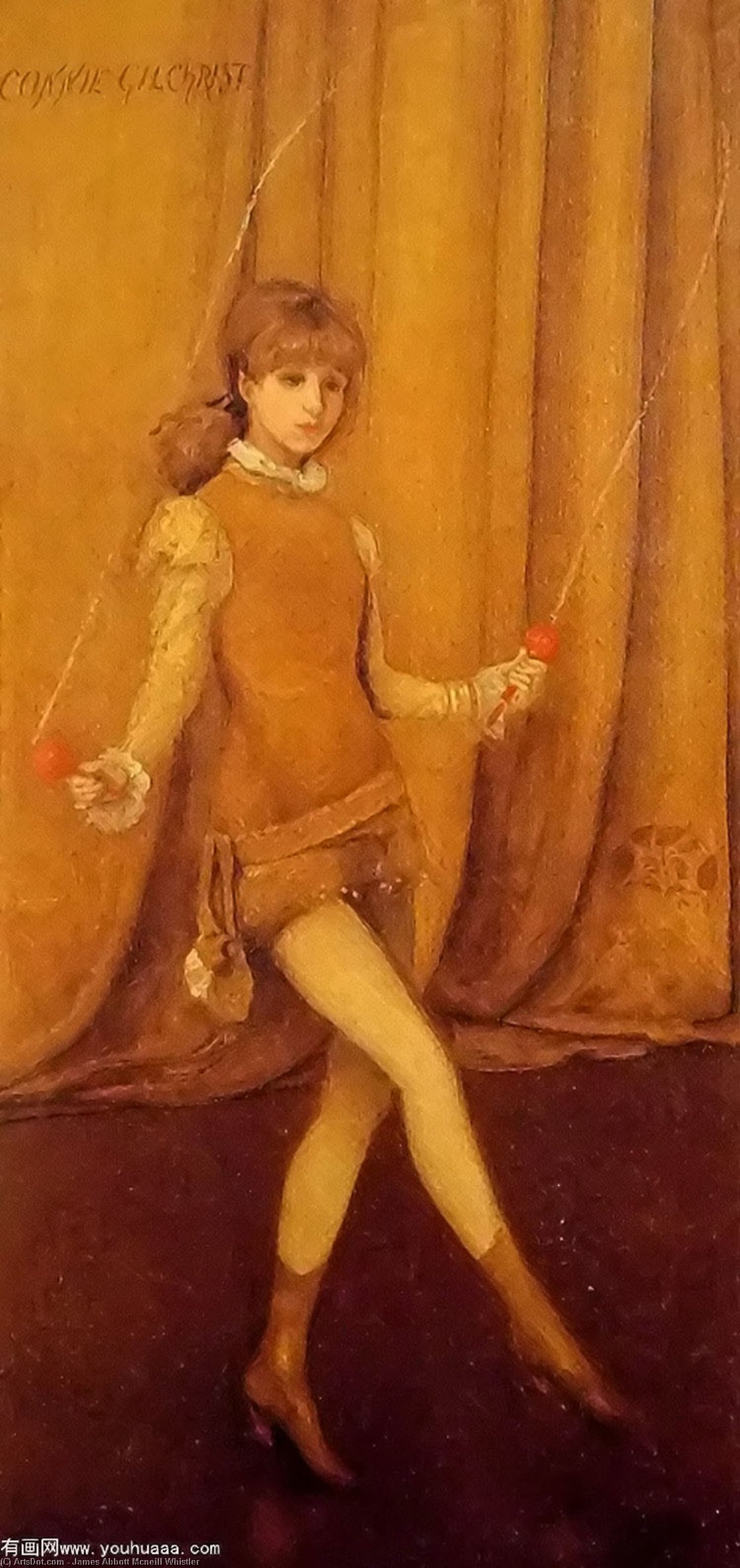
Harmony in Yellow and Gold: The Gold Girl Connie Gilchrist
The painting
Harmony in Yellow and Gold: The Gold Girl—Connie Gilchrist stands as a testament to James Abbott McNeill Whistler’s singular vision – an exploration of tonal harmony that transcends mere representation. Created in 1876, this oil on canvas piece isn't simply a portrait; it’s a carefully considered composition designed to evoke contemplation and subtly convey emotion. Whistler, deeply influenced by Impressionism yet steadfastly committed to his own aesthetic principles, sought to capture the essence of light and color without resorting to detailed depiction. This approach aligns perfectly with the painting's serene atmosphere and its masterful use of pigment.
Artistic Style and Technique: Tonal Harmony
Whistler’s distinctive style—often termed “Tonalism”—was a reaction against the prevailing trend toward capturing fleeting impressions of light and color. Instead, he prioritized achieving a unified tonal surface, where subtle gradations of color blend seamlessly to create an illusion of depth and luminosity. In
Harmony in Yellow and Gold: The Gold Girl—Connie Gilchrist, Whistler achieves this effect brilliantly through meticulous layering of thin glazes – translucent washes of color applied over multiple coats – resulting in a velvety surface that absorbs light rather than reflecting it. This technique lends the painting an ethereal quality, mirroring the moodiness of the nocturne genre and emphasizing Whistler’s belief that “art for art’s sake” should be paramount.
Subject and Composition: Graceful Presence
The subject of the artwork is Constance Macdonald Gilchrist—a young dancer known as “the original Gaiety Girl”—captured in a pose that embodies confidence and poise. Gilchrist stands on stage, her legs slightly parted, holding two red balls aloft – a deliberate inclusion intended to heighten the visual drama without distracting from Whistler’s tonal exploration. The curtain backdrop serves as an integral element of the composition, framing Gilchrist and subtly suggesting the theatrical setting. Whistler skillfully utilizes negative space—the areas devoid of color—to create balance and draw attention to the central figure, furthering enhancing the painting's contemplative character.
Historical Context: Aestheticism and Symbolism
Aestheticism flourished in Britain during Whistler’s time—a movement that championed beauty as an end in itself, rejecting moral didacticism and prioritizing sensory experience. Whistler embraced this philosophy wholeheartedly, believing that art should be judged solely on its visual impact. The painting's muted palette – dominated by shades of yellow and gold – contributes to the overall mood of quiet contemplation and reinforces Whistler’s commitment to tonal harmony. Furthermore, the red balls symbolize passion and vitality—a counterpoint to the stillness of Gilchrist’s pose, prompting viewers to consider the interplay between opposing forces.
Resources for Further Exploration
To delve deeper into James Abbott McNeill Whistler's artistic legacy and appreciate
Harmony in Yellow and Gold: The Gold Girl—Connie Gilchrist within its broader context, visit
ArtsDot.com for additional information about Whistler’s life and work. You can also explore the Hunterian Museum and Art Gallery, showcasing masterpieces by renowned artists like Whistler, offering invaluable insights into his artistic vision. Consider commissioning a hand-painted reproduction of this iconic artwork from
ArtsDot.com to bring Whistler’s aesthetic brilliance into your home.