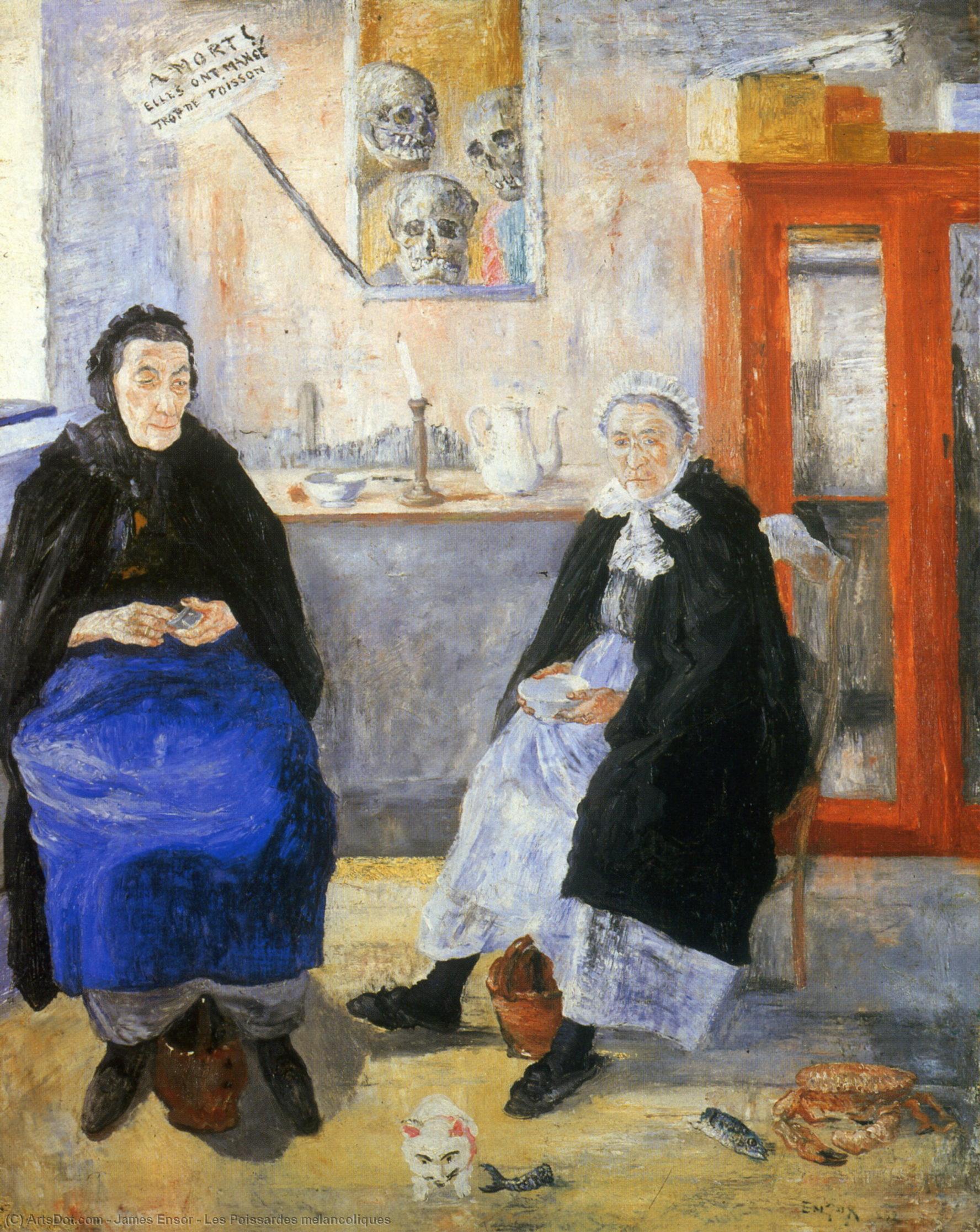
Les Poissardes melancoliques

James Ensor’s Les Poissardes melancoliques presents two women in a haunting black and white scene filled with unsettling objects, reflecting the artist's unique Symbolist style. Explore this evocative masterpiece and discover its captivating mood – own a piece of art history.


James Ensor (1860 - 1949)

Descubre a James Ensor (1860-1949), un pionero pintor y grabador belga. Explora sus escenas inquietantes y oníricas de máscaras, carnavales y esqueletos que influyeron profundamente en el Expresionismo y el Surrealismo. #JamesEnsor #Expresionismo #Surrealismo #Bel

James Ensor's Melancholic Fisherwomen: A Window into the Soul

  • James Ensor’s *Les Poissardes melancoliques* (The Melancholy Fishwives) is a profoundly unsettling yet undeniably captivating work, born from the artist’s unique perspective and deeply rooted in the atmosphere of his native Ostend. Completed around 1896, this black-and-white depiction transcends a simple genre scene; it's an intensely psychological portrait rendered with Ensor’s signature blend of Symbolism and Expressionism. The painting immediately confronts the viewer with two women – seemingly ordinary fishwives – yet their postures and the surrounding environment evoke a palpable sense of sorrow and isolation.
  • Ensor, influenced by the vibrant, often unsettling world of Belgian seaside resorts and his family's souvenir shop filled with masks and curiosities, was fascinated by themes of disguise and hidden emotion. This fascination is powerfully evident in *Les Poissardes melancoliques*. The cluttered room, populated with bottles, a cup, and a bowl, isn’t merely a backdrop; it feels like a contained space of suppressed feelings and unspoken anxieties.

A Study in Symbolism and Technique

  • Ensor's masterful technique is immediately apparent. He employs a starkly contrasting palette – the dominance of black and white amplifies the emotional weight of the scene. The figures themselves are rendered with broad, expressive brushstrokes, contributing to their sense of vulnerability and unease. Notice how he uses light and shadow not just for realism but to sculpt form and intensify mood.
  • The composition is deliberately unbalanced, further enhancing the feeling of disquiet. The women are positioned in a way that draws the viewer into their private world, creating an intimate yet unsettling experience. Ensor’s meticulous attention to detail – the textures of the clothing, the glint of light on the bottles – adds to the painting's overall impact and realism, despite its symbolic intent.

Historical Context and Ensor’s Vision

  • Created during a period of significant artistic experimentation in Europe, *Les Poissardes melancoliques* aligns with the burgeoning Symbolist movement, which sought to express subjective emotions and ideas rather than simply depicting external reality. However, Ensor pushes beyond mere Symbolism, incorporating elements of Expressionism that would become increasingly prominent in his later work.
  • Ensor’s personal life – his dual heritage, his struggles with artistic conventions, and his preoccupation with themes of mortality and the grotesque – all contribute to the painting's profound emotional depth. The fishwives themselves can be interpreted as representations of marginalized figures within Belgian society, burdened by hardship and despair.

Emotional Impact and Artistic Significance

  • *Les Poissardes melancoliques* remains a powerfully evocative work, capable of eliciting a range of emotions from the viewer – sadness, anxiety, perhaps even a sense of dread. It’s a testament to Ensor's ability to translate complex psychological states into visual form.
  • This painting is considered a cornerstone of Ensor’s oeuvre and a crucial example of his unique artistic vision. Its haunting beauty and unsettling atmosphere continue to captivate audiences today, solidifying its place as one of the most significant works in the artist's body of work. A hand-painted reproduction offers an unparalleled opportunity to experience this masterpiece firsthand.