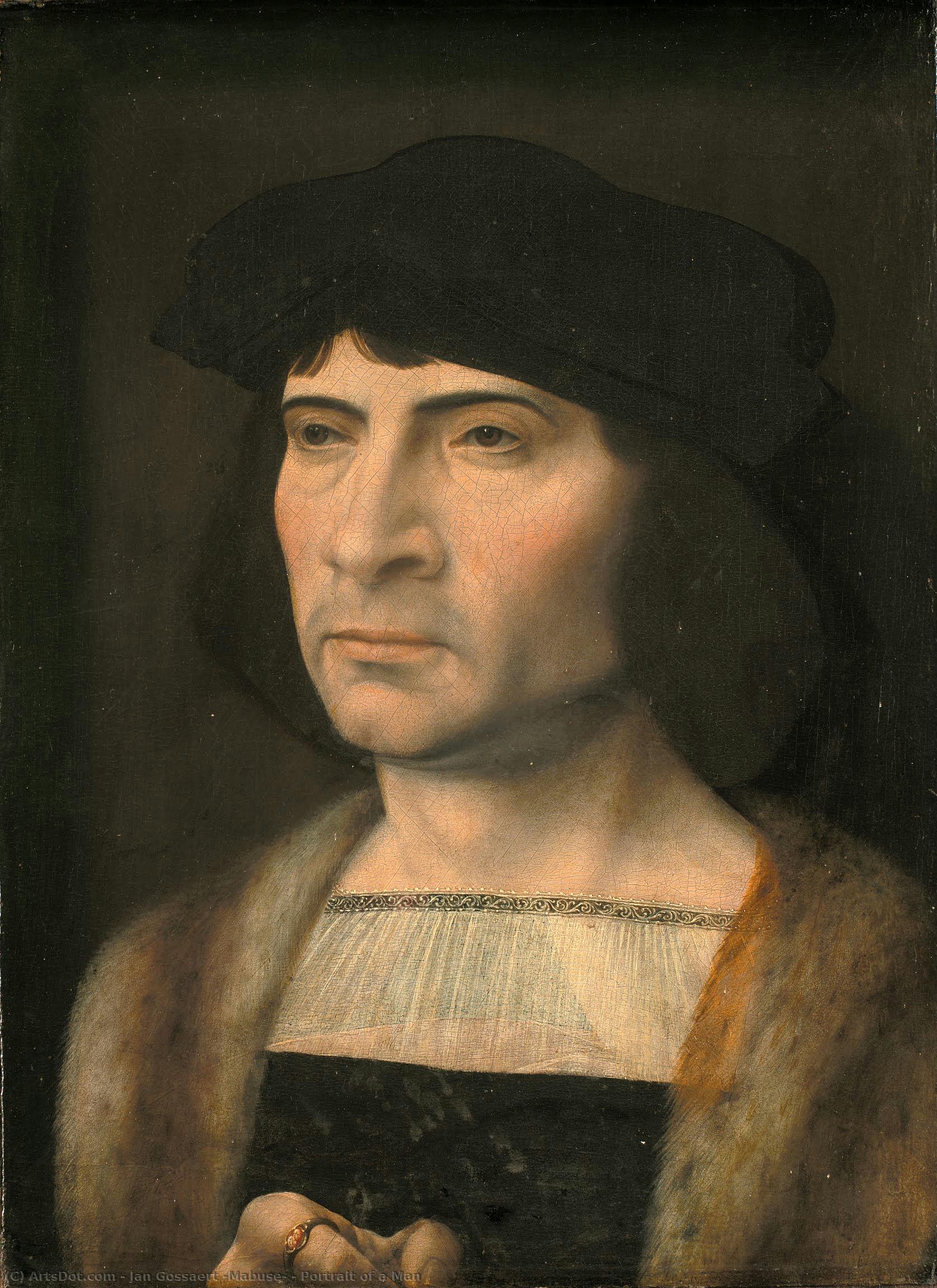
A powerfully rendered 1532 portrait by Jan Gossaert captures a stern, resolute man with flaring nostrils and tight lips, embodying the ruthless pragmatism of the Renaissance era. This captivating piece showcases Gossaert’s mastery and offers a timeless depiction of strength – discover this exquisite reproduction.
A Portrait of Unwavering Resolve: Jan Gossaert’s ‘Portrait of a Man’
This arresting portrait, executed in 1532 by the masterful Jan Gossaert (Mabuse), transcends mere representation to embody a potent distillation of Renaissance ideals. Measuring 31 x 41 cm, this intimate canvas immediately commands attention with its subject's intensely focused gaze and the palpable sense of controlled power radiating from him. The man before us is not simply depicted; he is presented as an archetype – a figure for whom the ends justify the means, a personality forged in strength and unwavering conviction.
- The Artist’s Legacy: Jan Gossaert's rise to prominence mirrors the broader artistic shifts occurring across Europe during the early 16th century. His appointment as a master of the St. Luke’s Guild in Antwerp solidified his position at the forefront of artistic innovation, leading him on a trajectory that included commissions from royal patrons like Danish King Christian II.
- Hampton Court Echoes: Gossaert's work resonates with earlier explorations of secular portraiture, notably his depiction of Danish princes – a pioneering group portrait that foreshadowed the burgeoning interest in capturing individual personality within artistic works. The careful observation and nuanced portrayal of these young royals clearly influenced Gossaert’s approach to this ‘Portrait of a Man.’
Technical Mastery and Renaissance Influence
Gossaert's skill is immediately evident in the meticulous detail with which he renders his subject. The dark, richly textured fabric of the man’s attire – a black hat adorned with a fur trim and a ruffled collar – speaks to the luxurious materials favored by the wealthy elite of the era. The artist’s technique demonstrates a sophisticated understanding of oil painting, achieved through layering glazes that create a luminous quality and an astonishing level of realism in the rendering of textures, particularly the fur and the folds of the clothing. This reflects his training under Flemish masters like Rogier van der Weyden and Hugo van der Goes, who championed emotional depth and realistic representation within religious iconography.
Symbolism and Emotional Impact
The man’s posture – rigid yet resolute – is key to understanding the portrait's impact. Nostrils flaring, lips tight, he presents a face of unwavering determination, suggesting a character accustomed to confronting difficult situations with unflinching resolve. The dark background serves not merely as a backdrop but actively amplifies the subject’s presence, drawing the viewer’s eye directly to his intense gaze. This portrait isn't about beauty; it’s about power, intellect, and an unyielding spirit – qualities that continue to resonate powerfully across centuries.
Historical Context and Significance
Created in 1532, this work represents a pivotal moment in the evolution of portraiture. Gossaert's ability to capture not just physical likeness but also the inner character of his subject firmly establishes him as a master of psychological realism. The painting’s enduring appeal lies in its timeless quality – it speaks to fundamental human traits that transcend specific historical periods, making it a compelling addition to any discerning collection or a striking focal point within interior design.