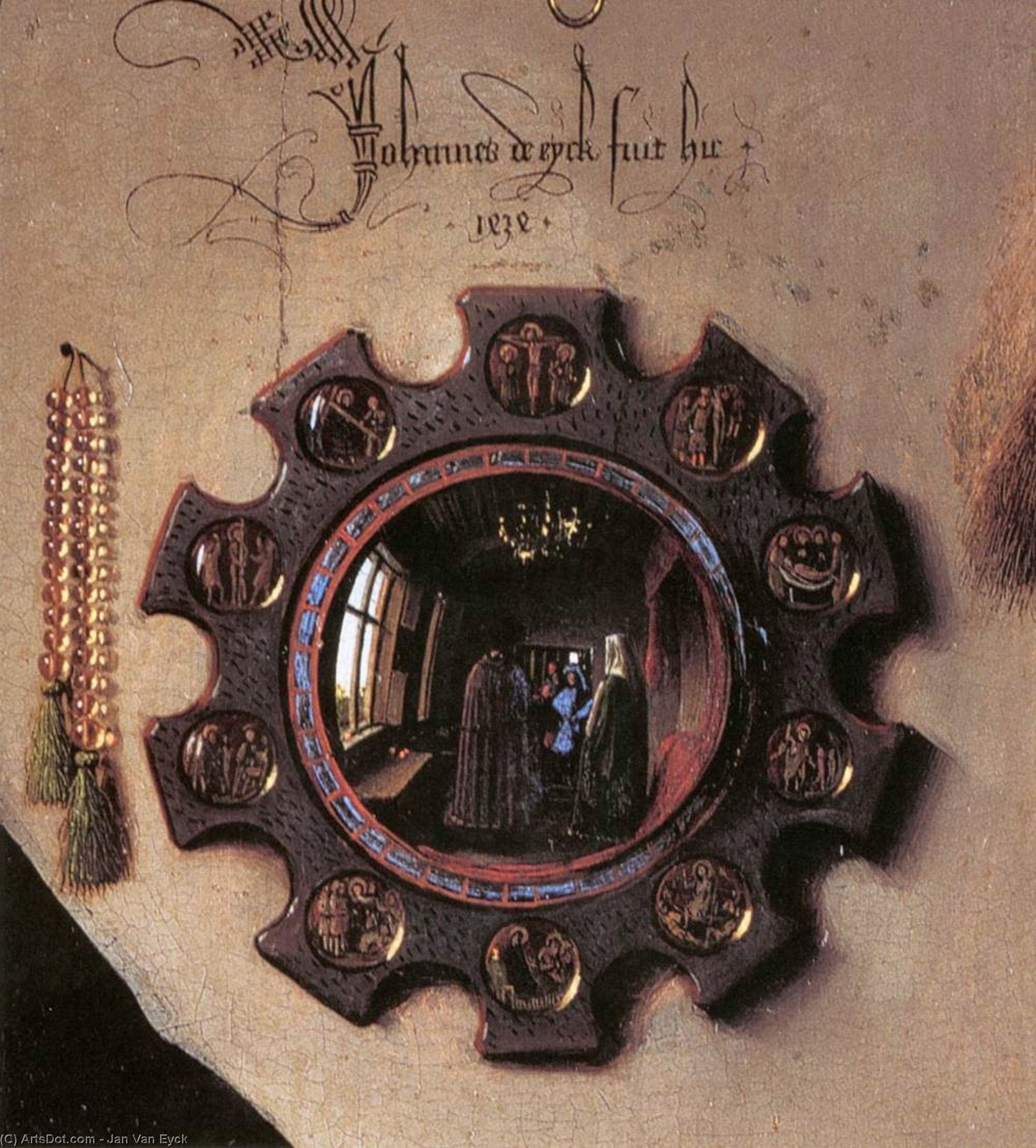
Portrait of Giovanni Arnolfini and his Wife (detail)
The Portrait of Giovanni Arnolfini and his Wife, a masterpiece by the renowned artist Jan Van Eyck, stands as an unparalleled achievement in Early Netherlandish painting—a testament to artistic innovation and meticulous observation.
Painted in 1434, this oil on oak panel resides at the National Gallery in London and is universally recognized as a cornerstone of artistic history.
The Artistic Technique
Jan van Eyck’s revolutionary approach to pigment application—the masterful use of oil paint—transformed the visual landscape of his time. Unlike tempera paints which dry quickly, oil allowed for an astonishing level of detail and luminosity. He achieved this through *alla prima*, applying thin, translucent glazes layer upon layer, meticulously blending wet-on-wet to capture subtle nuances of light and shadow.
This technique wasn’t merely about replicating reality; it was about creating an illusion—a palpable sense of depth and texture that captivated viewers centuries later. Consider the way Van Eyck renders the folds of fabric, the sheen on the polished brass chandelier, or the delicate rendering of skin tones – each element speaks to his unparalleled skill.
Iconography and Symbolism
The Arnolfini Portrait is brimming with symbolic references that extend far beyond its surface appearance. The woman’s dress—a vibrant green hue—represents fertility, a crucial consideration in marriage rituals during the Renaissance. Similarly, the fruit on the windowsill symbolizes abundance and prosperity – a visual declaration of marital happiness.
The mirror hanging prominently on the wall is perhaps the painting's most intriguing element. Its convex surface reflects not only the room itself but also two additional figures entering from the doorway—a subtle gesture suggesting witness to the ceremony, and potentially Van Eyck himself. The clock positioned above the mantelpiece serves as a reminder of time passing, emphasizing the solemnity of the occasion.
Historical Context
This painting marks an extraordinary moment in art history: it is widely regarded as one of the earliest examples of a full-length double portrait executed in oil paint. Giovanni di Nicolao Arnolfini and his wife are depicted within their Bruges home, offering a glimpse into the domestic life of wealthy merchants during the Burgundian Renaissance.
Beyond its aesthetic brilliance, the Arnolfini Portrait holds profound significance as a document of its era—a visual record of social customs and beliefs. It exemplifies the artistic fervor that characterized Northern Europe in the mid-15th century, establishing Jan van Eyck’s legacy as one of the most influential painters of his generation.
Artistic Influence
Jan van Eyck's groundbreaking technique irrevocably altered the course of painting. His meticulous attention to detail and his pioneering use of oil paint inspired subsequent artists—including Leonardo da Vinci—to push the boundaries of realism and illusionism. The Arnolfini Portrait continues to serve as a beacon for aspiring painters, demonstrating that true artistry lies in capturing not just what is seen but also what is felt.
For those seeking inspiration or contemplating acquiring a stunning reproduction of this iconic artwork, explore more of Jan van Eyck’s oeuvre at Jan Van Eyck – a true visionary who redefined the art of his time.