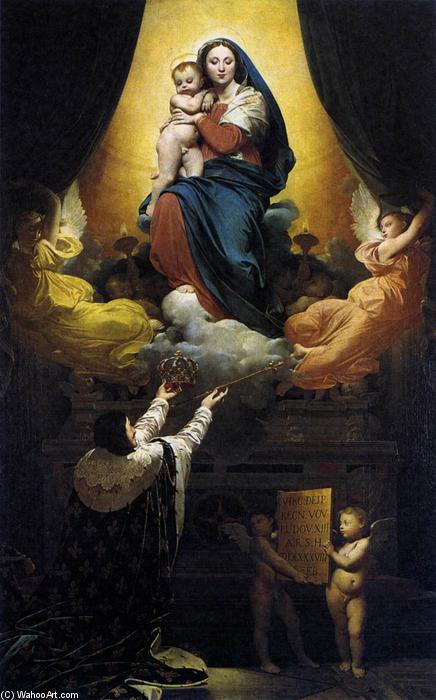
The Vow of Louis XIII
Jean-Auguste-Dominique Ingres’ “The Vow of Louis XIII,” completed in 1824, stands as a monumental testament to Neoclassical grandeur and artistic ambition. More than just a depiction of religious devotion, it embodies the intellectual fervor of its time—a clash between classical restraint and burgeoning Romantic emotion—captured with unparalleled precision.
- Subject Matter: The painting portrays Louis XIII kneeling before the Virgin Mary, symbolizing France’s solemn pledge to divine protection during a period marked by political instability and religious reform.
- Style: Ingres adhered rigorously to Raphael’s style, rejecting the expressive dynamism favored by Delacroix and embracing symmetry, balance, and idealized forms—characteristics emblematic of Neoclassicism.
- Technique: Executed in oil on canvas with meticulous glazing, “The Vow” showcases Ingres' mastery of chiaroscuro (light and shadow), creating a dramatic interplay that elevates the spiritual significance of the scene. The artist employed a technique reminiscent of Raphael’s Madonna di Foligno, reversing the pose to emphasize solemn contemplation.
- Historical Context: Commissioned by France’s Ministry of Interior in response to the turbulent political landscape following Louis XVI's overthrow, the painting reflects the anxieties surrounding royal legitimacy and the yearning for moral stability amidst societal upheaval. It debuted at the Salon of 1824 alongside Delacroix’s “Scenes from the Massacres of Chios,” sparking a pivotal debate about artistic priorities.
- Symbolism: The pyramidal composition—with Mary and Jesus at its apex—represents divine majesty and reinforces the central theme of piety and reverence. Ingres deliberately avoided conveying emotional fervor, prioritizing intellectual clarity and upholding Raphael’s aesthetic ideals.
Elizabeth Prettejohn argues that Ingres' stylistic choices mirrored the broader artistic tensions of the era: “Ingres’ *The Vow of Louis XIII* *is pious and patriotic...Delacroix’s * Scenes from the Massacres of Chios*, on the other hand, is modern and activist...In every aspect of pictorial style, too, the two pictures are starkly contrasted.”
Stendahl famously criticized Ingres' work at the Salon of 1824, noting that “This is a psychological, not a technical defect,” highlighting the artist’s unwavering commitment to classical principles. Despite critiques, Ingres cemented his legacy as the foremost champion of Neoclassicism—a style destined to inspire generations of artists and captivate audiences worldwide.
The painting resides in Montauban Cathedral, France – a UNESCO World Heritage Site showcasing Ingres’ masterpiece and rich religious history! Admire architectural details & discover Tarn-et-Garonne's cultural gem.