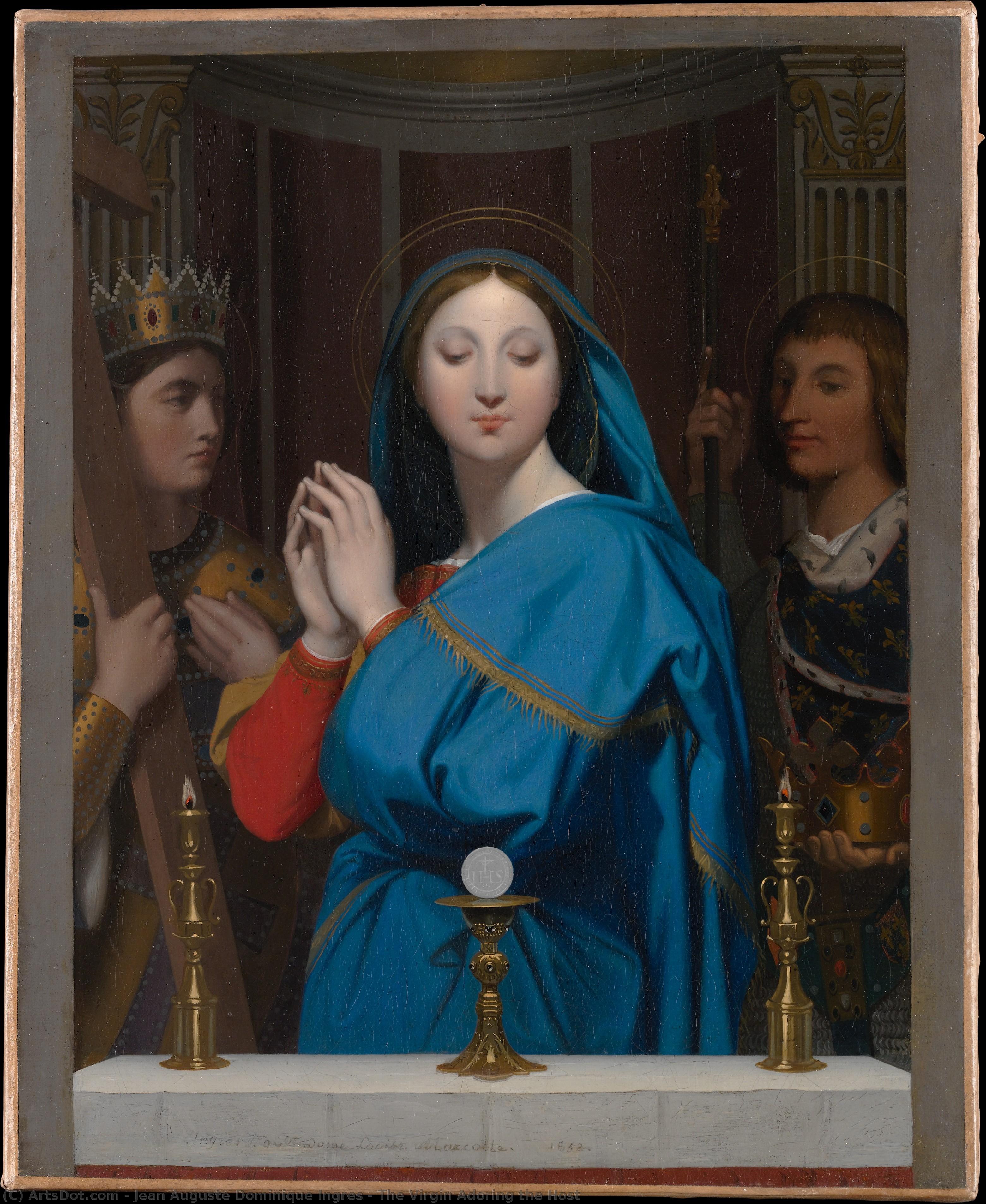
La exquisita obra de Ingres captura la serena belleza de la devoción neoclásica, reflejando el estilo de Rafael y celebrando un himno eterno a la fe con línea y forma meticulosas. Explora esta obra maestra.
Descubre a Ingres (1780-1867), maestro del neoclasicismo y retratos icónicos. Explora su legado, influencia en Matisse y Picasso en ArtsDot.
Descubre el Museo Metropolitano de Arte (The Met) en NYC: 5000 años de arte, desde Egipto hasta la modernidad. ¡Un viaje cultural imprescindible!
A Sacred Encounter in Light and Shadow
In the quietude of a candlelit chapel, Jean-Auguste-Dominique Ingres captures a moment of profound spiritual intimacy. "The Virgin Adoring the Host" is not merely a depiction of religious ritual; it is an invitation into a state of pure, unadulterated reverence. The Virgin Mary, draped in her iconic blue, sits with hands clasped in prayer, her gaze fixed upon the sacred host with a devotion that transcends the canvas. The presence of figures in the periphery—shadowed presences that add depth to the composition—creates a sense of shared sanctity, as if the viewer has stumbled upon a private, holy communion. The soft flicker of candlelight, casting gentle glows across the scene, imbues the atmosphere with a warmth that is both comforting and deeply moving, making this piece an evocative centerpiece for any space dedicated to contemplation and peace.
The Precision of Neoclassical Mastery
To behold this work is to witness the pinnacle of Neoclassical discipline. Unlike the fluid, spontaneous brushwork of the Impressionists, Ingres sought a sculptural permanence through meticulous line and form. Every fold of the Virgin’s drapery is rendered with an almost architectural accuracy, creating a three-dimensional presence that feels tangible to the touch. Through his masterful use of technique, Ingres achieved a luminous quality, where subtle tonal gradations allow light to dance across surfaces with breathtaking delicacy. This technical rigor does not feel cold or clinical; rather, it provides a structured vessel for the painting's emotional depth. For the discerning collector or interior designer, the painting’s clean contours and balanced composition offer a sophisticated elegance that complements both classical and contemporary settings, bringing a sense of order and refined beauty to a room.
A Bridge Between Eras and Hearts
The historical resonance of this masterpiece lies in its ability to bridge the grandeur of the Renaissance with the intimate sentiments of the Romantic era. Ingres, ever the guardian of tradition, drew profound inspiration from the monumental works of Raphael, particularly the balanced compositions found in the Vatican frescoes. Yet, there is a palpable personal touch within this work; painted in 1852 as a gift for Louise Marcotte—the woman who would become his wife and lifelong muse—the painting breathes with a tender, human warmth. It is this unique intersection of academic excellence and personal affection that gives the artwork its enduring soul. Owning a high-quality reproduction of such a piece means more than possessing a beautiful image; it is about integrating a legacy of faith, art history, and romantic devotion into the fabric of one's own home.