A Tender Glimpse into Enlightenment Russia
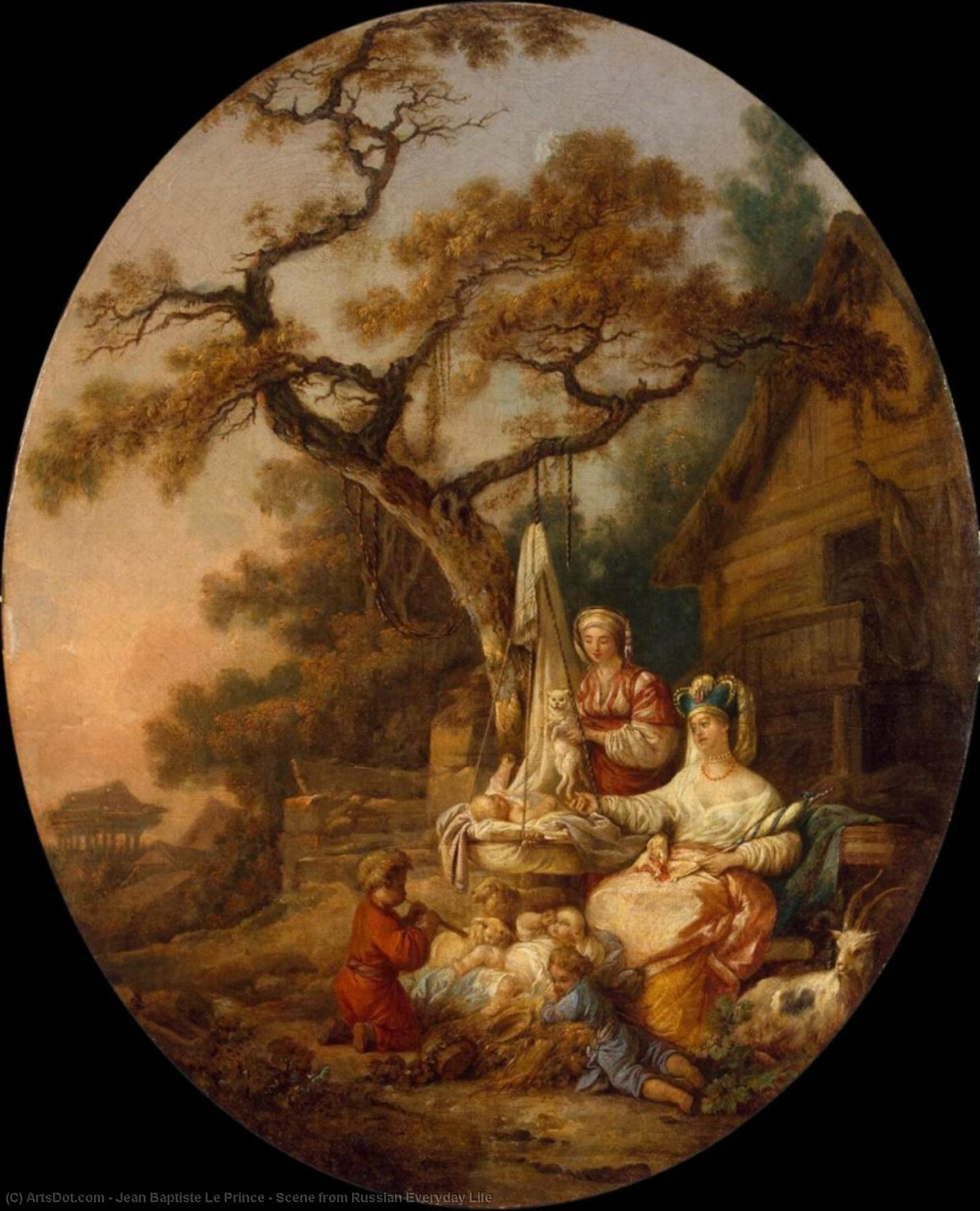
In the soft, flickering light of an eighteenth-century interior, Jean Baptiste Le Prince captures a moment that feels both profoundly intimate and historically monumental. His 1764 masterpiece, often referred to as The Russian Cradle, is far more than a simple domestic vignette; it is a carefully orchestrated tableau that breathes life into the era of Catherine the Great. As we gaze upon the woman cradling her infant, we are not merely observing a family scene, but witnessing a window into the soul of Enlightenment Russia—a period defined by a delicate tension between burgeoning modern ideals and deeply rooted traditions.
The painting presents a soulful composition where the warmth of human connection meets the structured elegance of the Rococo style. Le Prince masterfully directs our eyes through the scene, using the gentle curves of the figures and the soft textures of their traditional Russian attire to create a sense of rhythmic harmony. There is an undeniable emotional pull in the way the light falls across the mother’s face, illuminating a sense of maternal devotion that transcends time and geography, making this piece an evocative choice for any collector looking to introduce a sense of narrative depth and historical grace into a curated space.
Mastery of Light and Rococo Elegance
Technically, Le Prince demonstrates the sophisticated training he received under the legendary François Boucher. The artist employs a brilliant use of chiaroscuro, employing dramatic shifts between light and shadow to sculpt the figures from the darkness of the rural interior. This technique does not merely provide depth; it imbues the scene with a theatrical, almost sacred quality. His brushwork is nothing short of exquisite, capturing the tactile softness of skin and the heavy, intricate folds of fabric with a realism that balances the playful lightness characteristic of the Rociente era.
For the discerning interior designer, the painting offers a rich palette of muted tones and deep, resonant hues. The interplay between the darker architectural elements and the luminous highlights on the subjects creates a visual complexity that commands attention without overwhelming a room. It is a work that thrives in both grand, classical settings and more contemporary, minimalist environments, acting as a sophisticated focal point that invites prolonged contemplation.
Symbolism and the Weight of Tradition
Beneath the surface of this serene domesticity lies a profound layer of social commentary. The cradle itself serves as a potent symbol of continuity, lineage, and the preservation of values within the Russian aristocracy. However, Le Prince subtly weaves in the complexities of the era's social hierarchy. Through the positioning of the figures and the subtle distinctions in their presentation, he hints at the stratified nature of society under Catherine II—a world where the pursuit of domestic tranquility was often shadowed by the rigid structures of class and authority.
To possess a reproduction of this work is to hold a piece of history that speaks of protection, nurturing, and the enduring strength of the family unit. It is an investment in art that does not just decorate a wall, but tells a story of human resilience and the timeless beauty found in life's most quiet, fleeting moments.