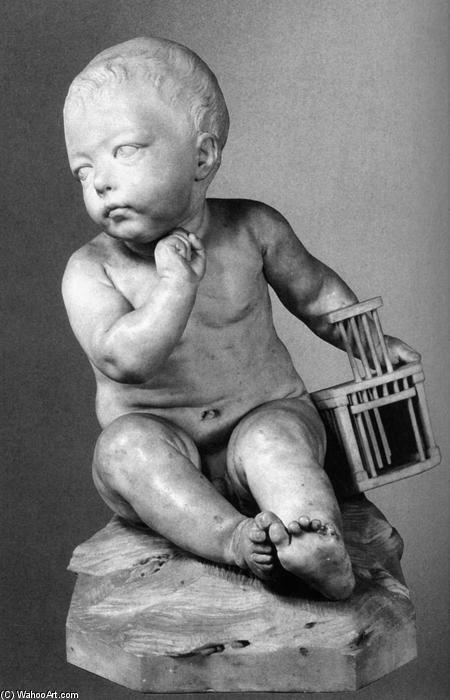
Experience the quiet contemplation of Pigalle's Neoclassical marble sculpture, Infant with a Cage, capturing freedom versus constraint; discover this masterpiece today.
Descubre a Jean-Baptiste Pigalle, escultor francés que fusionó el Barroco y Neoclasicismo. Admira sus figuras dinámicas, retratos icónicos (¡incluyendo el desnudo de Voltaire!) y belleza idealizada.
Descubre el Louvre en París: hogar de obras icónicas como la Mona Lisa y Venus de Milo. ¡Viaja por la historia del arte desde Egipto hasta iconos renacentistas! Planifica tu visita hoy.
París
Francia
Un Palacio Forjado a Través del Tiempo: Revelando el Alma del Louvre
El Musée du Louvre no es simplemente un edificio que alberga obras maestras; es un palimpsesto grabado en piedra y lienzo, susu
A Moment of Quiet Contemplation: Jean Baptiste Pigalle’s “Infant with a Cage”
Jean-Baptiste Pigalle's "Infant with a Cage," sculpted in 1750, stands as a testament to the burgeoning Neoclassical aesthetic—a deliberate reaction against the opulent excesses of the Baroque and an embrace of classical ideals. More than just a depiction of childhood innocence, this marble masterpiece delves into profound symbolic layers that continue to resonate with viewers today. The sculpture’s serene stillness invites contemplation on themes of freedom versus constraint, mirroring the broader intellectual currents shaping eighteenth-century France.
The Sculpture's Form and Technique: Embracing Classical Precision
Pigalle skillfully employed subtractive sculpting—a technique favored by masters like Michelangelo—to liberate form from a solid block of Carrara marble. This meticulous process allowed him to achieve astonishing anatomical accuracy, capturing the delicate musculature and subtle expressions characteristic of Neoclassical sculpture. Notice the careful rendering of folds in skin, mirroring the idealized human figures celebrated by artists such as Canova and Bertel Thorvaldsen. The cage itself—crafted from wood or metal—is a geometric marvel, its bars meticulously arranged to create a visually balanced composition that contrasts sharply with the rough-hewn stone base upon which the infant rests. This juxtaposition underscores the sculpture’s central message: vulnerability juxtaposed against imposed limitations.
Historical Context and Artistic Influences
Pigalle's work emerged during a period of significant artistic reform, driven by Enlightenment thinkers who championed reason and classical learning. The Royal Academy in Paris played a crucial role in shaping artistic tastes, fostering a renewed interest in Greek and Roman art and philosophy. Pigalle’s training at the academy instilled in him a commitment to idealized beauty and emotional restraint—qualities that define Neoclassicism's core principles. Like many sculptors of his time, Pigalle drew inspiration from the works of artists such as Antonio Canova and Bertel Thorvaldsen, who championed similar stylistic approaches.
Symbolism Beyond Innocence: The Cage as Metaphor
The inclusion of a cage within the sculpture’s composition is undeniably symbolic. Traditionally, cages represent confinement—a barrier to liberty—yet they can also symbolize protection or nurturing. In “Infant with a Cage,” this duality speaks to the complexities inherent in childhood itself – the vulnerability and innocence of youth alongside the inevitable restrictions imposed by societal expectations. The birdcage serves as a poignant reminder that even amidst beauty and tranquility, there exists an underlying tension between aspiration and reality.
Emotional Resonance: A Portrait of Quiet Reflection
Ultimately, Pigalle’s “Infant with a Cage” transcends mere visual representation; it evokes a powerful emotional response. The child's contemplative gaze—directed downwards towards the cage—communicates a profound sense of introspection and vulnerability. The sculpture invites viewers to consider questions of freedom, responsibility, and the enduring allure of classical ideals. It remains an evocative emblem of artistic grace and intellectual depth – a timeless masterpiece that continues to captivate audiences centuries after its creation.