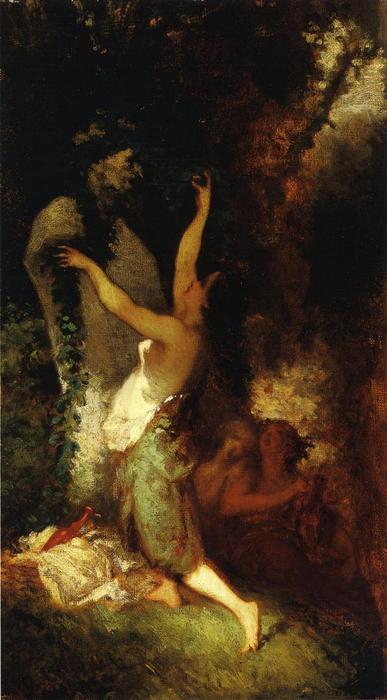
Explore Jean-François Millet's poignant depiction of rural life with 'Offering to Pan,' a masterpiece capturing serenity and reverence for nature. Discover Barbizon realism at the Musée Fabre.
Jean-François Millet (1814-1875) fue un pintor realista clave de la Escuela de Barbizon, reconocido por sus conmovedoras representaciones de la vida campesina y obras icónicas como 'Los recogedores' y 'El ángelus'. Explore su legado en ArtsDot.
Descubre el Museo Fabre en Montpellier: una colección excepcional de arte europeo desde el siglo XV hasta el XX, arquitectura impresionante y exposiciones innovadoras.
Museo Fabre Montpellier, Arte Europeo Colección Fabre, Jacques-Louis David Pintura, Rubens Maestros, Gustave Courbet Escultura, Historia Artística Francesa Edad Media Exposiciones
Museé Fabre
Francia
Dr. Christophe Barbier
Mont
Offering to Pan – A Symphony of Rustic Reverie
Jean-François Millet’s “Offering to Pan” transcends mere depiction; it embodies a profound connection between humanity and the natural world, capturing a moment of quiet contemplation that resonates across centuries. Completed in 1845 during the burgeoning Realist movement, this painting—measuring 52 x 29 cm and executed in oil on canvas—is more than just an image; it’s a testament to Millet's unwavering commitment to portraying everyday life with unflinching honesty and palpable emotion.
Composition & Symbolism: The Language of Landscape
At the heart of Millet’s masterpiece lies a woman, nude yet radiating serenity, extending her arms upwards in supplication towards Pan—the god of shepherds and wildness—a figure deeply rooted in Greek mythology symbolizing fertility and pastoral innocence. Positioned beside an ancient oak tree – a symbol of strength, longevity, and connection to the earth – she embodies humanity’s yearning for communion with nature's divine presence. Surrounding her are three other women who gaze upon Pan’s gesture, suggesting a collective reverence for the sacredness of the landscape. The careful arrangement of figures against the backdrop of the forest isn’t merely aesthetically pleasing; it speaks to a broader philosophical concern – the belief that true spirituality resides in recognizing our interdependence with the natural world.
Realism Embodied: Millet's Technique & Artistic Vision
Millet’s artistic prowess is evident in his meticulous attention to detail, achieved through masterful oil painting technique. He eschewed idealized representations of rural life, opting instead for a brutally honest portrayal of peasant existence. The artist skillfully captures the textures of bark and foliage, conveying the palpable atmosphere of winter morning with remarkable accuracy. Millet's use of muted earthy tones—browns, greens, ochres—creates an immersive experience for the viewer, transporting them to the quiet solitude of the Barbizon landscape. This deliberate stylistic choice aligns perfectly with the Realist movement’s ethos: to depict reality without embellishment or sentimentality.
Historical Context & Significance: The Barbizon School's Legacy
“Offering to Pan” emerged during a pivotal moment in French art history—the rise of the Barbizon school, spearheaded by Millet and fellow artists like Théodore Rousseau. Rejecting the academic conventions of their predecessors, these painters sought inspiration solely from nature, prioritizing observation and truthful representation over artistic illusion. The painting’s debut at the Salon of 1845 provoked considerable controversy among critics who deemed it crude and lacking in beauty—a judgment that ultimately proved to be misguided as subsequent generations recognized Millet's profound contribution to art. Today, housed in the Musée Fabre in Montpellier, France, “Offering to Pan” stands as an enduring symbol of Realism’s commitment to portraying human experience with dignity and compassion – a timeless reminder of our connection to the natural world and the beauty found within its simplest forms.