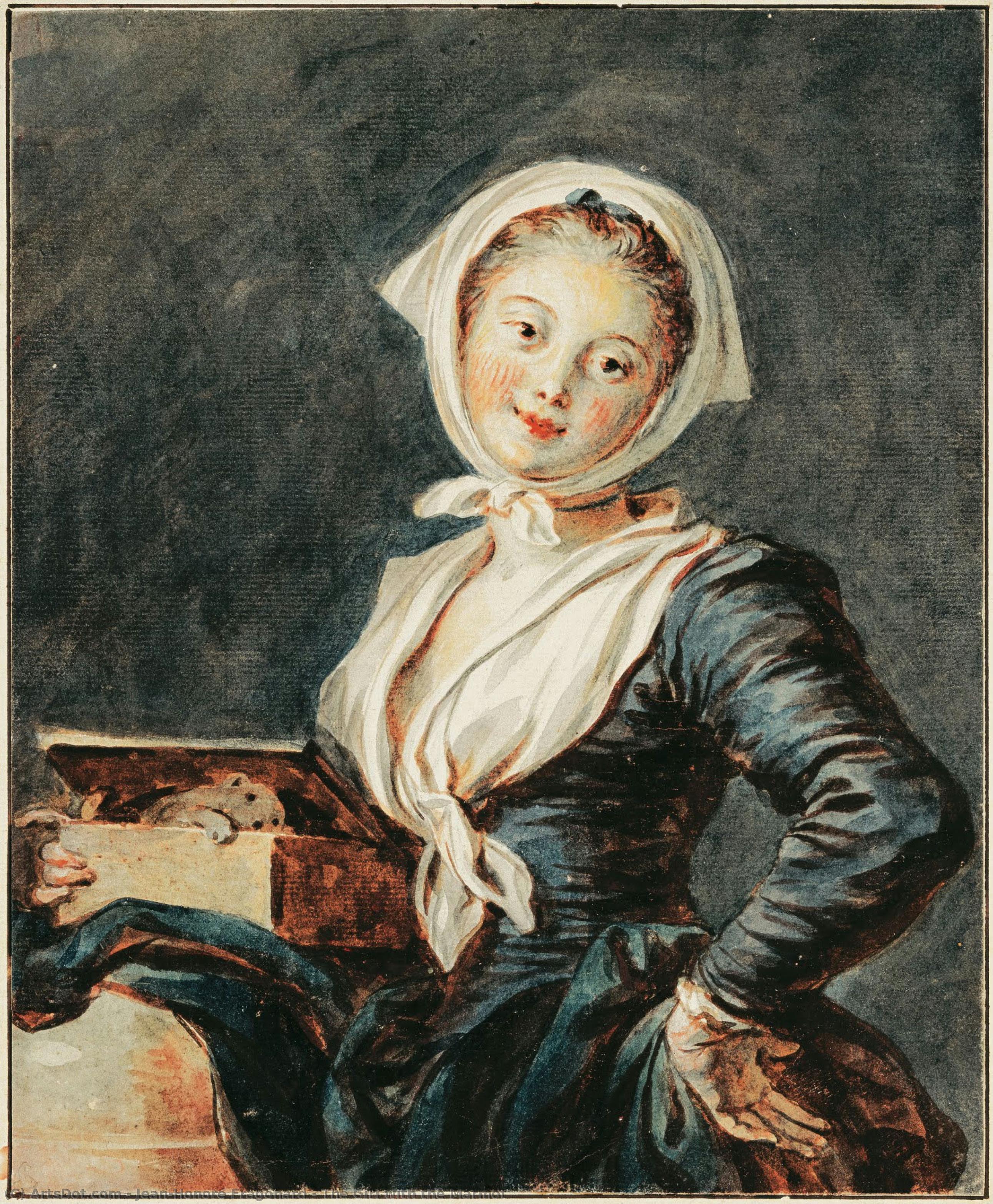
A Symphony of Pastel and Grace
In the soft, luminous realm of Jean-Honoré Fragonard’s “The Girl with the Marmot,” the viewer is transported to an era of unparalleled elegance and whispered secrets. Painted around 1768, this masterpiece serves as a breathtaking distillation of the Rococo spirit, capturing a moment that feels both fleeting and eternal. The subject, a young woman adorned in delicate attire, radiates a gentle joy, her smile acting as a window into the carefree hedonism of the French aristocracy. As she interacts with the small, curious marmot, there is an undeniable sense of intimacy and playfulness that transcends the canvas, inviting anyone who gazard upon it to step into a world where beauty and leisure reign supreme.
The technique employed by Fragonard is nothing short of miraculous, showcasing his ability to manipulate light and texture to create an illusion of airy lightness. Utilizing a masterful pastel palette—dominated by tender shades of pink, peach, and lemon yellow—the artist achieves a luminous glow that seems to emanate from within the painting itself. Through the meticulous use of glazing, Fragonard layered thin, translucent washes of color, allowing light to penetrate the surface and reflect back with a subtle, pearlescent quality. This delicate approach creates a soft-focus effect, where the edges of drapery and the softness of skin blend seamlessly, evoking a dreamlike atmosphere that is as much about feeling as it is about sight.
Symbolism and the Spirit of an Era
Beyond its surface beauty, the artwork is steeped in the cultural nuances of Louis XV’s France. During this period, the court at Versailles sought refuge from the rigid formalities of the past, embracing instead a culture of sensuality, romance, and spontaneous pleasure. Fragonard, a master of this movement, captures this zeitgeist perfectly. Even the inclusion of the marmot is far from accidental; in the symbolic language of the 18th century, such creatures were often linked to themes of fertility and prosperity. The creature’s presence adds a layer of grounded charm to the ethereal scene, subtly suggesting the hidden desires and the bountiful nature of life that characterized the Rococo era.
For the discerning collector or interior designer, "The Girl with the Marmot" offers more than just aesthetic pleasure; it provides a focal point of profound emotional resonance. Whether placed in a sun-drenched morning room or a sophisticated gallery space, a high-quality reproduction of this work brings an infusion of warmth and historical depth. It is a piece that speaks to the soul, reminding us of the enduring power of grace, the importance of finding joy in small moments, and the timeless allure of a world bathed in soft, golden light.