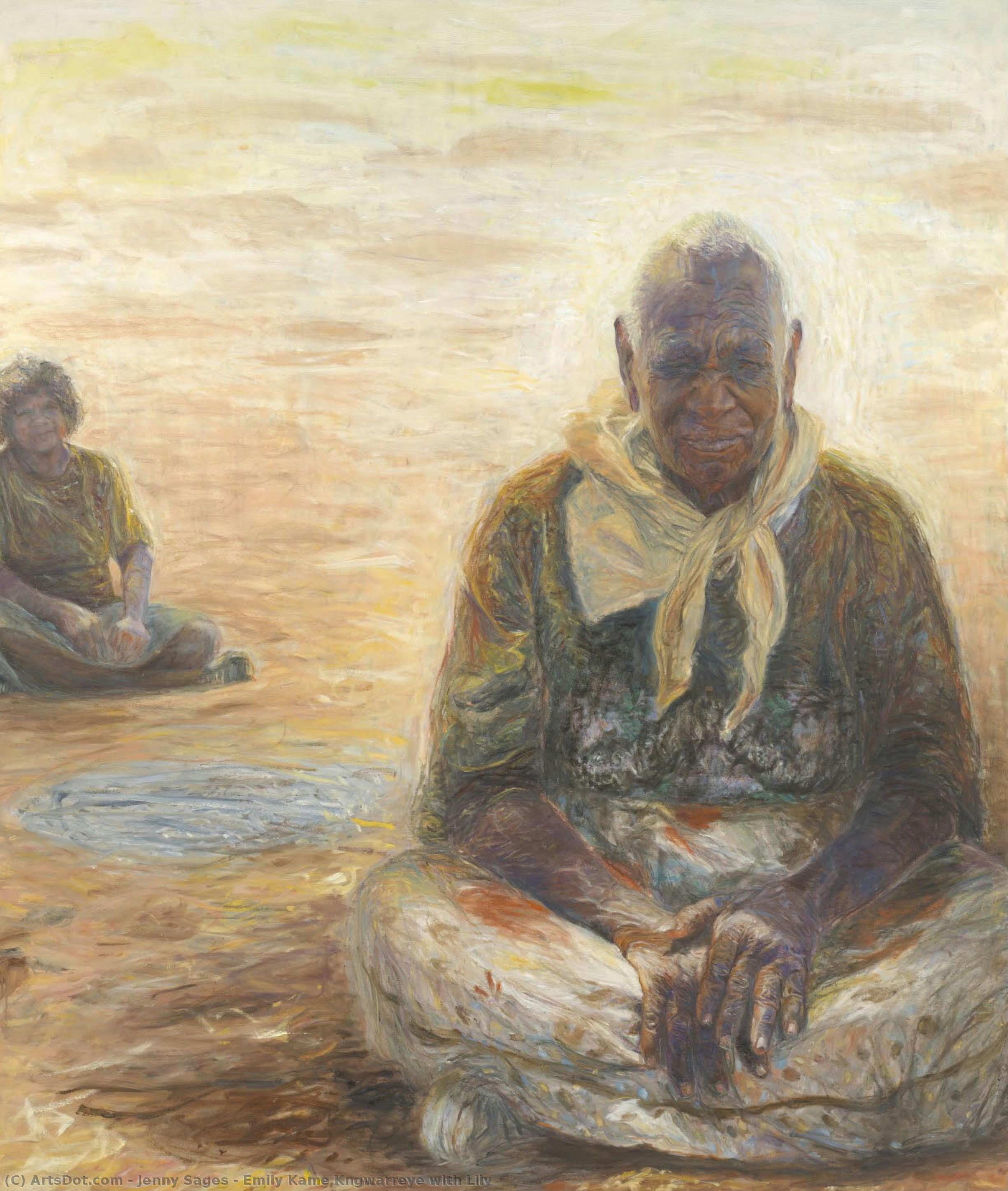
A poignant portrait of two figures by the ocean captures a serene moment in Jenny Sages' 1993 masterpiece Emily Kame Kngwarreye with Lily, inviting you to explore this evocative piece of contemporary Australian art.
Descubre a Jenny Sages, artista australiana ganadora del Premio Archibald. Conocida por sus paisajes abstractos y retratos usando cera y pinceladas mínimas. Inspirada en la cultura de Kimberley.
Descubre la identidad australiana en retratos impresionantes y obras maestras artísticas en la Galería Nacional de Retratos de Canberra, Australia. Entrada gratuita y exposiciones especiales.
Emily Kame Kngwarreye (Kngwarrey) (c.1910–1996), Anmatyerre artist, was born at Alhalkere, Utopia Station in the Northern Territory. After her ancestral land was appropriated for cattle grazing, she worked as a stockhand. As she grew older she became a leader in women’s ceremonial business, experienced in ceremonial body painting. From 1977 she collaborated in the production of batik, an important industry for the Anmatyerre after they regained land title. She first painted on canvas in 1988. In the course of her brief career she produced thousands of canvases depicting the flowers, roots, dust and summer rains of her country, the translucent colours built up with layered touches of paint to create an illusion of depth and movement. In 1998 a retrospective exhibition of Kngwarreye’s work, Alhalkere – Paintings from Utopia, travelled to three state galleries and the National Gallery of Australia. Ten years later Utopia: The Genius of Emily Kame Kngwarrey, an exhibition of 120 of the artist’s works, showed in Osaka and Tokyo. With that exhibition, Kngwarreye was recognised as one of the very greatest abstract artists of the twentieth century.Jenny Sages (b. 1933) came to Australia as a fifteen-year-old, trained in art in New York and travelled for some years before returning to live in Sydney, where she worked as a commercial illustrator for magazines including Vogue. At the age of fifty she went to the Kimberley, and significant aspects of her life up until that time simply fell away. She gave up commercial illustration to become a full-time artist, concentrating on abstract and landscape works. For more than twenty years she went out annually to ‘walk the land’ with women companions. On one of her early expeditions, she arranged to meet Emily Kngwarreye. Having charmed her way onto a plane with some German curators, she had to wait for four days for the older woman to turn up with her mob. Emily thought Jenny was as old as she was; they were about the same size; and Sages recalls that they sat and talked ‘as two eighty-three-year-olds do’. Sitting with Kngwarreye, Sages poured her impressions onto paper, annotating drawing after drawing with her sitter’s remarks. Back in her Sydney studio, she developed the huge, spare painting that became a foundation work for the Portrait Gallery. Along with it into the collection came the drawings that she made under the ‘talking tree’, capturing the changing expressions on the Anmatyerre woman’s face, her shifts between lively and impassive postures, and the things that she said as she first embraced, then tired of, the process.