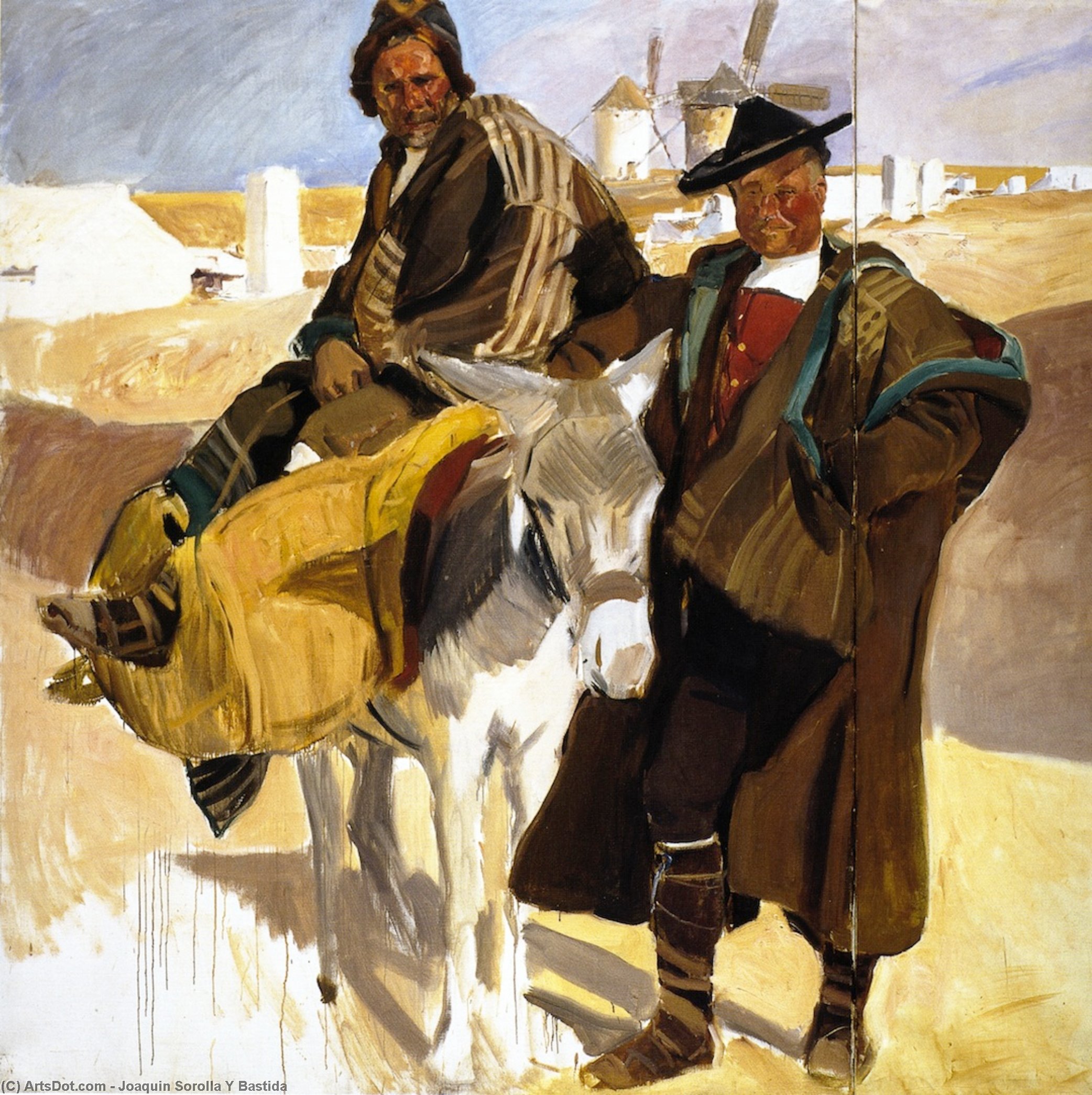
Joaquin Sorolla’s "Types of La Mancha," The White Donkey, captures the spirit of rural Spain with its luminous colors and depiction of two men riding donkeys across a desert landscape. Admire this Impressionist masterpiece at Museo Sorolla in Madrid.
Types of La Mancha, The White Donkey: A Portrait of Spanish Identity
Joaquín Sorolla y Bastida’s “Types of La Mancha, The White Donkey,” completed in 1912, transcends mere depiction; it embodies the very spirit of Spain – a nation steeped in tradition yet perpetually yearning for movement and vibrancy. Situated within the Museo Sorolla in Madrid, originally his own home studio, this oil on canvas painting serves as an enduring testament to Sorolla’s Impressionist vision and his profound connection to the landscape and people of La Mancha.
- Subject Matter: The artwork centers around two men riding white donkeys across a sun-drenched desert expanse, capturing a quintessential image of rural Spain. These figures aren't simply travelers; they represent the backbone of Spanish society – hardworking individuals connected to the land and its rhythms.
- Style & Technique: Sorolla’s masterful manipulation of light is immediately apparent. He employs loose brushstrokes and vibrant hues—primarily yellows, oranges, and blues—to convey a palpable sense of warmth and luminosity. This technique prioritizes capturing fleeting moments of sensation rather than striving for photographic realism, aligning perfectly with the Impressionist movement's core principles.
- Historical Context: Painted during Sorolla’s prolific period in Rome, “Types of La Mancha” reflects the influence of Italian Impressionism and Sorolla’s fascination with capturing the beauty of everyday life. It speaks to a broader cultural preoccupation with portraying the pastoral idyll – a romanticized vision of rural Spain that resonated deeply within European artistic circles.
Symbolism: Donkey, Landscape, Light
The white donkey itself holds significant symbolic weight. Traditionally associated with humility and endurance—qualities revered in Spanish culture—the donkey embodies resilience and steadfastness amidst challenging circumstances. Simultaneously, the expansive desert landscape symbolizes solitude and introspection, prompting contemplation on themes of identity and belonging. Crucially, Sorolla’s masterful use of light – particularly dappled sunlight filtering through foliage – elevates the painting beyond a simple visual record; it illuminates the emotional core of the scene.
- Donkey Symbolism: Represents humility, endurance, and connection to the land.
- Landscape Symbolism: Evokes feelings of solitude, contemplation, and exploration of identity.
- Light Symbolism: Captures fleeting moments of beauty and illuminates emotional depth.
Emotional Impact & Artistic Legacy
“Types of La Mancha, The White Donkey” succeeds in transporting the viewer to a specific place and time—a sun-kissed corner of Spain brimming with life and tradition. Sorolla’s emotive brushwork evokes feelings of warmth, optimism, and nostalgia for simpler times. More than just an aesthetically pleasing painting, it serves as a powerful emblem of Spanish cultural heritage – a reminder that beauty can be found in the commonplace and that art possesses the capacity to capture the essence of human experience.
- Emotional Resonance: Evokes feelings of warmth, optimism, and nostalgia.
- Cultural Significance: Represents Spanish cultural heritage and celebrates the beauty of everyday life.
- Artistic Influence: Sorolla’s Impressionist style continues to inspire artists today.