Joaquin Sorolla y Bastida was a Spanish painter celebrated for his masterful use of light and color, particularly in landscapes and portraits. Born in Valencia in 1863, he faced early hardship after losing both parents to cholera but persevered with artistic pursuits, studying in Rome and honing his skills under influential mentors. His signature style involved capturing fleeting moments of everyd
Descubre a Joaquín Sorolla (1863-1923), maestro del Realismo y Luminismo español! Explora sus vibrantes pinturas llenas de luz mediterránea, playas, retratos y temas sociales. ¡Una figura clave del Impresionismo!
Joaquín Sorolla y Bastida: Capturing Sunlight's Embrace – An Exploration of “Untitled (2322)”
Joaquin Sorolla y Bastida, a name synonymous with the radiant light and vibrant energy of Spain, was more than just a painter; he was a chronicler of his nation’s soul. Born in Valencia in 1863, Sorolla's early life was marked by tragedy. Orphaned at the tender age of two following a cholera epidemic that claimed both parents, young Joaquín and his sister were raised by their maternal aunt and uncle. This formative experience instilled within him a profound appreciation for the ephemeral beauty of existence – a sentiment that would become central to his artistic vision. Though hardship shadowed his beginnings, it did not extinguish the burgeoning talent that swiftly manifested itself, propelling him toward formal studies under influential artists like Cayetano Capuz and José Benlliure before securing a prestigious grant to pursue his education in Rome. It was amidst the classical grandeur of I
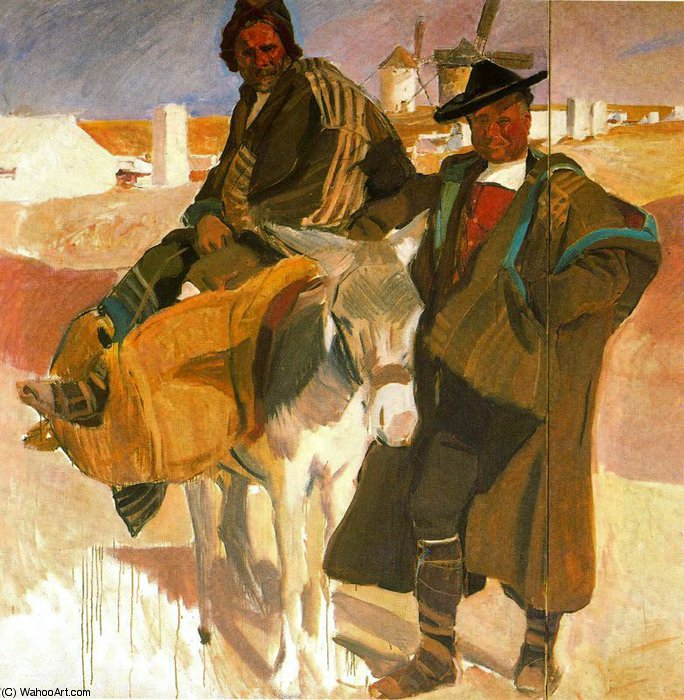
The painting “Untitled (2322)” exemplifies Sorolla’s signature style: Impressionism infused with Spanish landscape tradition. Executed on a large oil canvas, approximately 100 cm x 75 cm, it depicts two men astride horses traversing a vast expanse of desert terrain bathed in the golden hues of late afternoon sun. Sorolla meticulously captured this fleeting moment, prioritizing light and color above precise detail—a technique characteristic of Impressionist painters who sought to convey atmosphere rather than photographic realism. The artist’s loose brushstrokes dance across the canvas surface, creating textured planes that shimmer with reflected sunlight.
Sorolla's masterful use of color is particularly noteworthy. Dominating the scene are shades of ochre and amber, mirroring the desert sands and highlighting the brilliance of the sunbeams piercing through the sky. Accents of turquoise and pale lavender subtly delineate distant mountains and add depth to the composition. These colors aren’t merely decorative; they serve as conduits for conveying Sorolla's emotional response to his subject matter—a palpable sense of serenity mingled with exhilaration.
Historically, Sorolla’s work emerged during Spain’s Belle Époque, a period marked by artistic innovation and cultural optimism following the Franco-Prussian War. Influenced by Impressionists like Claude Monet and Pierre Auguste Renoir, Sorolla embraced plein air painting—working outdoors directly from nature—a revolutionary approach that challenged academic conventions of the time. The desert landscape itself carries symbolic weight, representing solitude, resilience, and the grandeur of the natural world – themes frequently explored in Spanish Romanticism and subsequently adopted by Sorolla.
Ultimately, “Untitled (2322)” transcends mere visual representation; it evokes a powerful emotional resonance. Viewers are transported to a tranquil oasis amidst arid surroundings, invited to contemplate the beauty of human companionship intertwined with the majesty of the landscape. Sorolla’s luminous palette and expressive brushwork capture not only the physical environment but also the intangible spirit of joy and contemplation—a testament to his enduring legacy as one of Spain's greatest painters and a champion of Impressionist ideals. This artwork is ideal for interior designers seeking to infuse spaces with warmth, vibrancy, and an appreciation for the sublime beauty of light-filled landscapes.