Johann Zoffany’s Regal Portrait: A Dialogue Between East and West
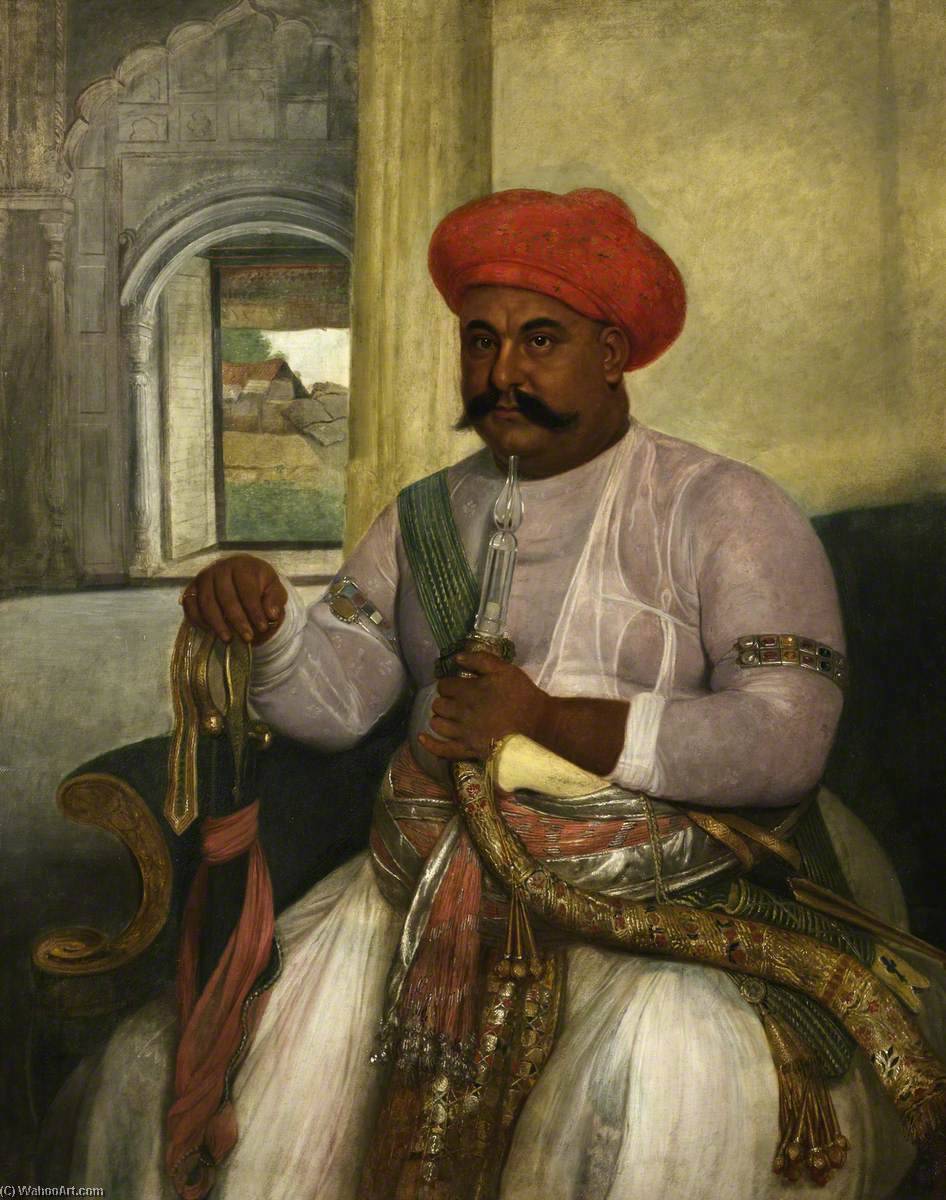
Johann Zoffany’s “Hasan Reza Khan, Minister to Asaf al Daula of Oudh,” painted in 1784, transcends mere portraiture; it's a meticulously crafted tableau that encapsulates the burgeoning fascination with Eastern cultures within the European artistic landscape. This monumental canvas—measuring 127 x 102 cm—depicts Hasan Reza Khan, a prominent diplomat serving under Asaf al Daula, ruler of Oudh (present-day Lucknow), India—a figure embodying both imperial authority and refined elegance.
- Subject Matter & Context: The painting captures a pivotal moment in diplomatic relations between Britain and Mughal India. Khan’s presence signifies the importance of maintaining alliances during a period of shifting geopolitical dynamics. Zoffany skillfully portrays him amidst an intellectual gathering, reflecting the Enlightenment's interest in observing and documenting diverse cultures.
- Style & Technique: Zoffany masterfully blends Baroque grandeur with Rococo delicacy. The composition adheres to classical principles—centering on Khan’s figure—yet incorporates subtle nuances of European artistic convention. Employing oil paint on canvas, he achieves remarkable realism through layering techniques and meticulous attention to detail. Light plays a crucial role, emanating from the left window, illuminating Khan's face and casting shadows that heighten depth and drama.
- Composition & Symbolism: The carefully arranged figures—Khan himself, accompanied by his entourage—engage in animated conversation, creating an illusion of movement within the static frame. Decorative elements like swords and jewelry symbolize power and wealth, while Khan’s turban represents tradition and nobility. The window backdrop serves as a visual anchor, grounding the scene in a landscape that subtly reinforces the grandeur of the subject.
- Color Palette & Texture: Zoffany utilizes a rich color palette dominated by warm hues—gold, crimson, ochre—evoking opulence and conveying Khan’s status. Brushstrokes are textured to simulate fabric folds and architectural surfaces, adding tactile richness to the artwork. The artist's meticulous rendering captures not only visual accuracy but also an emotional resonance that speaks to dignity and contemplation.
“Hasan Reza Khan” stands as a testament to Zoffany’s artistic prowess—a captivating fusion of Eastern grandeur and Western sophistication. Its enduring appeal lies in its ability to transport viewers back to a time of intellectual curiosity and diplomatic maneuvering, offering an unparalleled glimpse into the cultural exchange that shaped the eighteenth century.