A Glimpse into Parisian Society: John Singer Sargent's "Le Roi s'amuse"
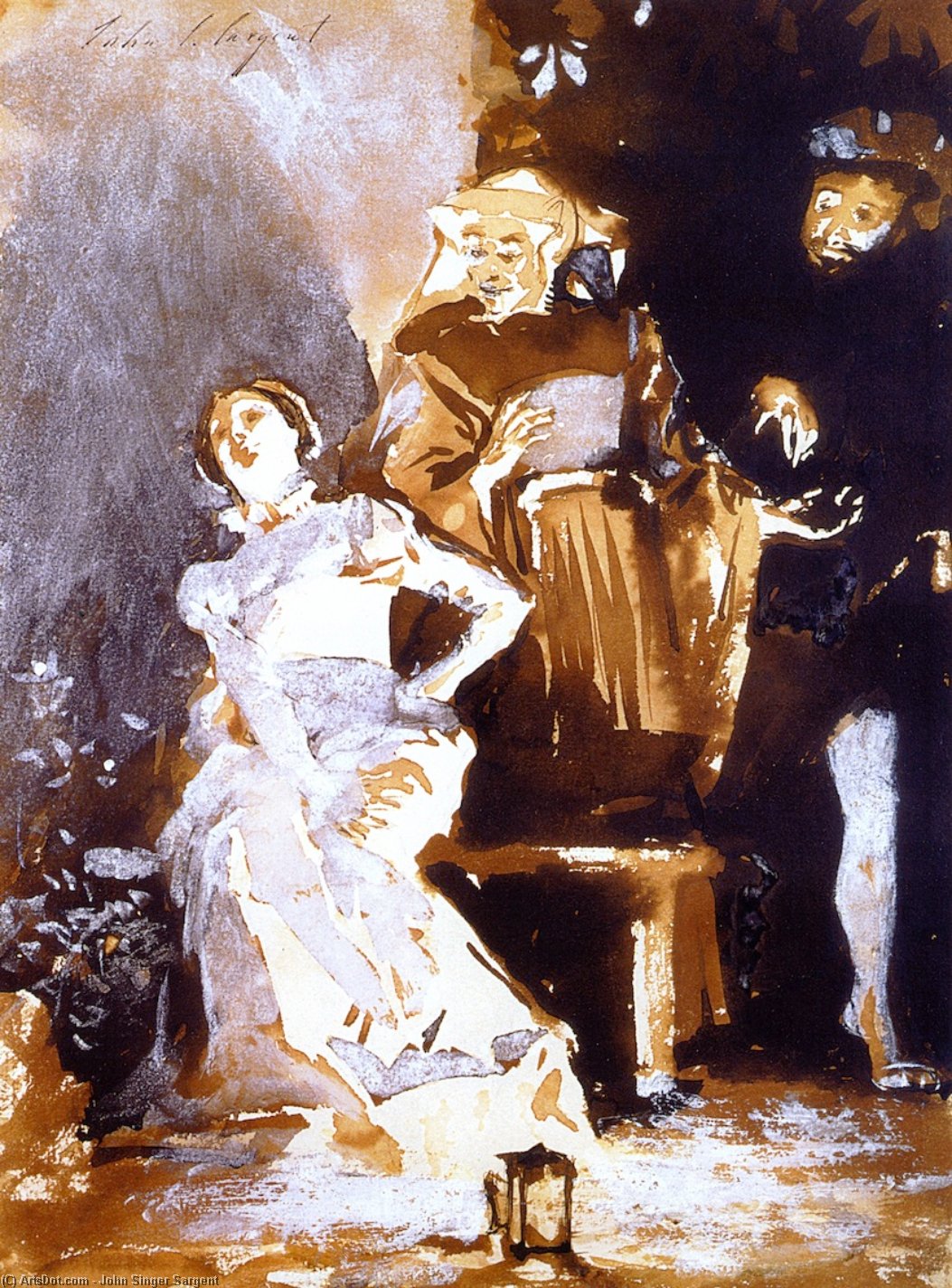
John Singer Sargent’s “Le Roi s’amuse,” painted in 1882, is more than just a depiction of a social gathering; it’s a meticulously crafted window into the opulent and subtly complex world of late 19th-century Paris. This watercolor masterpiece, brimming with quiet observation and masterful technique, captures a moment of relaxed elegance within a private salon – a space that speaks volumes about wealth, taste, and the carefully constructed rituals of high society. Sargent’s ability to convey atmosphere through delicate washes of color and precise rendering is immediately apparent, creating an illusion of light and shadow that draws the viewer into the scene.
- Subject Matter: The painting centers around three individuals – a man seated in a chair, a woman also seated, and a gentleman standing behind them. Their postures are relaxed, suggesting an informal yet refined conversation.
- Composition: Sargent’s compositional choices contribute significantly to the work's allure. The arrangement of figures creates depth, guiding the eye through the scene from the foreground to the background, where additional individuals and a potted plant add to the sense of a bustling, though contained, social event.
The Brushstrokes of Impressionism and Academic Precision
Sargent’s style exemplifies a fascinating blend of influences. While undeniably rooted in the burgeoning Impressionist movement – particularly evident in his use of light and color – he maintains a strong adherence to academic training, demonstrated through his precise rendering of form and detail. The watercolor technique itself is crucial; Sargent employed loose washes and layered glazes to build up tones and textures, creating a luminous effect that captures the play of light on fabrics and faces. Note the subtle variations in tone within the man's jacket, or the delicate shading around the woman’s face – these details reveal a painstaking attention to realism.
- Technique: Sargent was renowned for his mastery of watercolor, utilizing wet-on-wet techniques to achieve soft edges and atmospheric effects.
- Color Palette: The muted color palette—dominated by browns, creams, and subtle greens—reflects the subdued elegance of a private salon and contributes to the painting’s overall sense of quiet intimacy.
Symbolism and Social Commentary
Beyond its technical brilliance, “Le Roi s'amuse” offers glimpses into the social dynamics of the era. The open book held by one figure suggests intellectual pursuits, while the vase – a common decorative element in affluent homes – speaks to an appreciation for beauty and luxury. The painting subtly captures the power dynamics inherent in these gatherings, with the seated figures holding positions of authority or influence. It’s a snapshot of a world where social standing was often determined by wealth and lineage, and where leisure activities were carefully cultivated displays of status.
The title itself, “Le Roi s'amuse” (The King Amuses Himself), is laden with potential interpretations – perhaps a commentary on the idle pursuits of the wealthy or a reflection on the role of patronage in supporting the arts.
Emotional Impact and Legacy
"Le Roi s’amuse" continues to resonate with viewers today, not just for its aesthetic beauty but also for its evocative portrayal of human interaction. Sargent's ability to capture fleeting moments of social grace and quiet contemplation is a testament to his artistic skill. This painting exemplifies the artist's signature style – characterized by elegant figures, atmospheric lighting, and a keen eye for detail—making it a cornerstone of his oeuvre and a beloved subject within the canon of 19th-century portraiture. A hand-painted reproduction offers an unparalleled opportunity to experience the full impact of this remarkable work.