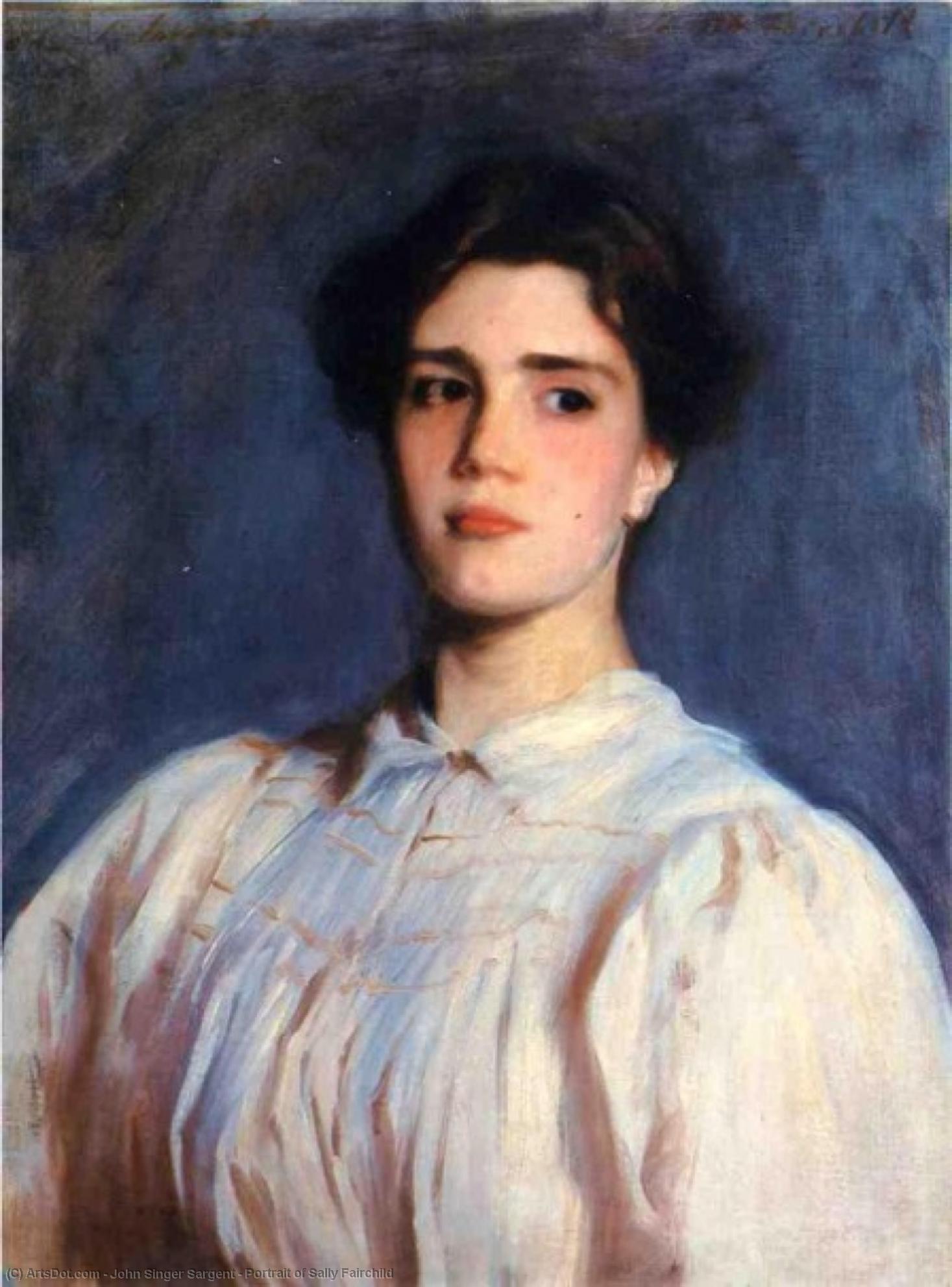
Capturing a moment of quiet Victorian elegance, this exquisite realist portrait by John Singer Sargent showcases luminous skin tones and profound psychological depth, inviting you to bring this timeless masterpiece home.
¡Explora las obras maestras de John Singer Sargent! Conocido como impresionista americano por sus retratos como 'Madame X', paisajes y por capturar la elegancia de la Época Dorada. ¡Descubre su arte hoy mismo!
A Window Into Victorian Elegance: Exploring John Singer Sargent’s Portrait of Sally Fairchild
John Singer Sargent's "Portrait of Sally Fairchild," completed in 1885, stands as an enduring emblem of the Aesthetic Movement and its fascination with capturing fleeting beauty within meticulously crafted realism. More than just a depiction of a young woman—Sally Fairchild herself—the painting embodies a broader cultural preoccupation with portraying inner life alongside outward appearance, reflecting the sensibilities of Victorian society grappling with evolving notions of femininity and artistic expression.
The Style of Delicate Realism
Sargent’s approach to portraiture distinguishes itself from its contemporaries through an unwavering commitment to capturing subtle nuances of emotion and gesture. Unlike the grand, theatrical poses favored by many artists of his era, Fairchild is presented in a posture that conveys quiet contemplation—her gaze directed outwards, subtly hinting at inner thoughts and feelings. This understated elegance aligns perfectly with the Aesthetic Movement’s rejection of overtly sentimental subjects, prioritizing instead an honest portrayal of psychological depth. The artist skillfully employs chiaroscuro – dramatic contrasts between light and shadow – to sculpt Fairchild's form, emphasizing her delicate features and creating a sense of luminous serenity.
Technique: Mastering Oil Paint on Canvas
The painting’s execution showcases Sargent’s mastery of oil paint on canvas—a technique he honed throughout his prolific career. Layers upon layers of pigment are painstakingly blended to achieve an astonishing level of tonal gradation, capturing the subtle variations in skin color and texture with remarkable precision. Sargent's meticulous brushwork contributes significantly to the overall impression of stillness and tranquility, mirroring Fairchild’s serene demeanor. Furthermore, the artist utilizes glazing—applying thin translucent washes of color over existing layers—to imbue the painting with depth and luminosity, enhancing its visual richness and capturing the ethereal quality characteristic of Impressionist influences.
Historical Context: Victorian Society and Artistic Innovation
“Portrait of Sally Fairchild” emerged during a period of significant social transformation in Britain – the Victorian era (1837-1901). Marked by rapid industrial growth and burgeoning urbanization, Victorian society simultaneously upheld traditional moral values while embracing artistic experimentation. Sargent’s work represents a pivotal moment in this evolution, demonstrating that beauty could be found not only in grand narratives but also in intimate portraits imbued with psychological insight. The painting reflects the broader cultural debate surrounding gender roles and artistic representation—challenging conventional stereotypes by portraying Fairchild as an intelligent, contemplative woman rather than merely decorative object.
Symbolism: Light, Calmness, and Inner Reflection
Beyond its technical brilliance, “Portrait of Sally Fairchild” resonates with symbolic significance. The diffused light bathing Fairchild’s face symbolizes purity and serenity – qualities highly valued within Victorian ideals of femininity. Her gaze outward suggests an openness to experience and a preoccupation with inner reflection—a theme central to Aesthetic philosophy. Moreover, the painting's composition—simple yet balanced—creates a sense of harmonious equilibrium, mirroring Fairchild’s tranquil state of mind. Sargent skillfully employs visual cues to convey emotional depth without resorting to explicit sentimentality, cementing his legacy as one of the most perceptive portrait painters of his time.
Emotional Impact: A Moment Frozen in Time
Ultimately, “Portrait of Sally Fairchild” transcends its formal qualities to evoke a profound emotional response in viewers. The painting’s stillness and luminosity invite contemplation—encouraging us to consider themes of beauty, introspection, and psychological complexity. It captures a fleeting moment frozen in time—a portrait not merely of a young woman but also of an era grappling with evolving artistic sensibilities. Like many masterpieces of Realism, it speaks to universal human experiences—reminding us that true artistry lies in capturing the essence of inner life alongside outward appearance. Its enduring appeal testifies to Sargent’s unparalleled ability to transform pigment and canvas into instruments of emotional resonance – a testament to his genius as an artist and a cultural icon.