A Symphony of Water and Stone: Exploring Sargent's Villa Torlonia Frascati
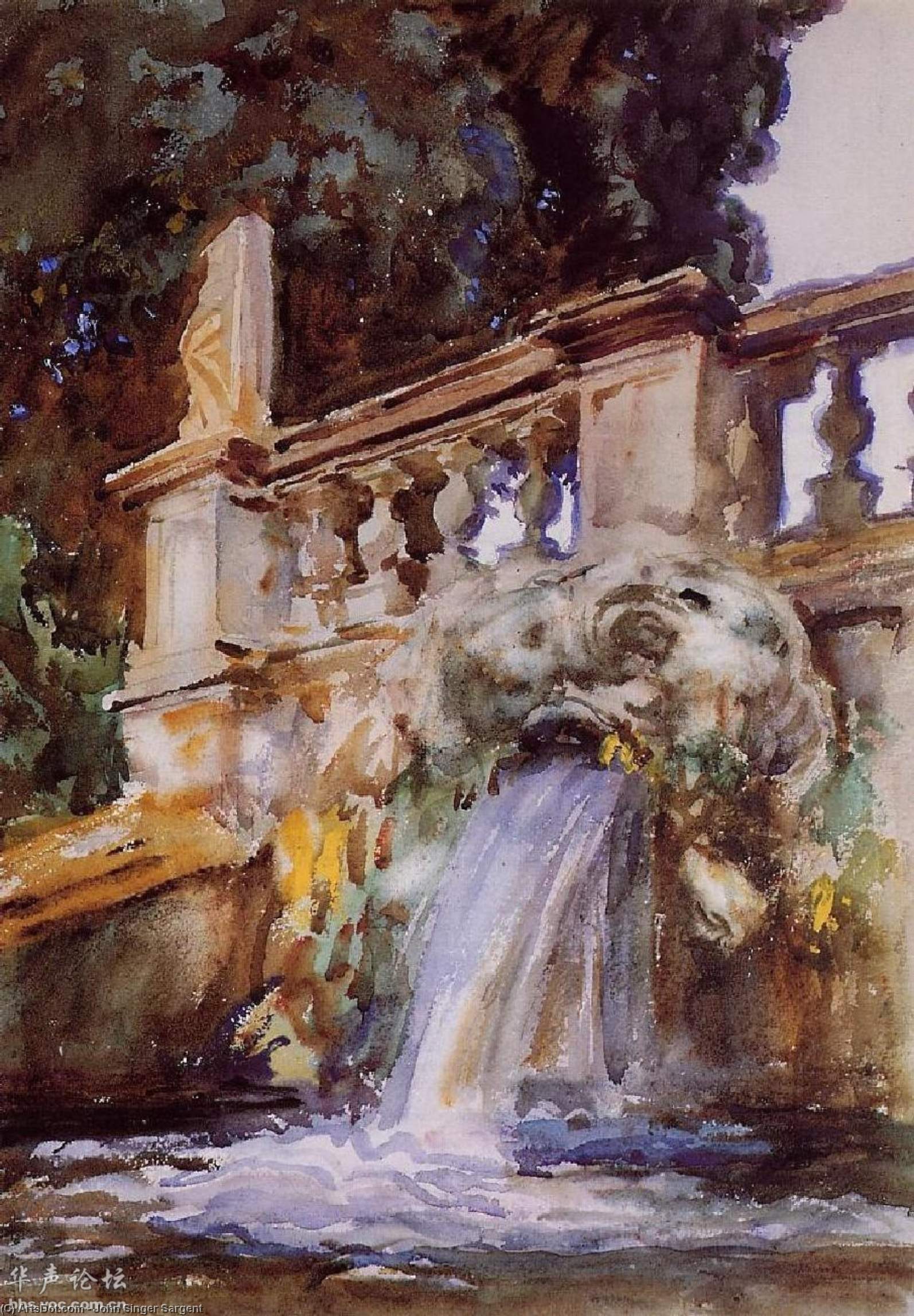
John Singer Sargent’s Villa Torlonia Frascati is not merely a depiction of a fountain; it’s an immersion into the very essence of late 19th-century aesthetics – a testament to the artist’s mastery of light, composition, and the subtle poetry of movement. Painted around 1920, this work captures a pivotal moment in the design of the Villa Torlonia complex, commissioned by Senator Giovanni Landi, reflecting the opulent tastes and architectural trends of the era. The scene unfolds with an almost theatrical grace, dominated by a cascading waterfall that appears to originate from a sculpted figure – a deliberate echo of classical ideals of beauty and power. Sargent’s keen eye for detail is immediately apparent in the meticulously rendered water, conveying not just its visual flow but also its tactile quality, inviting the viewer to almost feel the cool spray on their skin.
The Language of Form: Composition and Technique
- Sargent’s Brushwork: Sargent's signature loose, expressive brushstrokes are particularly evident in the depiction of the water. He avoids a photographic realism, instead prioritizing an impressionistic approach that captures the fleeting nature of light and movement. The paint is applied with confident, almost impulsive strokes, creating a sense of dynamism and energy within the composition.
- Monumentality and Grace: The placement of the statues – one on either side of the fountain – establishes a formal pyramidal structure, a compositional device frequently employed by Sargent to convey stability and grandeur. However, this formality is tempered by the fluidity of the water, preventing the scene from feeling static or overly rigid.
- Color Palette: The artist utilizes a restrained yet sophisticated color palette dominated by blues, greens, and whites, reflecting the natural tones of the surrounding landscape and enhancing the sense of tranquility and serenity. Subtle variations in tone contribute to the illusion of depth and volume.
Symbolism and Context: Echoes of Antiquity
The scene’s composition draws heavily on classical mythology and Roman architectural principles. The fountain itself, a recurring motif in Roman art and architecture, symbolizes abundance, prosperity, and the connection between humanity and nature. The statues, likely inspired by classical forms, represent idealized beauty and power – concepts central to the artistic sensibilities of Sargent's time. The Villa Torlonia, built in the style of a grand Italian villa, was intended to evoke the grandeur of ancient Rome, reflecting the wealthy landowners’ desire for status and prestige. Sargent’s painting perfectly encapsulates this ambition, offering a visual homage to the glories of antiquity.
Emotional Resonance: A Moment of Tranquility
Beyond its formal qualities, Villa Torlonia Frascati possesses a profound emotional resonance. The scene evokes a sense of peace and contemplation, inviting the viewer to escape the hustle and bustle of modern life. Sargent’s masterful use of light and shadow creates a luminous atmosphere that is both captivating and deeply soothing. This artwork speaks to a timeless desire for beauty, harmony, and connection with nature – qualities that continue to resonate with audiences today. It's a reminder of the power of art to transport us to another time and place, allowing us to experience moments of quiet contemplation and aesthetic delight.