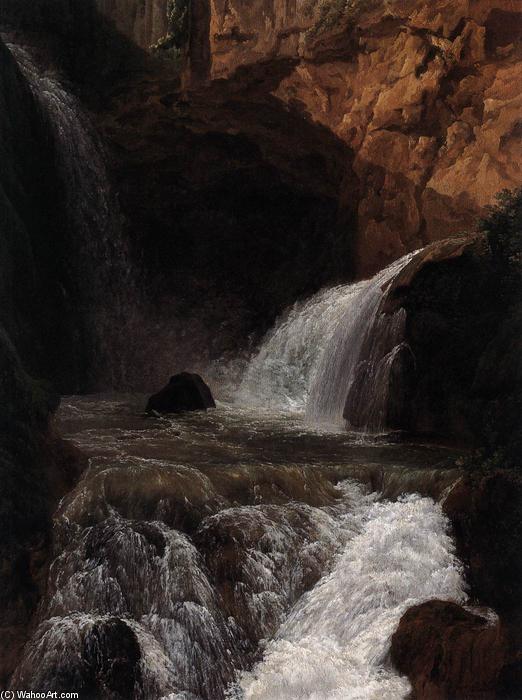
Admira la impresionante vista de las cascadas de Tivoli pintada por Jean-Joseph Xavier Bidauld en 1788. Un paisaje italiano meticulosamente detallado que captura la belleza silenciosa de la naturaleza francesa.
Explora los paisajes de Joseph Pierre Xavier Bidauld, pintor francés de los siglos XVIII y XIX conocido por sus escenas italianas y su éxito en el Salón. ¡Descubre su arte!
Descubre la Galería Nacional de Arte en Washington D.C.! Maestra obras del Renacimiento al arte moderno, incluyendo Rafael, Van Gogh y más. ¡Entrada gratuita!
A Quiet Masterpiece: Exploring Jean-Joseph-Xavier Bidauld’s “View of the Waterfalls at Tivoli”
The landscape painting "View of the Waterfalls at Tivoli," executed in 1788 by Jean-Joseph-Xavier Bidauld, stands as a testament to the understated elegance and profound observation characteristic of Italianate art during the Enlightenment. Unlike the grand narratives favored by many contemporaries, Bidauld’s work eschews ostentation for a meticulously crafted depiction of natural beauty—a deliberate choice that speaks volumes about his artistic sensibilities and reflects the broader cultural preoccupation with idealized representations of the sublime.
The Scene: Tivoli's Cascade
Captured on canvas is a breathtaking vista of Tivoli Falls, nestled within the verdant hills of Lazio, Italy. The composition centers around a powerful waterfall plunging into a rocky riverbed, its white foam contrasting sharply against the dark browns and grays of surrounding stone formations. Bidauld’s eye for detail isn't merely descriptive; it strives to convey an emotional response to the grandeur of nature—a feeling echoed in the subtle tonal variations that imbue the scene with atmosphere. The artist skillfully utilizes light and shadow, highlighting textures and creating a sense of depth that draws the viewer into the landscape.
Style & Technique: Italianate Influence
Bidauld’s artistic approach firmly aligns with the prevailing stylistic trends of his time—specifically, the influence of Italian Romanticism. This movement championed idealized depictions of nature as a source of spiritual inspiration and sought to capture its majesty through precise observation and tonal harmony. The artist employs a realistic technique, prioritizing accuracy in portraying geological features and water dynamics. Brushstrokes are deliberate yet restrained, blending seamlessly to achieve a smooth surface finish that enhances the overall impression of tranquility and serenity.
Historical Context: Enlightenment Sensibility
“View of the Waterfalls at Tivoli” emerged during a period marked by intellectual ferment—the Enlightenment—when thinkers questioned traditional dogma and embraced reason alongside empirical observation. Artists like Bidauld responded to this spirit by turning their gaze outward, seeking solace and beauty in the natural world. The painting reflects the broader cultural fascination with landscapes as emblems of moral virtue and spiritual contemplation – themes central to the philosophical debates of the era.
Symbolism & Emotional Impact: Tranquility Amidst Stone
Beyond its visual splendor, “View of the Waterfalls at Tivoli” carries symbolic weight. The waterfall itself represents dynamism and renewal—a powerful force shaping the surrounding environment. Its descent into the riverbed symbolizes transformation and passage, mirroring the cyclical rhythms of nature and hinting at a deeper contemplation of life’s journey. The muted palette contributes to the painting's emotional impact, fostering a mood of quiet reflection and conveying a sense of profound peace—a rare achievement in art history.
A Reproduction Worth Admiring
Today, a high-quality reproduction of “View of the Waterfalls at Tivoli” offers an opportunity to experience Bidauld’s masterful artistry firsthand. Its serene beauty transcends time, inviting viewers to reconnect with the timeless allure of the Italian landscape and appreciating the quiet brilliance of a painter who captured the sublime essence of nature with remarkable sensitivity.