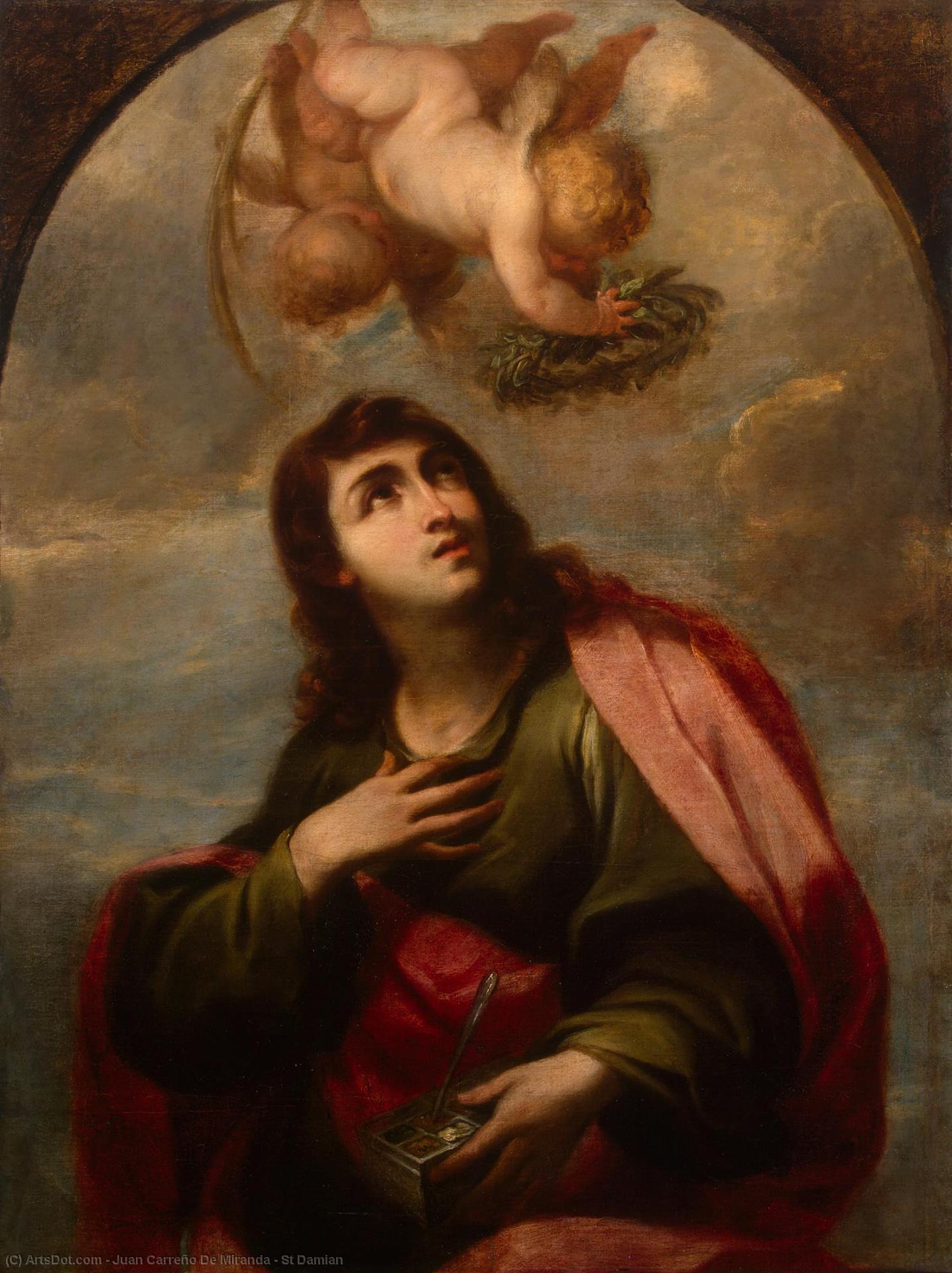
Juan Carreño de Miranda's 'St Damian,' painted in 1665, is a captivating portrait showcasing a woman adorned in pink robes, holding a delicate object while enveloped by two angels symbolizing divine grace. Birds add to the serene atmosphere, and an apple serves as a poignant emblem of faith and purity within this meticulously crafted Baroque artwork.
A Portrait of Faith Illuminated: Juan Carreño de Miranda’s St Damian
Juan Carreño de Miranda's “St Damian” stands as a testament to the grandeur and spiritual depth of Baroque art, capturing a moment of serene contemplation within a richly ornamented setting. Painted in 1670, this oil on canvas masterpiece exemplifies the artistic sensibilities prevalent during Spain’s Golden Age—a period characterized by royal patronage and an unwavering devotion to religious iconography. The painting depicts St Damian, a Syrian monk venerated for his compassion and healing abilities, presented against a backdrop of ethereal angels and symbolic elements that elevate the artwork beyond mere representation.
- Subject Matter: The central figure is St Damian himself, portrayed with dignified repose, gazing upwards towards the celestial realm. His gaze embodies humility and piety—a hallmark of Baroque portraiture aimed at conveying moral virtue.
- Style & Technique: Carreño de Miranda’s masterful brushwork demonstrates a profound understanding of chiaroscuro – dramatic contrasts between light and dark – skillfully employed to sculpt form and imbue the scene with palpable emotion. The artist utilizes impasto, applying thick layers of paint onto the canvas surface, creating textured surfaces that enhance visual depth and luminosity.
The composition is meticulously crafted, featuring two angels flanking St Damian on either side. These angelic figures are rendered in luminous hues—primarily gold—underscoring their divine status and symbolizing purity and grace. Their wings spread majestically above the saint’s head, creating a visual hierarchy that reinforces the spiritual narrative. Furthermore, birds appear delicately positioned within the upper left and lower right corners of the canvas, adding to the overall sense of harmony and suggesting connections between earthly and heavenly realms—a common motif in Baroque art reflecting Christian beliefs about ascension and divine providence.
- Symbolism: The inclusion of an apple at the center of the image is particularly noteworthy. Traditionally associated with Edenic innocence and divine grace, it serves as a potent reminder of humanity’s relationship with God and reinforces the painting's overarching theme of spiritual contemplation.
“St Damian” transcends its formal depiction to evoke a powerful emotional response in the viewer. The subdued palette—dominated by earthy tones complemented by shimmering gold—creates an atmosphere of solemn beauty, inviting reflection on faith, compassion, and divine grace. Carreño de Miranda’s meticulous attention to detail—from the subtle folds of St Damian's robe to the delicate rendering of the angelic wings—demonstrates his unwavering commitment to artistic excellence. It remains a captivating exemplar of Baroque artistry, continuing to inspire admiration for its technical prowess and profound spiritual resonance.