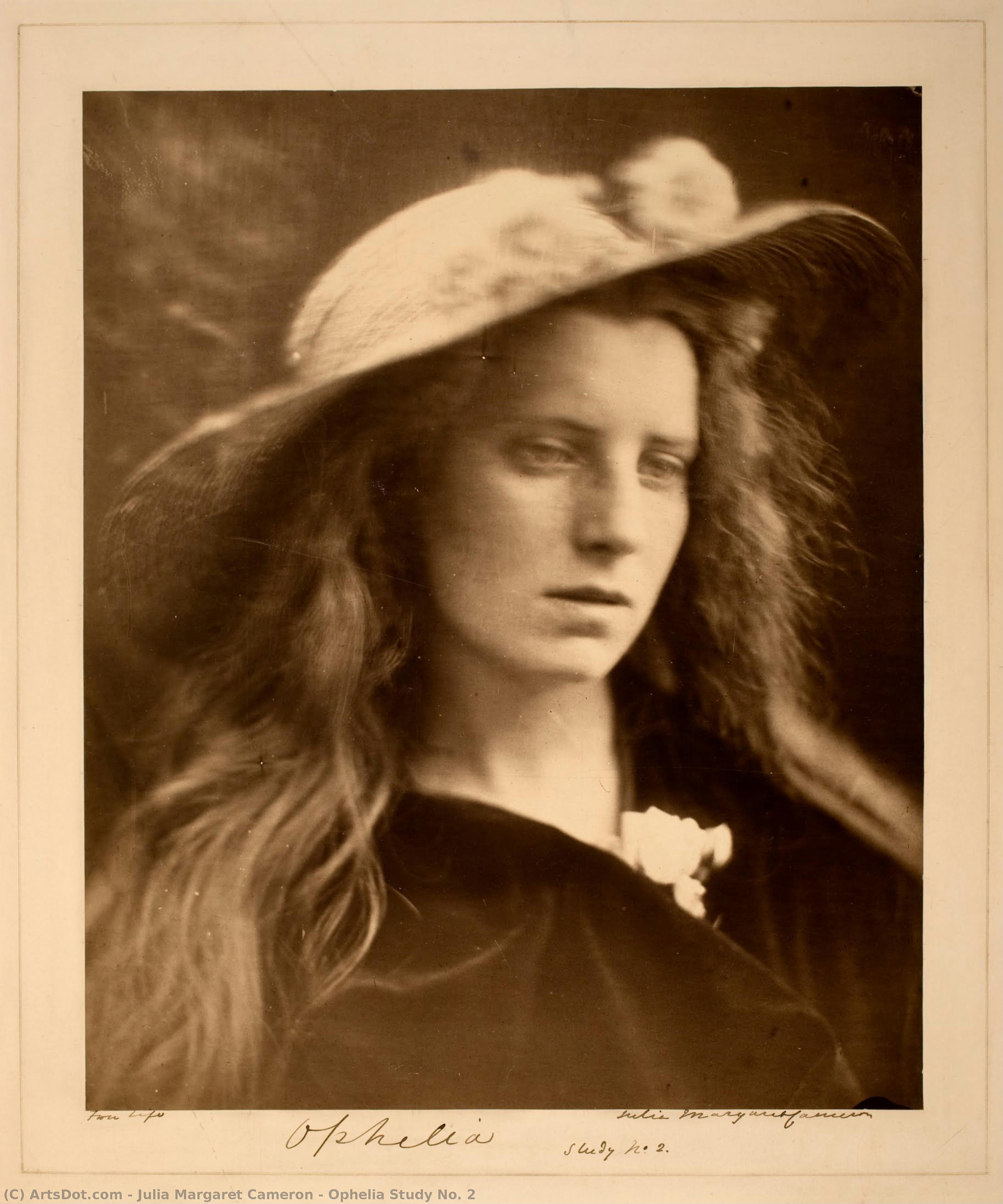
A Late Bloom: Exploring Julia Margaret Cameron’s Ophelia Study No. 2
Julia Margaret Cameron's artistic journey was remarkable for its timing—beginning at forty-eight, she defied Victorian conventions and established herself as a visionary figure in the burgeoning field of photography. Born Julia Pattle in Kolkata, India, her upbringing instilled within her a unique blend of Eastern and Western influences that profoundly shaped her aesthetic sensibilities. This unconventional spirit would later translate into groundbreaking images that captured ethereal beauty and psychological depth—a testament to her unwavering dedication to artistic exploration.
- Subject Matter: Cameron’s “Ophelia Study No. 2” depicts a woman adorned with flowers, embodying the tragic heroine from Shakespeare's Hamlet. The pose is deliberately melancholic, conveying profound sorrow and introspection as she gazes downwards.
- Style & Technique: Employing a photographic process pioneered by Cameron herself—collodion printing—the image achieves an otherworldly luminescence. This technique involved immersing a pewter plate coated in gelatin emulsion into a chemical bath before exposing it to light, resulting in incredibly detailed prints that captured subtle nuances of expression and texture.
Historical Context: Victorian Sensibility Meets Spiritual Vision
The photograph emerged during the Victorian era, a period characterized by strict moral codes and societal expectations. Cameron’s decision to pursue photography represented a bold challenge to these norms, prioritizing artistic vision over social conformity. Her work resonated with the spiritual currents of the time—particularly interest in mesmerism and occultism—reflecting a desire to explore realms beyond empirical observation. She collaborated closely with influential figures like George Frederick Watts and Alfred Lord Tennyson, cementing her position at the forefront of intellectual discourse.
- Symbolism: The flowers adorning the woman’s hat serve as potent symbols of remembrance and mourning—a direct reference to Hamlet's poignant contemplation of Ophelia’s death. Furthermore, the inclusion of birds—one perched atop her head and another positioned below—represents hope amidst despair, mirroring the biblical allusion to Noah’s Ark.
- Emotional Impact: Cameron skillfully captures a palpable sense of vulnerability and sorrow, inviting viewers into the woman's inner world. The photograph transcends mere representation; it evokes empathy and contemplation, prompting reflection on themes of grief, beauty, and the complexities of human emotion.
A Legacy of Ethereal Beauty
“Ophelia Study No. 2” stands as a cornerstone of photographic art history—a testament to Cameron’s pioneering spirit and her ability to imbue images with profound psychological resonance. Its delicate tonal palette, achieved through meticulous collodion printing, continues to inspire artists and designers today. Reproductions offer an opportunity to experience this captivating artwork firsthand, bringing its ethereal beauty and evocative symbolism into contemporary interiors.