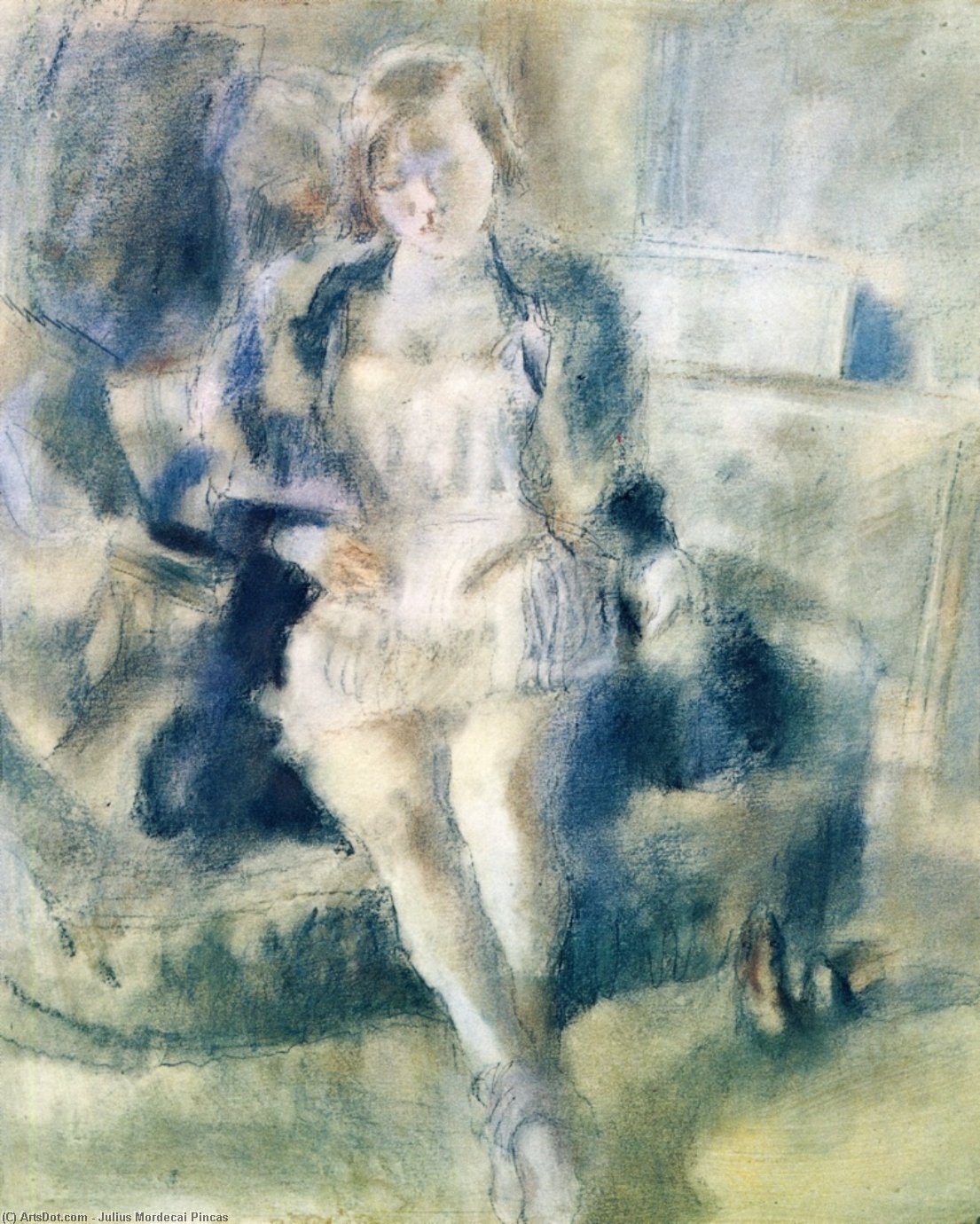
Jules Pascin’s ‘Ginette and Mireille,’ painted in 1928, showcases his signature style—a masterful blend of Expressionism and atmospheric light—depicting Hermine David and Lucy Krohg with remarkable sensitivity. This iconic piece exemplifies Pascin's artistic legacy within the Parisian avant-garde.
Mireille - A Portrait of Delicate Beauty Amidst Parisian Shadows
The painting “Mireille” by Jules Pascin (1930) stands as a testament to the School of Paris’s fascination with capturing fleeting moments and conveying profound emotion through subtle visual cues. More than just a depiction of a woman seated on a couch, it's an exploration of vulnerability and quiet contemplation within the bustling backdrop of early 20th-century Parisian life.
- Subject Matter: Pascin’s subject is Hermine David, a fellow artist and muse who became his lifelong companion. The portrait captures her serene gaze as she rests on a couch, crossed legs suggesting both comfort and restraint.
- Style & Technique: Executed in pastel and fusain on carton prepared à la gouache, “Mireille” exemplifies Pascin’s signature style—characterized by muted colors, atmospheric lighting, and meticulous detail. The artist skillfully employs hatching and cross-hatching to sculpt the form of David's body, creating a sense of depth and texture that draws the viewer into the scene.
- Historical Context: Created during Pascin’s Parisian years, “Mireille” reflects the artistic spirit of the time—a movement embracing Impressionism’s exploration of light and color alongside Expressionist tendencies to convey psychological states. The painting aligns with the broader aesthetic concerns of École de Paris artists who sought to depict human experience with honesty and sensitivity.
- Symbolism: The couch itself symbolizes domestic tranquility, yet David's posture conveys a subtle melancholy—perhaps hinting at unspoken anxieties or reflections on life’s complexities. Pascin’s masterful use of light casts shadows across David’s face, emphasizing her vulnerability and adding to the painting’s emotional resonance.
- Emotional Impact: “Mireille” succeeds in capturing a moment of quiet introspection—a portrait that invites contemplation about beauty, solitude, and the human condition. Its understated elegance speaks volumes about Pascin's ability to distill profound emotion into deceptively simple visual elements.
Provenance & Recognition
The artwork is housed at Centre Pompidou in Paris, a prestigious institution dedicated to modern art and cultural heritage. It was generously donated by Hermine David and Lucy Krohg in 1936, cementing its place within the canon of École de Paris masterpieces. Its inclusion in exhibitions like “Ginette and Mireille” (2014) underscores Pascin’s enduring influence on artistic discourse.
Further Exploration & Collecting
Interested collectors can delve deeper into Jules Pascin's oeuvre through publications such as "20th Century Drawings" by Una E. Johnson, which meticulously examines his stylistic innovations and thematic preoccupations. Notably, “Ginette and Mireille” was featured prominently in the 2014 exhibition “Pascin: Exposition Pascin au Japon,” showcasing his work alongside contemporaries like Picasso and Matisse—a testament to his contribution to European art history.
Resources & Inspiration
For those seeking inspiration or delving into the world of Impressionistic pastel portraits, explore articles detailing Jules Pascin’s artistic journey and legacy. Discover how he captured the essence of human emotion through masterful technique and evocative imagery – a timeless pursuit that continues to resonate with artists and audiences alike.