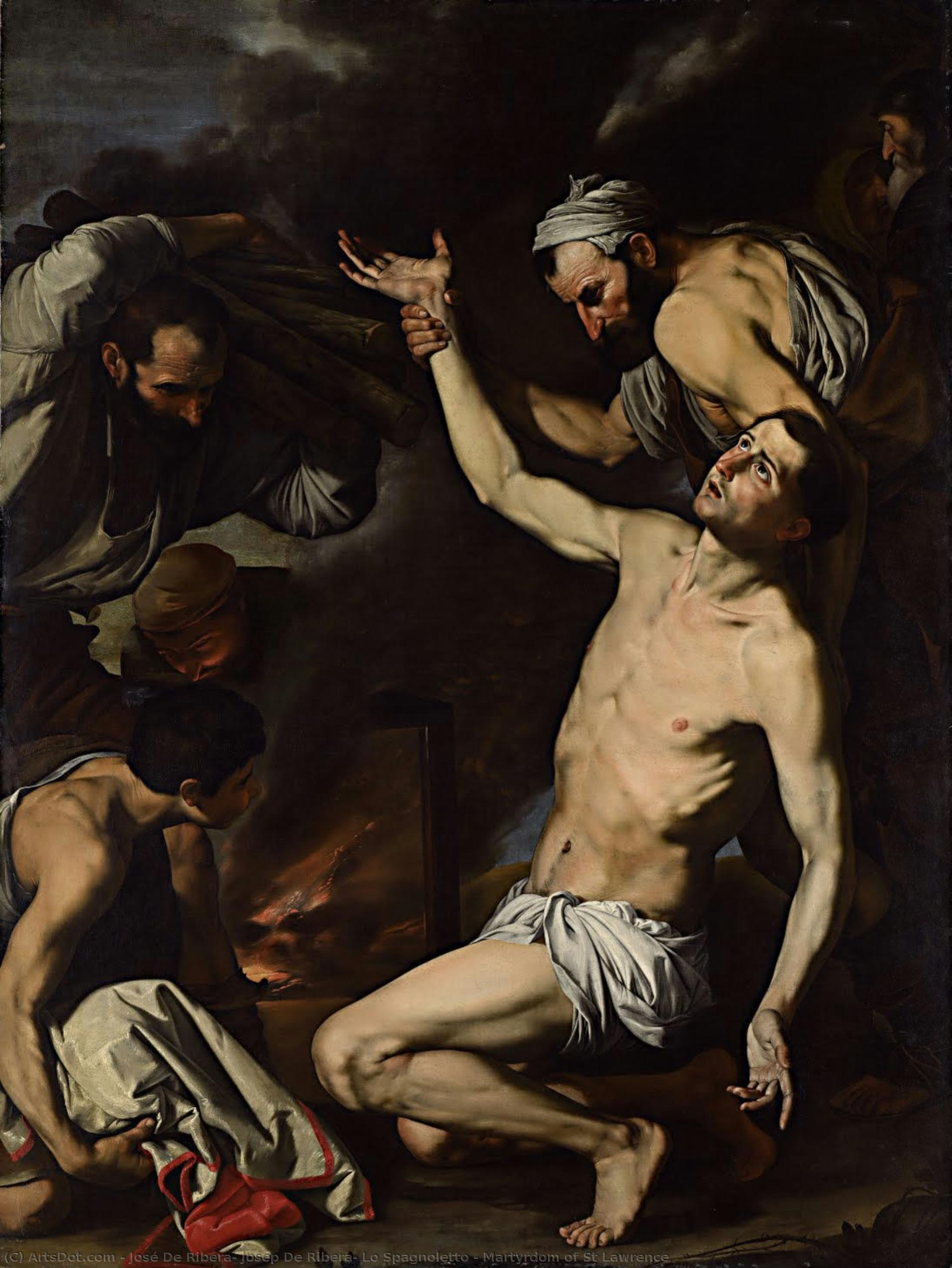
A Symphony of Shadow and Suffering
In the profound depths of Jusepe de Ribera’s Martyrdom of St. Lawrence, we encounter more than a mere historical tableau; we enter a visceral theater of faith. Painted in 1624, this monumental work serves as a breathtaking emblem of the Baroque era, capturing the precise moment where human agony meets divine transcendence. As the saint is bound to the gridiron, Ribera does not shy away from the gruesome reality of his execution. Instead, he utilizes the dramatic language of tenebrism—that signature interplay of piercing light and impenetrable shadow—to pull the viewer into the heat of the Roman persecutions. The composition is a masterclass in tension, where the weight of the physical torment is balanced by the spiritual resolve etched into the saint's very soul.
The technical virtuosity on display here is nothing short of extraordinary. Ribera, often celebrated as Lo Spagnoletto, brings a tactile realism to the canvas that makes the scene feel almost tangible. One can almost sense the rough texture of the iron, the strain of the ropes, and the heavy atmosphere of the Roman street. By synthesizing the dramatic chiaroscuro of Caravaggio with a meticulous, almost scientific attention to human anatomy, Ribera creates a sense of presence that is hauntingly intimate. For the discerning collector or interior designer, this piece offers a profound focal point—a work that commands attention not through bright colors, but through its intense psychological depth and the masterful way it manipulates light to direct the eye toward the central drama of sacrifice.
The Soul of the Counter-Reformation
To understand the emotional gravity of this masterpiece, one must look to the historical crucible in which it was forged. Commissioned for the high altar of San Lorenzo Lucina Church in Rome, the painting was a powerful tool of the Counter-Reformation. During this period, the Catholic Church sought art that could stir the hearts of the faithful, moving them through empathy and awe. Ribera achieves this by stripping away the idealized beauty found in Renaissance works, replacing it with an unflinching look at the cost of devotion. The surrounding figures—some watching with detached curiosity, others gripped by the gravity of the event—create a complex social tapestry that mirrors the turbulent religious landscape of 17th-century Europe.
For those seeking to incorporate such a powerful narrative into a curated space, the Martyrdom of St. Lawrence offers an unparalleled opportunity for intellectual and emotional engagement. It is a piece that invites contemplation on themes of resilience, endurance, and the triumph of spirit over flesh. Whether placed in a grand gallery or a sophisticated private study, this reproduction carries with it the weight of history and the luminous beauty of Ribera’s unique Baroque vision, making it an enduring treasure for any collection dedicated to the heights of human expression.