A Masterpiece of Baroque Sorrow
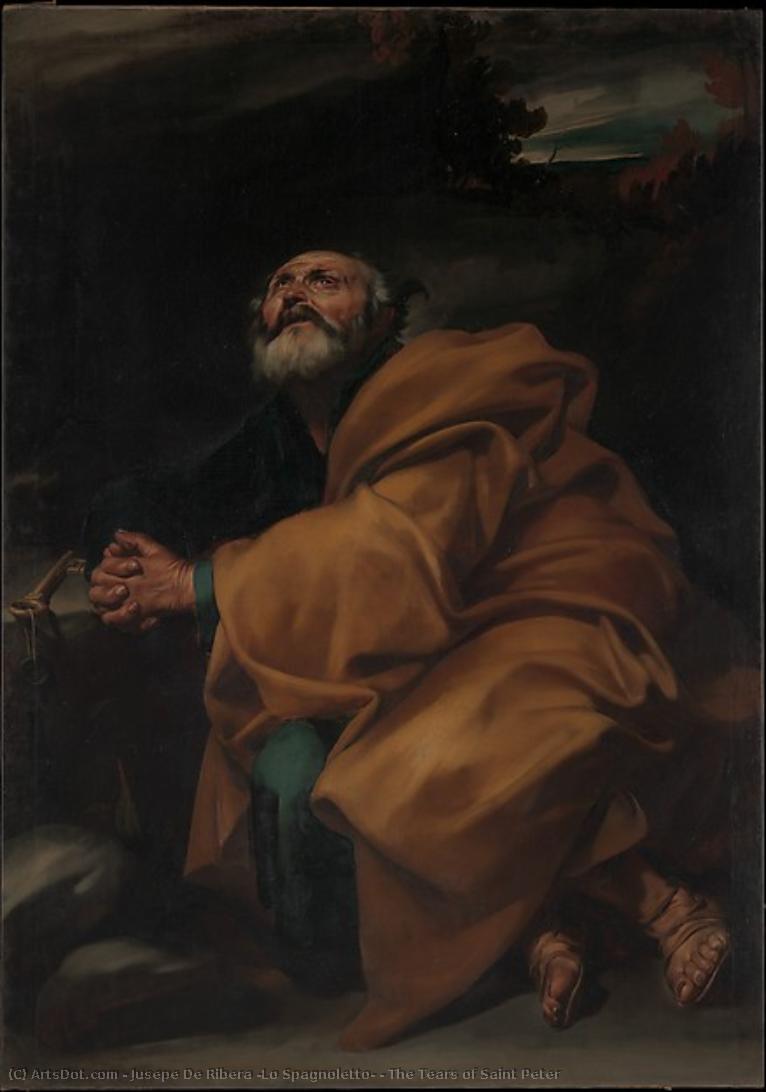
In the profound stillness of Jusepe de Ribera’s The Tears of Saint Peter, we are invited into a private moment of spiritual crisis and overwhelming human vulnerability. Created in 1612, this work stands as a breathtaking testament to the power of the Baroque era to capture the rawest edges of the human soul. The painting does not merely depict a biblical event; it immerses the viewer in the heavy, suffocating atmosphere of remorse. As we gaze upon the aged, weathered face of the Apostle, we are drawn into a narrative of betrayal and subsequent repentance, making it an ideal centerpiece for those who appreciate art that speaks to the depth of human experience and the complexity of our shared emotions.
The composition is a masterclass in tenebrism, a technique where extreme contrasts between light and shadow create a theatrical, almost cinematic intensity. Ribera utilizes a single, piercing light source that strikes Saint Peter from above, illuminating the rugged textures of his skin, the silvered strands of his
beard, and the damp glint of sorrow in his eyes. This dramatic lighting serves to isolate the figure against an abyss of dark, undefined space, forcing an intimate confrontation between the subject and the observer. The background remains largely shrouded in shadow, save for a fleeting glimpse of a distant, sunset-lit landscape that offers a poignant contrast to the spiritual darkness currently engulfing the Saint.
Symbolism and Spiritual Depth
Beyond its visual drama, the painting is rich with symbolic weight. Every element of the Apostle's posture—the bowed head, the clasped hands, and the slumped shoulders—communicates a profound sense of humility and submission to divine grace. The very title suggests a physical manifestation of grief, where tears become symbols of a cleansing spirit. This portrayal captures Saint Peter in the immediate aftermath of his denial of Christ, transforming a moment of failure into one of transformative penitence.
For collectors and interior designers, this piece offers more than just aesthetic beauty; it provides a focal point of contemplative gravity. The earthy palette of ochre, deep browns, and muted greens creates a grounded, organic feel that integrates seamlessly into sophisticated, classical, or even modern minimalist interiors. The painting’s ability to command attention through its quiet intensity makes it a profound addition to any curated collection.
The Artistry of Lo Spagnoletto
Jusepe de Ribera, known affectionately as Lo Spagnoletto (“the Little Spaniard”), was a towering figure of the Baroque era. His journey from his Valencian origins to the vibrant artistic hub of Naples allowed him to develop an unflinching realism that would define his career. In The Tears of Saint Peter, we see the hallmarks of his genius: the remarkable attention to texture, from the rough quality of the beard to the heavy weight of the drapery, and a mastery of light that breathes life into the canvas.
To possess a reproduction of this work is to bring a piece of art history into one's personal space. It is an invitation to reflect on the human condition—our capacity for error and our resilience in seeking redemption. Whether viewed as a study in technical brilliance or an emotional anchor for a room, Ribera’s masterpiece continues to resonate with anyone moved by the interplay of light and shadow, and the enduring power of the human spirit.